Academia’s role in Ukraine’s sustainable recovery
Published: April, 2026 · Categories: Publications, Ukraine
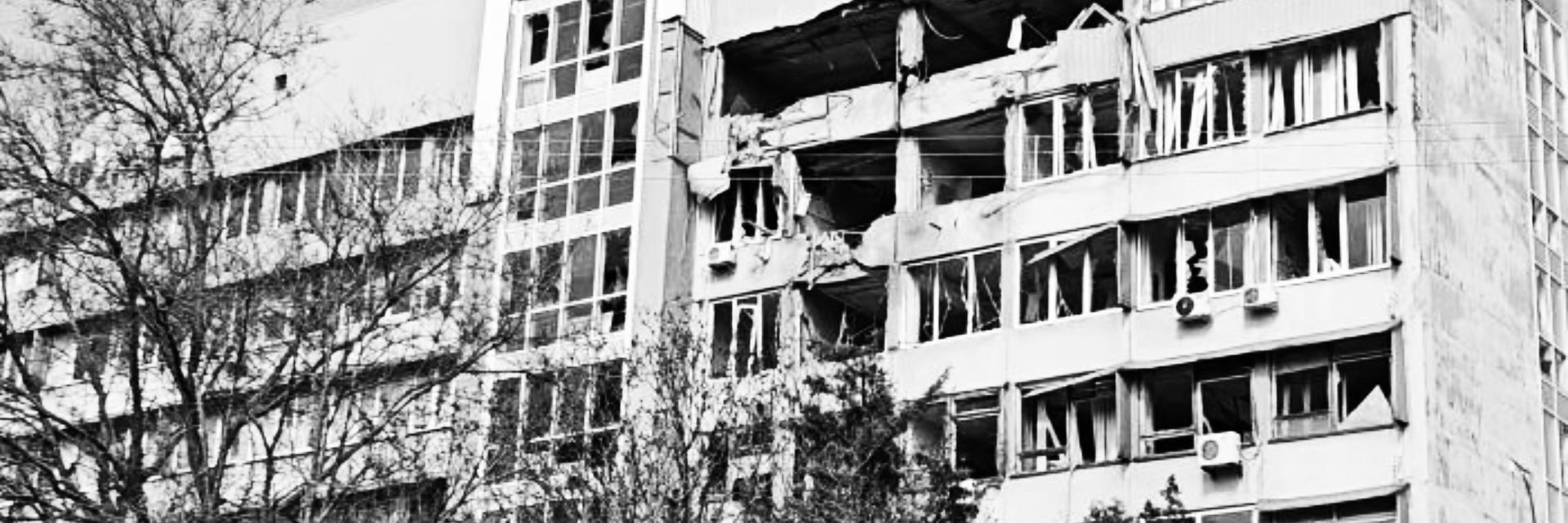
The war in Ukraine continues to harm universities and academia, impacting research and knowledge vital for Ukraine’s sustainable recovery.
This report assesses the state of relevant academic research, identifying strengths, gaps, and opportunities. Drawing on input from Ukrainian scholars, it also examines the realities of conducting research during wartime and the support needed to ensure that universities can contribute effectively to an environmentally sustainable national recovery.
Part 1 explores the reality of research under fire in Ukraine, while part 2 presents the outcome of a major literature review of sustainable recovery research, which identifies trends and gaps.
This report was prepared by Dr Eoghan Darbyshire, Leon Moreland, Dr Anna McKean, Iryna Babanina, Dr Linas Svolkinas.
Contents
“In times of peace, science helps nations prosper. In times of war, it helps them survive. With the right support, it can also become a pillar of Ukraine’s future recovery.” — Alessandra Guariglia, et al (2025).
Introduction
The war in Ukraine has had devastating consequences, not only for human lives, infrastructure and the environment but also for the country’s education and academic research sectors. Since 2014, the war has disrupted universities and scientific institutions, particularly in Crimea and the Donetsk and Luhansk regions. These disruptions have deepened since the full-scale invasion in 2022, triggering a nationwide crisis in research capacity. Many Ukrainian academics have been displaced internally or forced to emigrate abroad, while those who remain face shrinking resources, damaged facilities and increasing uncertainty.
In parallel, the Ukrainian government and international partners have been considering how Ukraine can implement a green or sustainable recovery and “build back better”. Green reconstruction is viewed as central to the post-war modernisation of Ukraine’s economy, energy security and governance, embedding low-carbon technologies and sustainable frameworks. It also aligns closely with Ukraine’s pursuit of EU membership, which it applied for shortly after the war began. Ukrainian civil society has defined sustainable recovery as:
‘…the process of restoring infrastructure, housing, the economy and ecosystems in an inclusive way that ensures long-term environmental safety, efficient use of natural resources and environmental restoration, while taking into account climate change and minimising negative impacts on ecosystems.’
The Green Recovery Platform (GRP), which promotes “a science-based, systematic and coordinated approach to rebuilding Ukraine in a sustainable and environmentally responsible manner”, has identified several key challenges to achieving this goal: regulatory and policy reform, investment and financial mechanisms, governance and institutional capacity, technological innovation, stakeholder engagement and long-term financial support. Needless to say, evidence-based sustainable recovery policy-making will be heavily dependent on the quality and availability of environmental data. Academic research, both domestic and international, plays a vital role in meeting these challenges.
Universities and research institutions provide the evidence base for policy, generate new technologies, and help create institutional capacity to implement sustainable recovery strategies. Ukraine’s education system is also viewed as a vehicle for closer EU alignment. Ukraine joined the Bologna Process in 2005, integrating its higher education system into the European higher education area. Following the 2014 revolution, Ukraine passed its Higher Education Law of Ukraine, to promote modernisation, autonomy and transparency and alignment with European values. Although the ongoing war has caused major disruption to the education sector, it has also accelerated momentum for EU integration. Recent initiatives, including the Law on Higher Education and Strategy of Higher Education Development in Ukraine 2022-32, establish a roadmap for systemic sectoral change and recovery.
Part 1: Research under fire
To understand the role academia may play in sustainable recovery it is important to not only focus on the research, but also the setting in which the research has taken place since February 2022. Before then Ukraine’s public science system comprised around 450 research institutions and 140 universities. These institutions covered a broad range of disciplines. However, systemic challenges persisted, these included: chronic underfunding, inefficient resource use, the divide between teaching and research, and ongoing brain drain.
1.1 Disruption within Ukraine
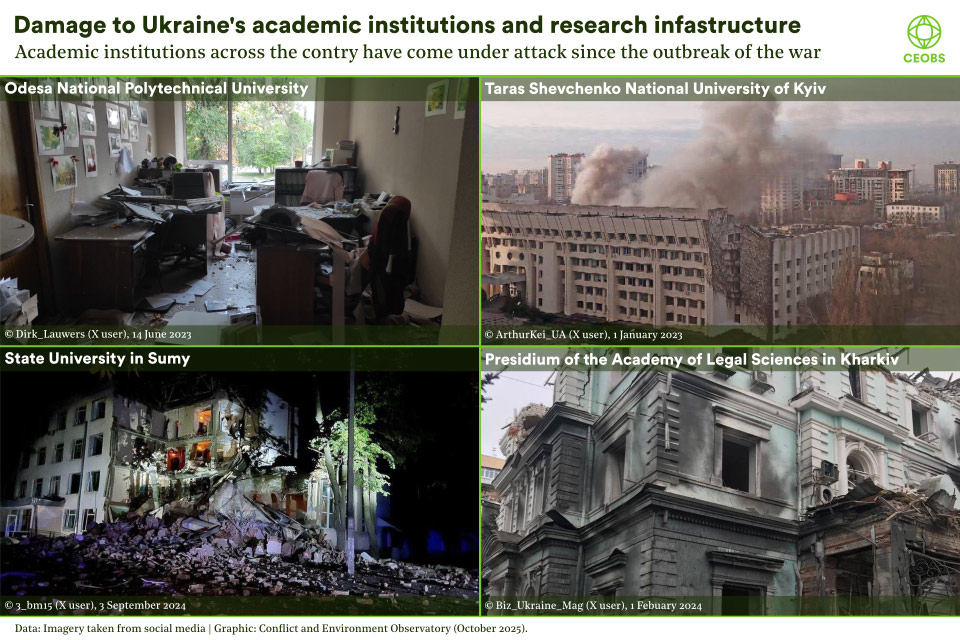
Since February 2022, the country’s academic sector has faced significant disruption due to displacement and the destruction of educational infrastructure. Roughly one fifth of higher education institutions and about one third of research facilities have been either partially damaged or completely destroyed. By late 2025 it was estimated that rebuilding and modernising academic infrastructure will cost up to €1.2 billion, a figure that will grow as the war progresses.
The destruction of research institutions not only stops teaching, creating knowledge gaps for students who have been displaced or left university to enlist, but also poses risks to surrounding communities. When specialist laboratories are damaged or destroyed hazardous materials can be released; for example, the Kharkiv Institute of Physics and Technology, which contains radioactive materials, had been targeted 74 times at the time of writing. Damage to technology centres like this also risk setting back teaching and research activities that could support sustainable recovery.
In February 2022, Ukraine’s public research sector employed more than 88,000 researchers and academic teaching personnel. By 2024 it was estimated that around 5.5% had been displaced internally, while it is estimated that in 2022, at least 78,000 high school seniors, some 34% of students, were directly impacted by the war, either by displacement or through declining to take the higher education entrance exam.
A November 2024 survey found that 64% of researchers were unwilling to change their place of residence; while around 15% had left academia entirely, and more than 1,500 had joined the Ukrainian military. The war has severely disrupted research continuity through the degradation of working conditions and adapting to unstable conditions. In temporarily occupied regions, publication rates and international partnerships have dropped significantly. Particularly research in natural sciences, engineering, and social science. For those who remained in academia, motivations vary, but a strong sense of civic duty and established peer-support network have been key.
Academics we interviewed described struggling to continue “pre-war” research due to reduced funding, inconsistent workloads, martial law challenges, and the need to take on part-time roles. Projects requiring specialist laboratories or fieldwork have been particularly affected. Dr Maksym Soroka, now of the NGO Dovkola said he:
“…was forced to cancel almost all planned expeditions, as there were changes in mobilisation legislation which made travel difficult for male researchers. In order to be able to continue my research in 2022-2023, I was forced to create a “mini-laboratory” in a new house at my own expense and that of my partners.”
Funding opportunities for researchers who stayed in Ukraine remain scarce, with a reliance on internationally supported funding (see below).
1.2 International support in Ukraine
Since February 2022, Ukrainian academics, students and institutions have received extensive support from international institutions and governments. More than 35 university alliances have expressed solidarity with Ukraine, advocating for the integration of education and research into the country’s reconstruction efforts. International cooperation has also helped some academics continue their work within Ukraine.
The Twinning initiative is a good example of institution to institution collaboration. In 2022, for instance, a partnership between Karazin Kharkiv National University and the University of York in the UK enabled joint projects on pollution assessments, cultural heritage preservation, resource sharing, and academic exchanges. Such collaborations not only strengthen institutional links but also provide vital professional and emotional support for academics working under extreme conditions.
That same year, Ukraine signed an agreement to associate with the Horizon Europe research innovation programme increasing participation in European research initiatives. One key example of targeted support is the EU Horizon Marie Skłodowska-Curie Ukraine Fellowship, launched in September 2022, which aimed to support up to 10,000 researchers.
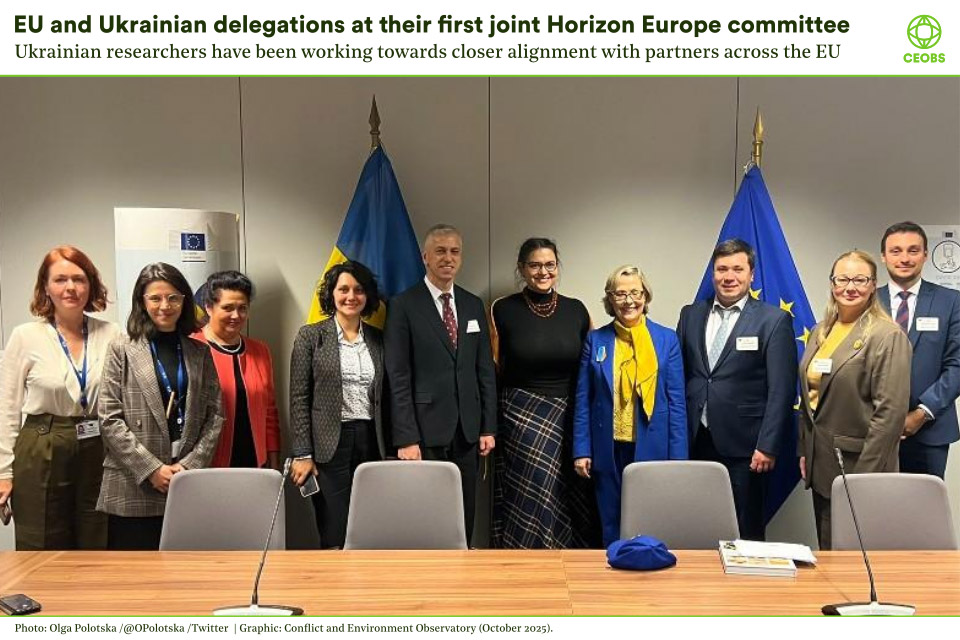
This international scientific cooperation continued to expand. Between 2021 and 2025, Ukrainian organisations received €62.5 million in research funding, compared to €48.9 million in 2014-2020. The success rate of applications also rose to 13.4%, compared with 9.3% previously. Importantly, Ukraine was exempt from paying participant contributions, allowing all funds to be directed towards research and development projects. Key areas of support include Pillar 1: Excellent Science and Pillar 2: Global Challenges and European industrial competitiveness. Major beneficiaries include Ukrainian titanium and graphite producers, indicating the EU’s interest in Ukrainian critical minerals, as well as Lviv Polytechnic National University, the National Research Foundation of Ukraine and the National Antarctic Scientific Centre of Ukraine. In 2022, Ukraine was also the first non-EU country to join the EU LIFE programme considering the need for innovative solutions to address the war damage and further align national legislation with EU standards.
Among individual funding opportunities, the EURIZON Fellowship Programme: Remote Research Grants for Ukrainian Researchers was one of the few funding mechanisms only open to Ukrainians, making it highly competitive. These temporary six- or twelve-month grants (2022–23) supported vulnerable research teams, PhD students, engineers, and technicians, working across scientific disciplines.
Gender equality has also remained an important focus of international cooperation. The “Women in Science” project, implemented by UN Women and UNFPA with EU funding, seeks to promote gender equality in STEM and raise the visibility of women in Ukrainian academia. While overall gender distribution among Ukrainian researchers remains nearly equal (approximately 50.3% male and 49.7% female), representation declines sharply at senior levels.
1.3 International support for diaspora academics
While international support has created new opportunities, displacement has introduced serious challenges. Approximately, 20% of Ukrainian scientists have left the country, often taking up insecure or temporary positions at host institutions. Academic careers in Ukraine have traditionally been tied to long-term affiliations with single institutions, and for many researchers, forced relocation has disrupted or erased their professional identities or achievements.
A 2024 survey revealed that approximately 40% of displaced academics reported financial difficulties, 35% reported problems securing adequate accommodation at their new locations, and 24% had faced issues relocating their families. Additionally, 24% noted significant changes in workload. Around 5.5% of survey respondents reported having lost their contract or job altogether.
Despite these hardships, many academics managed to adapt to their new roles, often at considerable personal and professional cost. It remains unclear to what extent their research priorities have shifted to align with their host institutions. In some cases it is only the transition out of the country that has enabled their research to continue. As Dr Anastasiia Splodytel, now at TU Braunschweig, Germany told us:
“My main research focus is still on Ukraine. I am currently working on a project at a German university that is dedicated to developing tools for the restoration of war-damaged soils. It was only the move to Germany that has enabled me to continue this work. Two years following the start of the full-scale invasion, I realised that I could no longer perform my work even at the pre-war level, which already had many problems before 2022, with funding, organisational structure, and management.”
While international collaboration remains vital for sustainable recovery and global cooperation, it also brings the risk of long-term brain drain; one study found that half of those surveyed had no intention to return. Academics who have relocated abroad may not return to a country where wages are lower and career opportunities more limited. Survey data suggests that the most research-active Ukrainian scientists have left the country, raising concerns about rebuilding Ukraine’s academic and innovation capacity in the years ahead.
1.4 Recovery needs
Although the precise role of academic research will evolve as Ukraine’s reconstruction takes shape, the government has already recognised that higher education is critical to almost every key sector in the country. Coordinated action is needed at the institutional, national and international levels to support the domestic research architecture in Ukraine. This should include investment in digital infrastructure, flexible research support, mental health services, and stronger networks for peer collaboration. Prioritising the wellbeing of researchers who continue their work inside Ukraine is essential to preserving the country’s scientific capacity and ensuring it plays a central role in future recovery.
Ongoing work
To address these challenges, Ukraine is investing in the reconstruction of its domestic research infrastructure, a critical step for long-term resilience and innovation. In 2025, the Cabinet of Ministers of Ukraine approved a resolution allocating state funding to support priority areas of scientific research and technical development. The approved budget was around ₴194 billion hryvnias (approximately $4.62 billion) and represented a 35% increase compared to the previous two years.
Despite the significant obstacles faced by Ukrainian researchers and institutions, including funding instability, displacement, shifting international support and direct physical damage. Ukraine’s academic community has shown remarkable resilience. Sustained international cooperation, combined with domestic investment will help ensure that academic research can be central to sustainable recovery.
Regional universities have a particularly crucial role. Their programmes can be adapted to address the most pressing issues facing local communities, providing a targeted approach and creating opportunities for collaboration with NGOs and local governments. Specialised rebuilding programmes, tailored to the needs of individual faculties and institutions, should therefore be actively encouraged. Such initiatives will also be vital in developing the green skills needed to drive reconstruction.
Recommendations
1. Ensure stable and equitable funding
The current funding mechanisms remain insufficient to meet the scale of Ukraine’s needs. This is particularly challenging for researchers who have remained in the country and face direct barriers to accessing funding. Resources should be distributed more equitably, ensuring that smaller institutions are supported rather than concentrating funding in major research centres such as those in Kyiv. Stable foreign funding is also essential to sustain ongoing academic projects and prevent valuable research initiatives from collapsing.
2. Address systemic challenges
The war has exposed Ukraine’s systemic challenges within higher education including underfunding, a strong divide between research and teaching, and brain drain. To address these challenges international organisations should work with the government’s higher education institutions to reform policy and address the systemic issues.
3. Coordinated action at institutional, national and international levels
Efforts to support Ukrainian academia should be coordinated across multiple levels. Stronger collaboration between regional universities, government ministries, and international organisations will help ensure that initiatives are cohesive and holistic rather than fragmented. This should include developing joint research agendas and aligning funding priorities.
4. Increase international partnerships
International cooperation has been a lifeline for Ukrainian academics and must continue. Long-term institutional partnerships, such as the collaboration between Karazin Kharkiv National University and the University of York, should be expanded to strengthen stability, build capacity, and embed recovery-focused research within wider international networks.
Part 2: Reviewing the state of academic research on sustainable recovery
To understand what is being studied in relation to Ukraine and its sustainable recovery, by Ukrainian academics, and academics based outside the country, a comprehensive search, filtering and classification process was undertaken. The 5,147 publications classified as related to the armed conflict, within Ukraine and since February 2022, represents the largest such corpus curated to date to our knowledge. Of these publications, 3,882 were classified as describing impacts of the armed conflict, 1,552 were classified as being relevant for recovery, and 345 as relevant specifically for sustainable recovery. The full list of related publications can be found here.
Method in brief: The first stage of this process involved the generation of a long-list of potentially relevant articles (34,784) using boolean key-word searches on the Web of Science – a collection of databases indexing scholarly literature. The second stage of this process involved classifying each publication using the two iterations of the GPT language models from OpenAi (GPT-mini-4 and mini-5). Finally, the filtered publications were recompiled in Web of Science to generate summary statistics. A more detailed methodology can be found in the appendix.
2.1 Research related to the war
Research themes
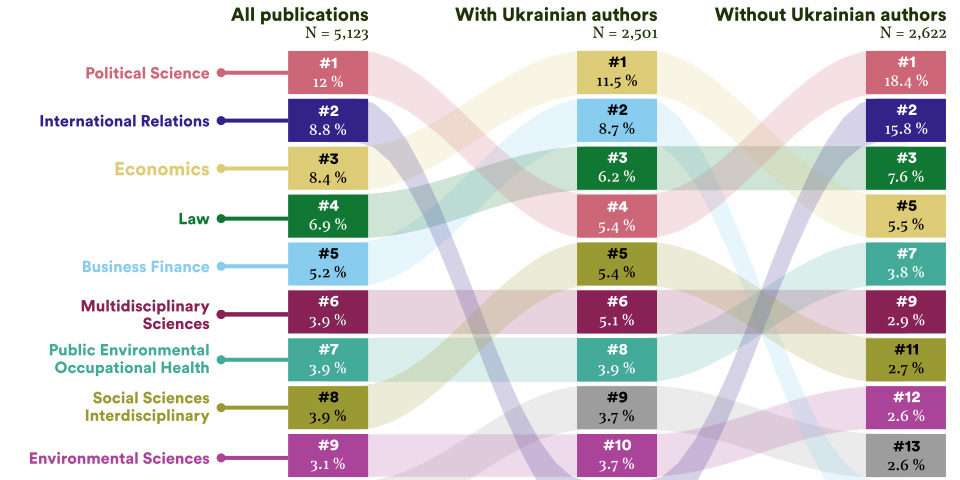
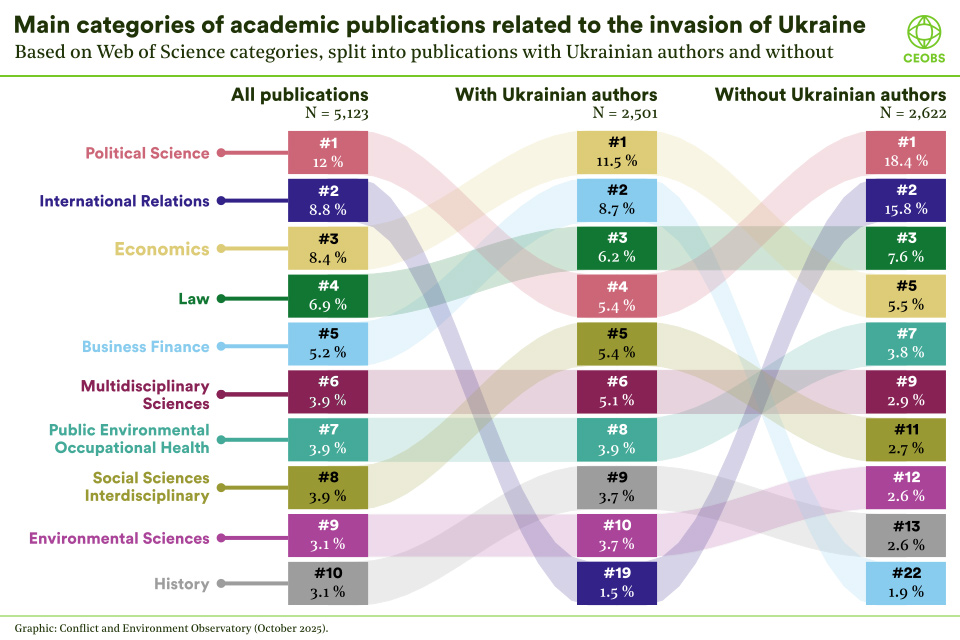
To understand the research themes, we investigated two metrics in the Web Of Science analytics. The first of these was ‘Categories’ – the subject area of the journal. Perhaps unsurprisingly, most publications focus on politics and economics. However, there is a solid foundation for sustainable recovery efforts, as taken together, environment, or environment adjacent, publications comprise 16% of all. Proportionally this number is marginally higher in publications with Ukrainian authors (19%) compared to those without (13%).
There is a large disparity in writing on international relations, comprising 9% of publications with no Ukrainian authors — the second most common topic area — compared to just 1.5% from publications with Ukrainian authors. Does this mean the world is writing about Ukraine’s place in it, but not Ukrainians themselves? Or are there more prosaic reasons, such as international relations historically having a lower profile in Ukraine?
Publications with Ukrainian authors are more focused on business, social sciences and health topics than publications without. Conversely, Communication is the fourth most frequent category in publications without Ukrainian authors, who are eleven times more likely to write about it.
The second Web Of Science metric used was the ‘citation topic’, determined by how articles cite one another and aggregate into discrete clusters. Generally, the results were similar, though the classification indicated a greater number of physical and mental health related publications. There was one large additional disparity, in Risk Assessment; it was the most common topic with Ukrainian authors (9%) yet only the 45th most common for publications without (0.3%). Digging deeper into the Risk Assessment sub-topics indicates that most (72%) of these publications are associated with Sustainable Development. In fact, the Sustainable Development sub-topic alone would still rank as the most common category, with 183 publications.
Indeed, another lens through which to assess the contents of the publication list is via the Sustainable Development Goals (SDG’s), as Web of Science maps publications to SDGs where possible.1 Of these, nearly a quarter (24%, 1,248 ) are SDG 3 – Good Health And Well Being. Also well represented are SDG 16 Peace And Justice Strong Institutions (12%), SDG 5 Gender Equality (10%), SDG 9 Industry Innovation And Infrastructure (8%) and SDG 8 Decent Work And Economic Growth (7%).
Geography
Nearly half (49%) of publications include Ukrainian authors. This seems one positive indicator of the health of Ukrainian academia, showing the capacity and will to research the impact of the conflict. This seems to have grown after 2022, when the representation was only in 39% of publications, likely a direct consequence of the shock of invasion. Note, this analysis is of all authors list on publications, not just the first author (this granularity of information not available).
The highest number of publications from outside of Ukraine are from the USA, Poland, the UK, and Germany. Collaborations are most common with those countries that are aligned with Ukraine, in particular states bordering the Baltic, and some of the states with strong programmes for diaspora academics (e.g. Switzerland, USA). Those publications featuring few Ukrainian voices include those from states such as Russia,2 China, and the other BRICS countries. Perhaps more surprising is the lack of representation from publications out of allied states, particularly Spain and France but western Europe more generally.
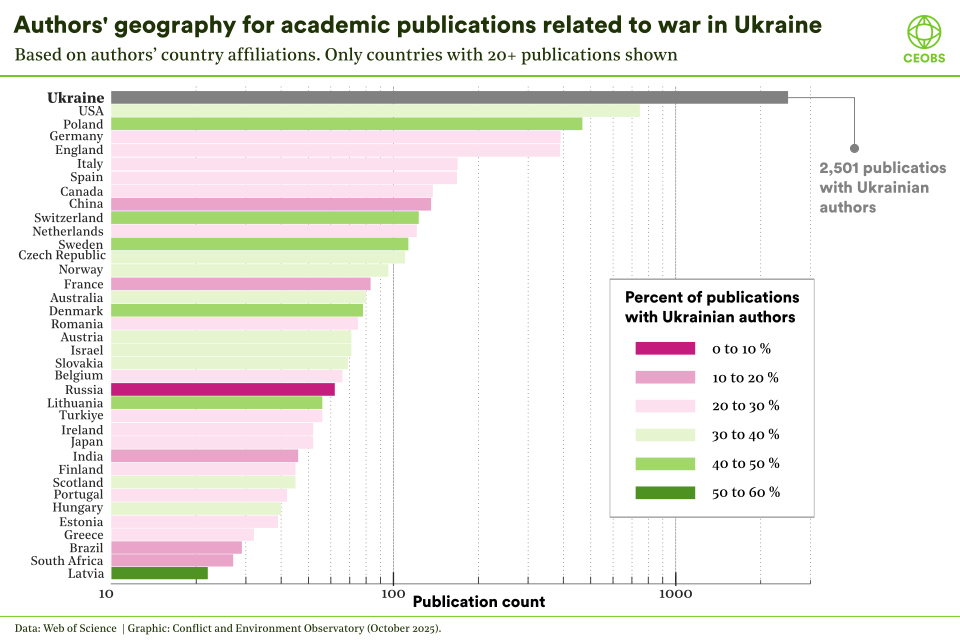
The institutions driving the research are dominated by Ukrainian bodies, in particular the Ministry of Education and Science, Taras Shevchenko National University of Kyiv, and the National Academy of Sciences. The three non-Ukrainian institutions with the most affiliated publications are the University of London, Harvard University, and Poland’s Jagiellonian University.
Despite the relatively positive Ukrainian representation, only 2% of publications are written in Ukrainian — this may limit readership within Ukraine in those sectors where English is not a working language. A bigger barrier may be that two out of every five papers are not open access and are behind a paywall.
The most influential publications related to the war are related to global issues, in particular food security and markets. However, of the most cited 10 publications,3 two do focus on environmental impacts — perhaps pointing to the higher profile of the environment in Ukraine compared to other armed conflicts.
2.2 Research specifically relevant for Ukraine’s sustainable recovery
Of the 5,147 publications related to the war, 345 were classified as being specifically relevant for Ukraine’s sustainable recovery.4 As expected, these have a much stronger environmental focus; the most common Web of Science category being Environmental Sciences. Cumulatively, the environment adjacent categories comprise 51% of all (175 publications). The remaining publications are linked to economics and business.
Of the publications relevant for sustainable recovery, 83% include Ukrainian authors. This indicates a strength in that the majority of papers likely speak directly to the Ukrainian context. Poland (9%), the USA (8%), Germany (7%), England (6%) and Switzerland (4%) are the next most common countries of authorship.
Publications were also classified by the sustainable recovery domains defined in another component of our wider project: a stocktake of sustainable recovery stakeholders and data. The publications were split between: Economic Sectors and Infrastructure (135), Environmental Systems and Natural Resources (102), Governance, Institutions, and Rule of Law (55), Technology, Innovation, and Finance (38), Social Dimensions and Inclusion (11), and Overarching (4). We now explore the publications in each of these domains, summarising what sustainable recovery themes are covered, and which are missing.
Economic sectors and infrastructure
The primary topic is renewables and energy transition — especially biofuels — but circularity, agriculture, hospitality/tourism, and logistics also feature heavily. There is less of a focus on cities and urban planning than expected. Generally, most papers’ analysis is at a high level, with generic conclusions often relating to the whole country. However, there are an encouraging number of studies that are more action-oriented; these include those focusing on local possibilities and specific industrial actions. Selected publications include:
- Transforming Agriculture into Energy: Unlocking Ukraine’s Bioenergy Potential for Sustainable Post-Conflict Recovery. Link: https://doi.org/10.3390/en18051212
- Potential of Landfill Gas Extraction in North-East Ukraine. Link: https://doi.org/10.12911/22998993/183827
- Feasibility of Fine Classification in Processing Watered Coal Sludge from Storage: A Case Study of the Dnipro Coke Chemical Plant Link: https://doi.org/10.46544/ams.v30i1.07
- Smart Cities and Ecological Transport: Challenges, Prospects and Impact on Sustainable Development Link: https://doi.org/10.1007/978-3-031-87376-8_16
- Rehabilitating instead of rebuilding aged or damaged pre-fabricated concrete buildings for reducing CO2 emissions: the case of Ukraine Link: https://doi.org/10.1617/s11527-023-02287-6
Environmental systems and natural resources
Publications mainly focus on the impacts to the environment as a direct or indirect result of the war, particularly for forestry, agriculture/soils and water availability. Many papers discuss recovery and rehabilitation, though it is the sole focus of very few. There is a mix of national and local scale studies, but an underrepresentation of marine/coastal locations and studies incorporating climate change. Selected publications include:
- Social impact of destruction of urban forests in Ukraine and considerations for their future reconstruction. Link: https://doi.org/10.1016/j.ufug.2024.128269
- Risk assessment for public health from air pollution in the industrial regions of Ukraine. Link: https://doi.org/10.26565/2410-7360-2022-56-18
- Water on fire: losses and the post-war future of ecosystem services from water resources of Ukraine. Link: https://doi.org/10.1007/s10113-024-02320-6
- Pollution Problems in the Economic Agricultural Sector: Evaluating the Impact on Natural Resources and Solutions for Improvement. Link: https://doi.org/10.3390/su162411294
- Southern Bug River: water security and climate changes perspectives for post-war city of Mykolaiv, Ukraine. Link: https://doi.org/10.3389/frwa.2024.1447378
Governance, institutions, and rule of law
The main focus of these publications is environmental and institutional frameworks for sustainability, including reform. A theme of many papers is how decentralisation and anti-corruption/transparency are important for successful green governance mechanisms. There are clusters on nuclear safety and sustainable economic regulation. A number of publications draw upon experiences from other settings for comparison. There are few papers on social inclusion and the role international law or reparations may play. Most surprisingly, there were no papers on environmental justice. Selected publications include:
- Environmental Component Of Sustainable Development Of Territorial Communities. Link: https://doi.org/10.55643/fcaptp.4.51.2023.4059
- Anti-corruption reform as a component of the sustainable development strategy and its impact on a safe environment. Link: https://doi.org/10.46398/cuestpol.4075.15
- Legal Foundations For The Development Of A Circular Bioeconomy: Ukrainian And European Dimensions. Link: https://doi.org/10.30525/2256-0742/2025-11-3-203-211
- Geoinformation support of geoportals of territorial communities: pre-war realities and post-war prospects. Link: https://doi.org/10.26565/2410-7360-2024-60-09
- Advancing sustainable reconstruction in Ukraine after full scale invasion: utilizing a green economic approach and essential guidelines for successful implementation. Link: https://doi.org/10.33223/epj/185209
Technology, innovation, and finance
The primary theme of these publications is green finance, particularly in relation to renewable energy. There are fewer papers on technology and digital transformation. Absent are papers on grassroots led initiatives or entrepreneurship. Selected publications include:
- Directions of Financial Support for Post-war Recovery and Sustainable Development of Smart Cities in Ukraine. Link: https://doi.org/10.1007/978-3-031-87379-9_33
- Resilient Synergy: Сrafting Integrated Smart Business Models For Eu-Ukrainian Recovery. Link: https://doi.org/10.55643/fcaptp.5.52.2023.4166
- The performance of the digital city projects in urban studies of the megalopolises (the case studies of Kharkiv and Dnipro cities). Link: https://doi.org/10.26565/2410-7360-2023-59-11
2.3 Data products from research that support the sustainable recovery
There is undoubtedly a significant volume of data generated from academic research that can be used in other sectors as part of a sustainable recovery. We found at least 120 publications with useful data, including these selected publications with openly available data:
- Regional irrigation expansion can support climate-resilient crop production in post-invasion Ukraine. Data link: https://doi.org/10.5281/zenodo.12106370
- An integrated high-resolution bathymetric model for the Danube Delta system. Data link: https://zenodo.org/records/14055741
- National-Scale In-Season Field Boundaries of Ukraine Using Remote Sensing. Data link: https://data.harvestportal.org/dataset/ukraine-field-boundary-delineation-2023
- Estimation of internal displacement in Ukraine from satellite-based car detections. Data link: https://github.com/mcruf/IDP_UKR
- ClimUAd: Observation-Based Gridded Daily Climate Data for Ukraine, 1946-2020.
Data link: https://uhmi.org.ua/data_repo/ClimUAd_Ukrainian_gridded_daily
Surprisingly, most of the filtered publications made no mention of whether the data was available at all. Just over a quarter of publications noted data accessibility, but with hoops to jump through, such as “available on request”. So, rather unfortunately, data was openly accessible for only approximately one fifth of our filtered publications, representing a barrier to use.
However, those publications we classified represent only a subset of the publications with useful data, for example publications from before 2022, or with a global or regional focus. We also undertook a review of these as part of curating a sustainable recovery data directory, and identified a significant number of useful publications in data journals and via academic data repositories. These were more open and accessible.
There remain barriers to both finding and using data from academic publications. In order to identify whether a publication includes usable or data a full inspection of the text is required. For this reason our AI model struggled, relying only on the title and abstract (a manual check was also required). The model was more successful when tasked with identifying only one type of data — satellite data — which also comprised the most common data type, reflecting a bias to remote data sources in conflict settings.
2.4 Emerging collaborations and programmes
A clear example of academic research moving into practice is the S3RoU consortium. This collaboration brings together the Ukrainian organisation ReThink, senior researchers from the UK’s universities of Leeds and Sheffield, and the Dutch engineering company Everox. Backed by a large international scientific committee, the project ensures the technology is both scientifically sound and future proof.
The consortium’s mission is to apply circular economy principles to reconstruction by recycling rubble into low-energy, low-carbon construction materials. The process involves crushing rubble, removing steel, textiles, and hazardous materials such as asbestos, and reprocessing what remains to create aggregates for fresh concrete. Although still in its early stages and not yet deployed in Ukraine, this technology could be applied far beyond the country, in other conflict-affected regions and disaster zones. It has the potential to change how demolition waste is managed globally and significantly reduce emissions from the concrete industry.
Encouragingly, there are signs of growing international engagement. For example, a recent call from the International Association for Energy Economics invites research on the green energy transition, environmental governance, climate action and adaptation, financing and international cooperation, and the circular economy and sustainable infrastructure. By bringing together researchers, academics, and policy experts, such initiatives highlight the importance of cross-border collaboration and knowledge-sharing. Expanding such efforts will be vital throughout Ukraine’s reconstruction.
2.5 Recommendations for research and data priorities
The concept of a sustainable recovery is emerging as a guiding principle. While relatively new, it draws on well-established research domains such as the circular economy, life cycle assessment, environmental risk analysis, environmental impact assessment, environmental auditing, materials science, sustainable recovery, waste management, ESG (environment, social and governance) reporting, and carbon accounting. Together, these fields provide the tools and data needed to rebuild in ways that are rapid, resilient, sustainable, and climate-conscious
A major challenge for reconstruction lies not just in generating data, but in ensuring it is accessible and translated into actionable information for stakeholders, decision-makers, and conflict-affected communities. However, this has been identified as an issue within our study and it’s recommended that an intermediary organisation could step in and accelerate the integration of research into policy and implementation. Closing this gap will be essential for recovery efforts to succeed. Both international and regional academic institutions have the potential to play a critical role in what is considered one of the most ambitious post-war recovery plans, while also helping Ukraine align its reconstruction with EU membership goals.
1. Improve data sharing
During the literature review we identified that there was a lack of openly accessible academic data. This data should be present in its raw form and as information that can be used by relevant policymakers, NGOs and affected communities. This could be done by supporting data sharing on centralised platforms like Ukraine’s EcoSystema.
2. Ensure research supports practical action
Funding and collaboration efforts should prioritise projects that directly contribute to reconstruction, environmental recovery, and sustainable development. Strengthening the link between academic research and practical implementation will ensure that science remains central to Ukraine’s sustainable recovery and long-term resilience. The S3RoU consortium, for example, demonstrates how academic research can be translated into real-world solutions for sustainable reconstruction.
3. Continue and improve collaboration with Ukrainian researchers
While there has been an encouraging level of collaboration, there is a risk that the trend of reduction over time gets worse. Meaningful and mutual collaboration will always strengthen outcomes, particularly when situated knowledge is incorporated. Programmes to continue and improve collaborations should be encouraged by funding bodies and institutions.
Ukraine’s recovery will be one of the most ambitious reconstruction efforts of this century. Academic research and development must be placed at the centre of this process. Although rebuilding Ukraine’s academic systems will have a financial cost, the long term benefit will be substantial. From developing capacity in sustainable reconstruction, green technologies and sustainable infrastructure, and to strengthening governance and policy, Ukraine can build a recovery that reinforces both its economy and environment, while aligning with its EU membership goals.
The research developed in Ukraine has the potential not only to guide the country’s own sustainable recovery but also to inform similar initiatives elsewhere, contributing to technologies and approaches with global impact.
Appendix
A1 Publication stocktake tables
| Citation Topics (Meso) | All | With Ukrainian authors | No Ukrainian authors | |||
|---|---|---|---|---|---|---|
| % of total | Rank | % of total | Rank | % of total | Rank | |
| 6.27 Political Science | 13.5 | 1 | 5.4 | 4 | 21.3 | 1 |
| 6.24 Psychiatry & Psychology | 5.6 | 2 | 6.2 | 2 | 5 | 5 |
| 1.156 Healthcare Policy | 5.4 | 3 | 6 | 3 | 4.8 | 6 |
| 6.317 Risk Assessment | 4.5 | 4 | 9 | 1 | 0.3 | 45 |
| 6.86 Human Geography | 4.5 | 5 | 3.1 | 7 | 5.8 | 3 |
| 6.185 Communication | 4.4 | 6 | 1.7 | 14 | 7 | 2 |
| 10.279 Soviet, Russian & East European History | 3.8 | 7 | 1.9 | 12 | 5.6 | 4 |
| 6.10 Economics | 3.3 | 8 | 2.8 | 9 | 3.7 | 7 |
| 6.3 Management | 2.3 | 9 | 3.2 | 6 | 1.3 | 11 |
| 6.321 Social Reform | 2 | 10 | 3.8 | 5 | 0.2 | 50 |
| 1.44 Nutrition & Dietetics | 1.9 | 11 | 1.6 | 15 | 2.2 | 8 |
| 6.238 Bibliometrics, Scientometrics & Research Integrity | 1.9 | 12 | 2.8 | 10 | 1.1 | 14 |
| 6.11 Education & Educational Research | 1.9 | 13 | 3 | 8 | 0.8 | 17 |
| 1.134 Trauma & Emergency Surgery | 1.6 | 14 | 2.1 | 11 | 1.2 | 13 |
| 6.115 Sustainability Science | 1.4 | 15 | 1.9 | 13 | 1 | 15 |
Table 1. Rank and percentage of 15 most common citation topics of publications relevant to Ukraine and the war, split into those including Ukrainian authors and those not.
| Publication | Citations |
|---|---|
| Impacts of the Russia-Ukraine War on Global Food Security: Towards More Sustainable and Resilient Food Systems? Authors: Ben Hassen, T; El Bilali, H Year: 2022 | Journal: FOODS | DOI:10.3390/foods11152301 | 384 |
| Heterogeneous impacts of wars on global equity markets: Evidence from the invasion of Ukraine Authors: Boubaker, S; Goodell, JW; Pandey, DK; Kumari, V Year: 2022 | Journal: FINANCE RESEARCH LETTERS | DOI:10.1016/j.frl.2022.102934 | 338 |
| The Russia-Ukraine Conflict: Its Implications for the Global Food Supply Chains Authors: Jagtap, S; Trollman, H; Trollman, F; Garcia-Garcia, G; Parra-López, C; Duong, L; Martindale, W; Munekata, PES; Lorenzo, JM; Hdaifeh, A; Hassoun, A; Salonitis, K; Afy-Shararah, M Year: 2022 | Journal: FOODS | DOI:10.3390/foods11142098 | 230 |
| Russian-Ukrainian war impacts the total environment Authors: Pereira, P; Basic, F; Bogunovic, I; Barcelo, D Year: 2022 | Journal: SCIENCE OF THE TOTAL ENVIRONMENT | DOI:10.1016/j.scitotenv.2022.155865 | 212 |
| The impact of Russia-Ukraine conflict on global food security Authors: Lin, FQ; Li, XC; Jia, NY; Feng, F; Huang, H; Huang, JX; Fan, SG; Ciais, P; Song, XP Year: 2023 | Journal: GLOBAL FOOD SECURITY-AGRICULTURE POLICY ECONOMICS AND ENVIRONMENT | DOI:10.1016/j.gfs.2022.100661 | 201 |
| Implications of the Russia-Ukraine war for global food security Authors: Behnassi, M; El Haiba, M Year: 2022 | Journal: NATURE HUMAN BEHAVIOUR | DOI:10.1038/s41562-022-01391-x | 190 |
| Geopolitical risk and the systemic risk in the commodity markets under the war in Ukraine Authors: Wang, YH; Bouri, E; Fareed, Z; Dai, YH Year: 2022 | Journal: FINANCE RESEARCH LETTERS | DOI:10.1016/j.frl.2022.103066 | 189 |
| The Russia-Ukraine conflict and volatility risk of commodity markets Authors: Fang, Y; Shao, ZQ Year: 2022 | Journal: FINANCE RESEARCH LETTERS | DOI:10.1016/j.frl.2022.103264 | 161 |
| Environmental damages due to war in Ukraine: A perspective Authors: Rawtani, D; Gupta, G; Khatri, N; Rao, PK; Hussain, CM Year: 2022 | Journal: SCIENCE OF THE TOTAL ENVIRONMENT | DOI:10.1016/j.scitotenv.2022.157932 | 155 |
| What the war in Ukraine means for energy, climate and food Authors: Tollefson, J Year: 2022 | Journal: NATURE | DOI:10.1038/d41586-022-00969-9 | 136 |
Table 2. Ten most cited papers in our dataset of publications related to the Ukraine war.
A2 Publication stocktake methodology
1. Boolean searches on Web of Science
The Web of Science (WoS) was chosen as the platform to generate a long-list of potentially relevant academic publications given its access to multiple indexing databases. Boolean searches were used to generate a long list of potentially relevant academic publications on 18 September 2025, covering the period 2022-2026. Though WoS now features an in house AI, SmartSearch, this tool was not used, as initial testing indicated it returned too many irrelevant publications.
A given boolean search on WoS can include no more than 50 terms. As such nine searches were conducted using eleven different combinations of keyword strings, as follows:
Keyword strings
Country terms: (Ukraine OR oblast) 1
City terms: (top 10 [to luhansk] and war-impacted cities in top 50))
(Kyiv OR Kharkiv OR Odesa OR Dnipro OR Donetsk OR Lviv OR Zaporizhzhia OR “Kryvyi Rih” or Mykolaiv OR Sevastopol OR Mariupol OR Luhansk OR Makiivka OR Kherson OR Chernihiv OR Poltava or Sumy OR Horlivka OR Kremenchuk OR Melitopol OR Kramatorsk OR Brovary OR Sloviansk OR Siverskodonetsk OR Lysychansk) 20
Area terms: (Donbas* OR Crimea OR “Black Sea” OR “Sea of Azov” OR Transnistria OR steppe OR Carpathian* OR Dnieper OR Dniester OR Donets OR Danube OR “Southern Bug” OR Chernobyl) 12
Invasion terms: (war* OR invasion OR conflict* OR militar* OR hostilit* OR occup* OR spill*) 6
Damage terms: (damage* OR harm* OR burn* OR destruct* OR collapse) 4
Environment terms 1: (environmental OR exposure OR pollution OR contamination OR biodiversity OR ecolog* OR river OR conservation OR atmosp* OR soil OR geolo* OR hydro* OR carbon OR “land use” OR agri* OR forest* OR tree* OR sea OR marine OR coast* OR waste OR “circular economy” OR ecocide OR chemical) 23
Environment terms 2: (infrastructure OR debris OR “hazardous material*” OR mineral OR mining OR toxi* OR fire OR flood* OR radiation OR hazard* OR nuclear OR ordnance OR scrap OR climate OR vegetation OR “air quality” OR river OR water OR natur* OR ecos* OR wild* OR fauna OR flora OR habitat OR food) 24
Monitoring terms: (“remote sensing” OR “earth observation” OR satellite OR “detection” OR monitoring OR “time series” OR observation* OR geospatial OR gis OR uav OR drone OR aerial OR sensor OR measur* OR photo*) 14
Recovery terms: (recovery OR revitalization OR transition OR “urban planning” OR green OR sustainable OR SDG OR industr* OR renewable OR digital OR nbs OR design OR resili* OR redevelop* OR develop* OR cities OR rural) 16
Other terms: (Governance OR heritage OR cultural OR grassroots OR “human rights” OR advocacy OR corruption OR justice OR regulat* OR humanitarian OR participatory OR standards OR funding OR communities OR policy OR knowledge OR private OR utilit*) 17
Data terms: (data* OR gridded OR model* OR inventory OR simulat* OR “artificial intelligence” OR “machine learning” OR statistics) 7
WoS Topic searches, boolean strings. (2022-2026). Conducted 18 September 2025
- Country terms OR City terms OR Area terms AND (Invasion terms OR Damage terms).
((Ukraine OR oblast) OR (Kyiv OR Kharkiv OR Odesa OR Dnipro OR Donetsk OR Lviv OR Zaporizhzhia OR “Kryvyi Rih” or Mykolaiv OR Sevastopol OR Mariupol OR Luhansk OR Makiivka OR Kherson OR Chernihiv OR Poltava or Sumy OR Horlivka OR Kremenchuk OR Melitopol OR Kramatorsk OR Brovary OR Sloviansk OR Siverskodonetsk OR Lysychansk) OR (Donbas* OR Crimea OR “Black Sea” OR “Sea of Azov” OR Transnistria OR steppe OR Carpathian* OR Dnieper OR Dniester OR Donets OR Danube OR “Southern Bug” OR Chernobyl)) AND ((war* OR invasion OR conflict* OR militar* OR hostilit* OR occup* OR spill*) OR (damage* OR harm* OR burn* OR destruct* OR collapse)) 16,650
- Country terms OR City terms AND Environment terms 1.
((Ukraine OR oblast) OR (Kyiv OR Kharkiv OR Odesa OR Dnipro OR Donetsk OR Lviv OR Zaporizhzhia OR “Kryvyi Rih” or Mykolaiv OR Sevastopol OR Mariupol OR Luhansk OR Makiivka OR Kherson OR Chernihiv OR Poltava or Sumy OR Horlivka OR Kremenchuk OR Melitopol OR Kramatorsk OR Brovary OR Sloviansk OR Siverskodonetsk OR Lysychansk)) AND (environmental OR exposure OR pollution OR contamination OR biodiversity OR ecolog* OR river OR conservation OR atmosp* OR soil OR geolo* OR hydro* OR carbon OR “land use” OR agri* OR forest* OR tree* OR sea OR marine OR coast* OR waste OR “circular economy” OR ecocide OR chemical) 5,832
- Area terms AND Environment terms 1.
(Donbas* OR Crimea OR “Black Sea” OR “Sea of Azov” OR Transnistria OR steppe OR Carpathian* OR Dnieper OR Dniester OR Donets OR Danube OR “Southern Bug” OR Chernobyl) AND (environmental OR exposure OR pollution OR contamination OR biodiversity OR ecolog* OR river OR conservation OR atmosp* OR soil OR geolo* OR hydro* OR carbon OR “land use” OR agri* OR forest* OR tree* OR sea OR marine OR coast* OR waste OR “circular economy” OR ecocide OR chemical) 11,870
- Country terms OR City terms AND Environment terms 2.
((Ukraine OR oblast) OR (Kyiv OR Kharkiv OR Odesa OR Dnipro OR Donetsk OR Lviv OR Zaporizhzhia OR “Kryvyi Rih” or Mykolaiv OR Sevastopol OR Mariupol OR Luhansk OR Makiivka OR Kherson OR Chernihiv OR Poltava or Sumy OR Horlivka OR Kremenchuk OR Melitopol OR Kramatorsk OR Brovary OR Sloviansk OR Siverskodonetsk OR Lysychansk)) AND (infrastructure OR debris OR “hazardous material*” OR mineral OR mining OR toxi* OR fire OR flood* OR radiation OR hazard* OR nuclear OR ordnance OR scrap OR climate OR vegetation OR “air quality” OR river OR water OR natur* OR ecos* OR wild* OR fauna OR flora OR habitat OR food) 7,333
- Area terms AND Environment terms 2.
(Donbas* OR Crimea OR “Black Sea” OR “Sea of Azov” OR Transnistria OR steppe OR Carpathian* OR Dnieper OR Dniester OR Donets OR Danube OR “Southern Bug” OR Chernobyl) AND (infrastructure OR debris OR “hazardous material*” OR mineral OR mining OR toxi* OR fire OR flood* OR radiation OR hazard* OR nuclear OR ordnance OR scrap OR climate OR vegetation OR “air quality” OR river OR water OR natur* OR ecos* OR wild* OR fauna OR flora OR habitat OR food) 10,468
- Country terms OR City terms OR Area terms AND Monitoring terms
((Ukraine OR oblast) OR (Kyiv OR Kharkiv OR Odesa OR Dnipro OR Donetsk OR Lviv OR Zaporizhzhia OR “Kryvyi Rih” or Mykolaiv OR Sevastopol OR Mariupol OR Luhansk OR Makiivka OR Kherson OR Chernihiv OR Poltava or Sumy OR Horlivka OR Kremenchuk OR Melitopol OR Kramatorsk OR Brovary OR Sloviansk OR Siverskodonetsk OR Lysychansk) OR (Donbas* OR Crimea OR “Black Sea” OR “Sea of Azov” OR Transnistria OR steppe OR Carpathian* OR Dnieper OR Dniester OR Donets OR Danube OR “Southern Bug” OR Chernobyl)) AND (“remote sensing” OR “earth observation” OR satellite OR “detection” OR monitoring OR “time series” OR observation* OR geospatial OR gis OR uav OR drone OR aerial OR sensor OR measur* OR photo*) 9,073
- Country terms OR City terms OR Area terms AND Recovery terms
((Ukraine OR oblast) OR (Kyiv OR Kharkiv OR Odesa OR Dnipro OR Donetsk OR Lviv OR Zaporizhzhia OR “Kryvyi Rih” or Mykolaiv OR Sevastopol OR Mariupol OR Luhansk OR Makiivka OR Kherson OR Chernihiv OR Poltava or Sumy OR Horlivka OR Kremenchuk OR Melitopol OR Kramatorsk OR Brovary OR Sloviansk OR Siverskodonetsk OR Lysychansk) OR (Donbas* OR Crimea OR “Black Sea” OR “Sea of Azov” OR Transnistria OR steppe OR Carpathian* OR Dnieper OR Dniester OR Donets OR Danube OR “Southern Bug” OR Chernobyl)) AND (recovery OR revitalization OR transition OR “urban planning” OR green OR sustainable OR SDG OR industr* OR renewable OR digital OR nbs OR design OR resili* OR redevelop* OR develop* OR cities OR rural) 16,777
- Country terms OR City terms OR Area terms AND Other terms
((Ukraine OR oblast) OR (Kyiv OR Kharkiv OR Odesa OR Dnipro OR Donetsk OR Lviv OR Zaporizhzhia OR “Kryvyi Rih” or Mykolaiv OR Sevastopol OR Mariupol OR Luhansk OR Makiivka OR Kherson OR Chernihiv OR Poltava or Sumy OR Horlivka OR Kremenchuk OR Melitopol OR Kramatorsk OR Brovary OR Sloviansk OR Siverskodonetsk OR Lysychansk) OR (Donbas* OR Crimea OR “Black Sea” OR “Sea of Azov” OR Transnistria OR steppe OR Carpathian* OR Dnieper OR Dniester OR Donets OR Danube OR “Southern Bug” OR Chernobyl)) AND (Governance OR heritage OR cultural OR grassroots OR “human rights” OR advocacy OR corruption OR justice OR regulat* OR humanitarian OR participatory OR standards OR funding OR communities OR policy OR knowledge OR private OR utilit*) 15,401
- Country terms OR City terms OR Area terms AND Data terms
((Ukraine OR oblast) OR (Kyiv OR Kharkiv OR Odesa OR Dnipro OR Donetsk OR Lviv OR Zaporizhzhia OR “Kryvyi Rih” or Mykolaiv OR Sevastopol OR Mariupol OR Luhansk OR Makiivka OR Kherson OR Chernihiv OR Poltava or Sumy OR Horlivka OR Kremenchuk OR Melitopol OR Kramatorsk OR Brovary OR Sloviansk OR Siverskodonetsk OR Lysychansk) OR (Donbas* OR Crimea OR “Black Sea” OR “Sea of Azov” OR Transnistria OR steppe OR Carpathian* OR Dnieper OR Dniester OR Donets OR Danube OR “Southern Bug” OR Chernobyl)) AND (data* OR gridded OR model* OR inventory OR simulat* OR “artificial intelligence” OR “machine learning” OR statistics) 14,476
Resulting publication list
The results from these searches were combined within Web of Science, using the “Marked List” functionality. This ensured that the list of returns was unique and contained no duplicate entries. The final number of returned publications was 34,534.
Part 2 – Classification with GPT‑4o mini
Visual inspections of the Web of Science list indicated there were a significant number of false-positives, i.e. publications which were not relevant to Ukraine post full-scale invasion. This scale of publications prevented a manual sort and classification, and so an automated approach was sought. AI is well suited to this task, in-particular Generative Pre-trained Transformers (GPTs), which can take into account context, process language and undertake analysis.
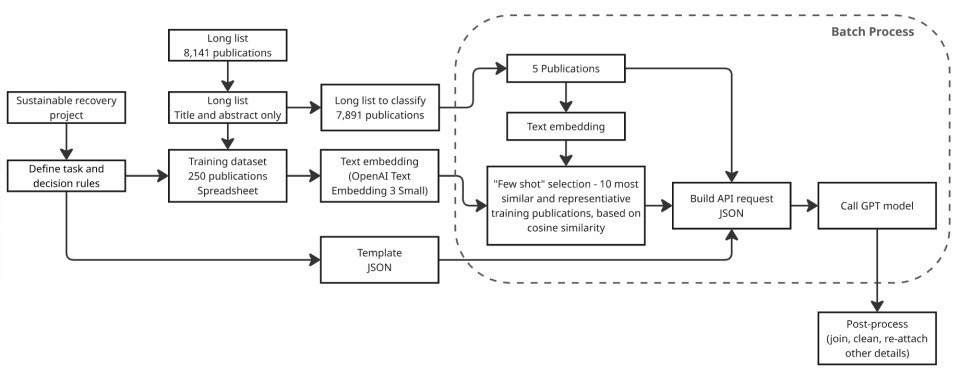
For this analysis we used the GPT language models from OpenAi (GPT-mini-4 and mini-5), accessed via API. There were two components the model involved – 1) viewing and understanding the training data, and 2) using its reasoning skills to identify and classify relevant papers. The method is summarised in the following flow chart:
Define task, decision rules and classification
To meet the objectives of this publication stock-check, a set of rules and classifications were developed. These were used manually, to tag a training dataset containing 250 entries, randomly sampled from the long-list The same rules and classifications were then provided to the GPT (Generative Pre-trained Transformer) for it to tag the whole publication dataset. This was undertaken in two sweeps – the first to remove obviously irrelevant papers, and the second to undertake the more in-depth classification. The following attributes were codified for each publication.
Related | marked as true only if the publication content is all of i) explicitly relevant to matters within Ukraine, ii) has a focus after February 2022, and iii) the subject matter is explicitly related to the military conflict. Studies related to other countries, or with only a regional or global focus are strictly false. Studies where the analysis is of a period before February 2022 are strictly false.
Impact | marked as true if related was true and only if true when explicitly invasion-linked impacts and harms are characterised (environmental, infrastructure, economic, social, health, energy, etc.). Otherwise false.
Recovery | marked as true if related was true and only if actions/policies/interventions for post-invasion recovery/reform/planning in Ukraine are the main focus (impact assessment does not count). Otherwise false.
Sustainable recovery | marked as true if recovery was true and only when there is an explicit environmental angle (clean energy/air/soil/water, biodiversity, just transition, circularity, green finance, governance, health, etc.).. Otherwise false.
Where sustainable recovery was true, the publication then underwent a classification by which domain of the sustainable recovery it was most aligned with. The domains used were those defined in CEOBS sustainable recovery stakeholder and data dictionary.
Data Flag | marked as true if related was true and if the paper very likely provides practical and reusable data for planning/assessment (not just minimal data to support claims).\
Specific additional instructions were given to the GPT:
- Evidence policy (bounded, content-anchored).
- Decide using the title + abstract as anchors.
- You may use general factual knowledge to interpret what’s in the text (e.g., “Lviv” is in Ukraine; “Zaporizhzhia” is a Ukrainian oblast; Feb 2022 = invasion start).
- Do not introduce facts absent from the text.
Build API requests and call GPT
The task, decision rules and classification scheme were passed to the GPT as JSON requests. The models used were OpenAI 4o-mini (first sweep) and OpenAI 4o-mini (second sweep) – choices designed to optimise speed and cost without significant accuracy losses.
The full publication list could not be processed in go, rather it had to be subdivided into batches of 5 papers. This was to work around the limitations of how much information the GPT can hold, consider and output in one go – so called token limits. For the same reasons not all 250 tagged training publications were included in the GPT request. Instead, only ten training publications were included. The ten chosen were those deemed to be those nearest examples to the five publications to classify. Text embedding and cosine similarity was used to determine these ten publications, ensuring they also contained at least two examples where the “Related” classification was true or false.
A template JSON was developed and this was edited for each batch, before it was sent to the OpenAI API.
Post-processing
The GPT output was via JSON files – these were compiled and translated back into spreadsheet format, where they underwent a formatting check and clean. The other information for each publication (e.g. doi, journal) were synchronized with the title and abstract.
Part 3 – Ingestion back into WoS
To allow further analysis on the research domain and country of author affiliation, the filtered data was ingested back in Web of Science to use its “Analyze Results” functionality. This was required because these fields were included in the original export of data from WoS – they are available if using the WoS API, but we did not have access to this source.
To ingest the publications, boolean searches were again performed, but using the “Ascension Number” (i.e. the unique WoS reference code) in batches of 50, with each added to a new “Marked List”.
In WoS “Analyze Results” is a feature that produces summary statistics and visualisations for a number of fields based on the metadata embedded in the records. For any given publication a country is assigned based on the affiliation data from the article’s address line – this is typically the corresponding, who is not always the lead author. Detailed information on the country assignment process is limited – there remains some ambiguity on what happens when there are multiple or missing affiliations. The total counts are greater than the number of publications, indicating some level of including multiple affiliations of authors.
A3 Questionnaire circulated to academics
Questionnaire
A structured questionnaire was sent to six academics within our network. The group included both men and women, academics at different career stages, researchers from a range of specialties, and individuals who had either relocated or remained in Ukraine. Of the six, we received four written responses and one audio response. Answers were collected via Google Forms to help consolidate the results.
The questions academics were asked:
Impact of full-scale invasion on scientific research
- If you have moved abroad, have you still been able to focus your research on Ukraine?
- If you stayed in Ukraine, have you still been able to focus your research on Ukraine?
- Have you encountered any specific obstacles in continuing your research (funding, field work, etc)?
- What would help you to continue or expand your work?
Role of academia in sustainable recovery
- How do you think researchers or academic institutions contribute to the recovery process?
- What can be done to enhance support or improve coordination of such research?
- Which stakeholders play the most important role in supporting it?
- Do you think the resources for sustainable recovery research are sufficient and do you anticipate reduction or discontinuation in important projects?
- For our list of related publications, 61% were classified.
- There are three publications marked with both Ukrainian and Russian affiliated authors. One is clearly an affiliation error, whilst in the other two the Russian academics are co-authors only – the publications are positive in their sentiment to Ukraine. There were 61 publications in total with Russian authors.
- See table X in appendix
- Important caveat: there are a lot of additional publications that are relevant to sustainable recovery not included in this list because they were not initially marked as being related to the war.