
Iran War: Environmental risk overview as of 27th March
A month into the Israeli-US war against Iran we summarise current and emerging conflict trends and their potential implications for people and the environment.
The war against Iran is disrupting global fossil fuel supply chains and, while states increasingly recognise that renewables reduce exposure to geopolitical shocks, Grace Alexander finds that there are dangers that emergency energy policies are chosen that lock-in emissions and energy insecurity.
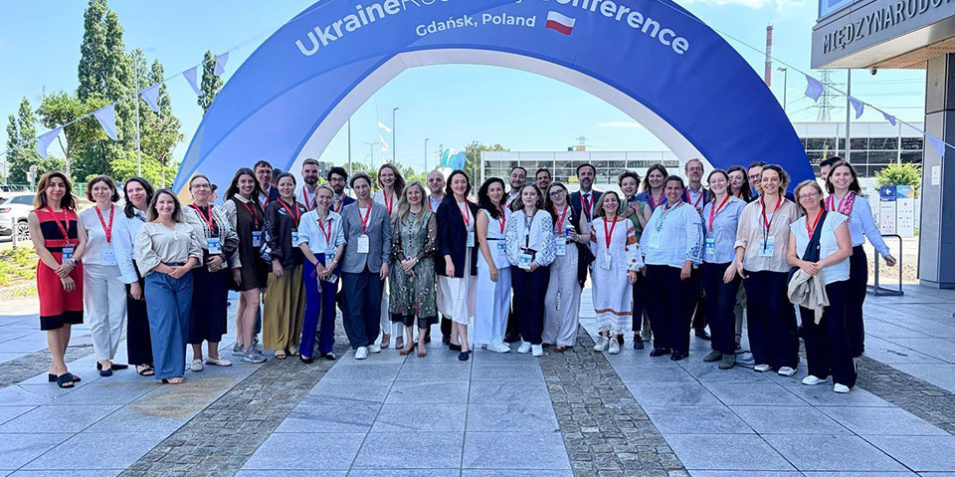
Online stakeholder event exploring Ukraine's environmental data needs for sustainable recovery, exploring data gaps and opportunities.
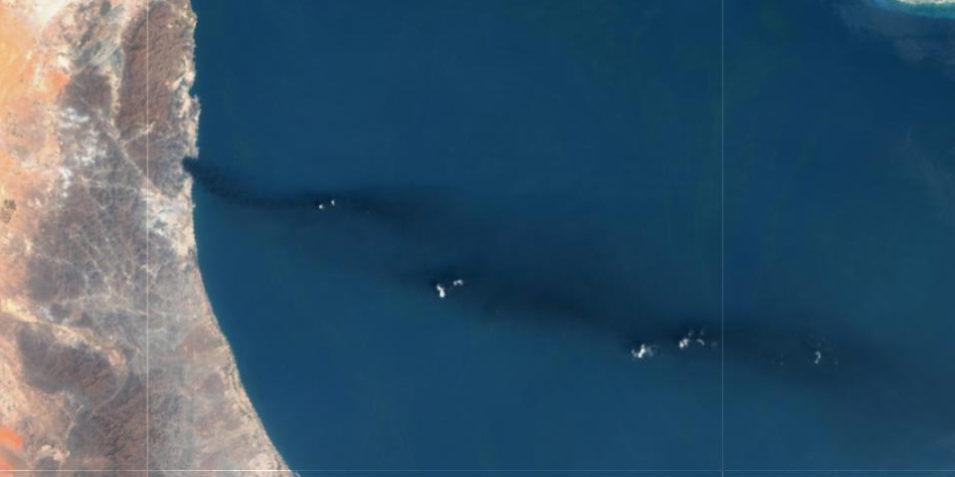
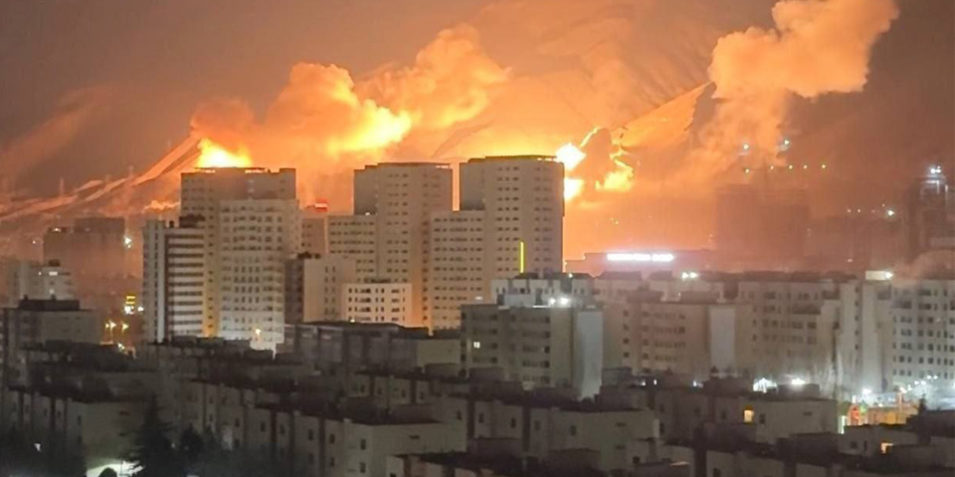
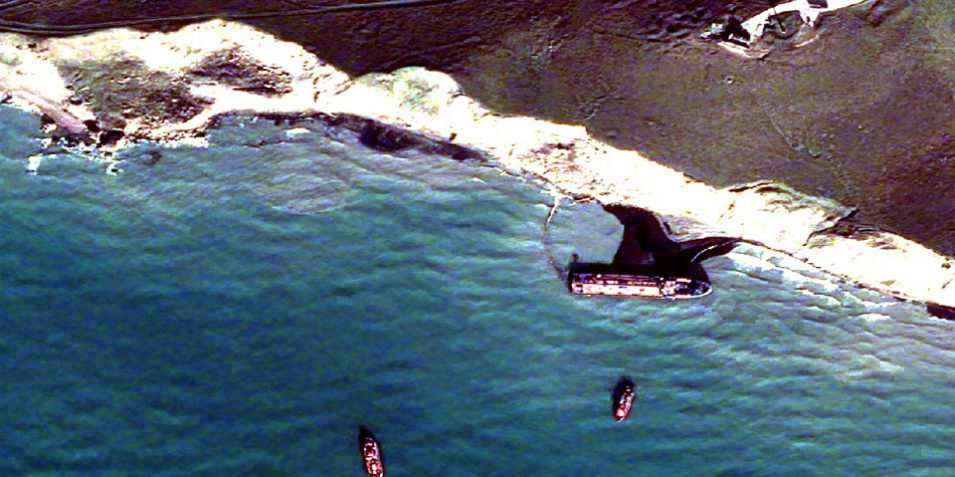
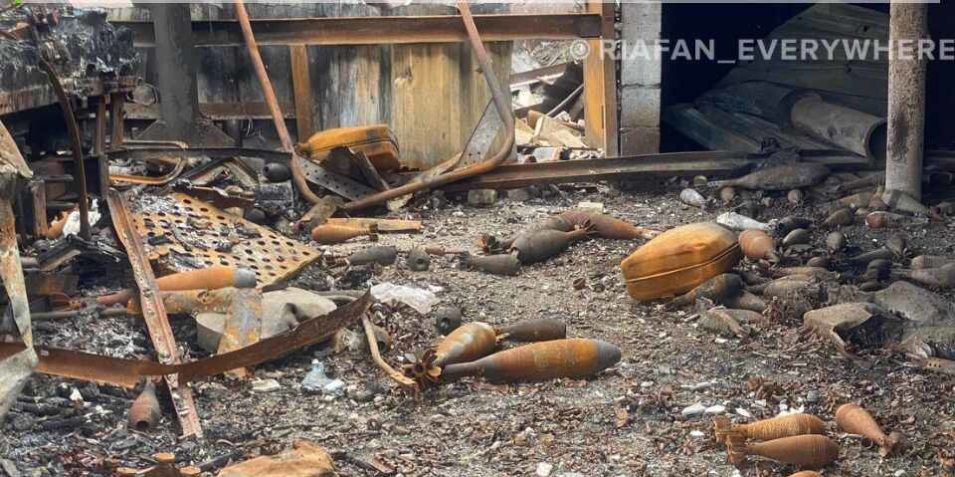
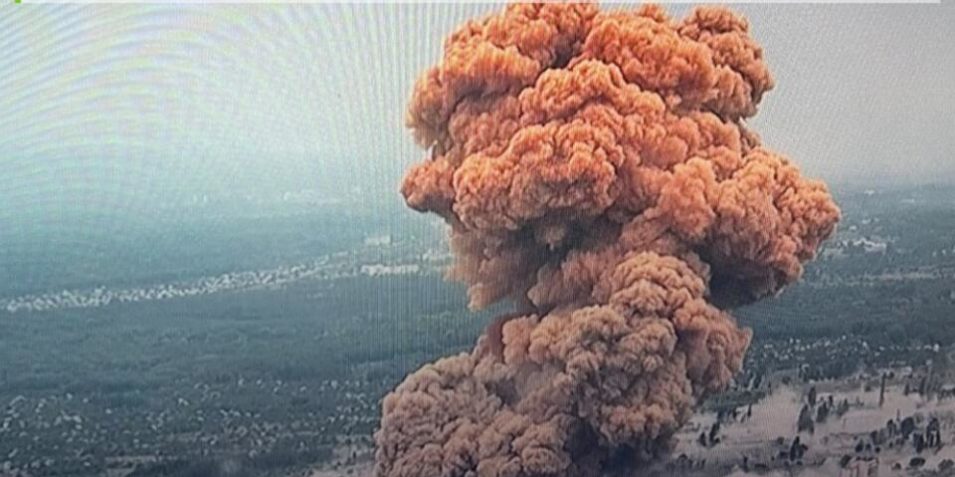
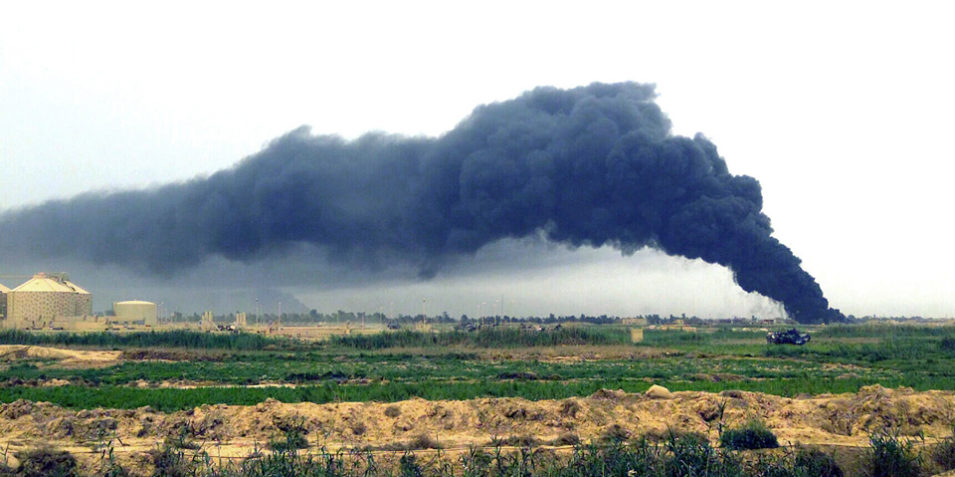
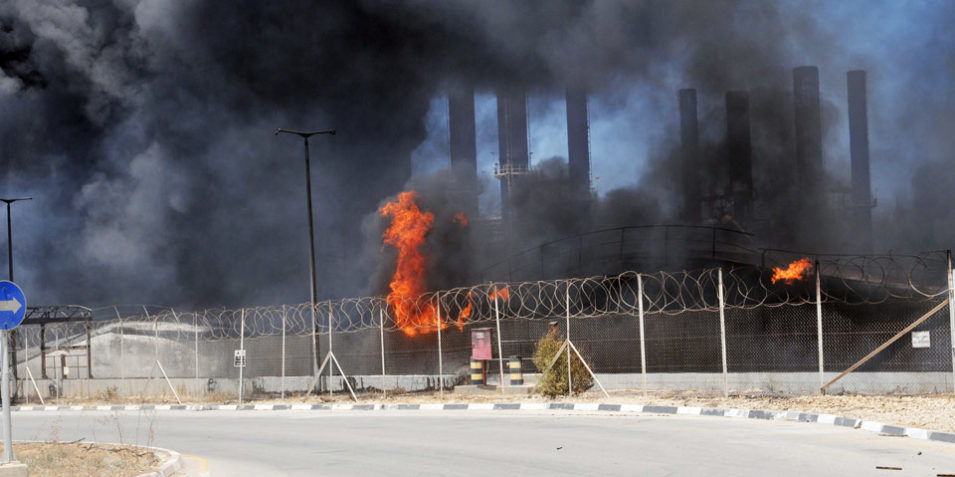
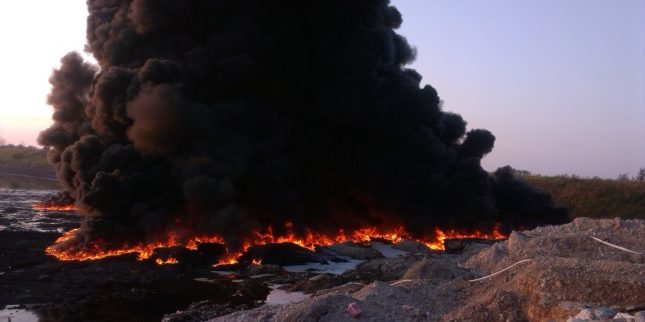
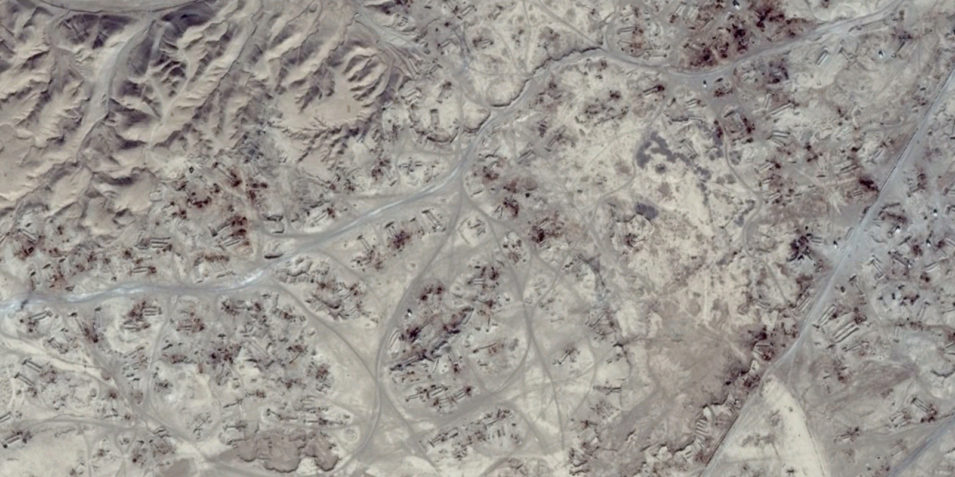
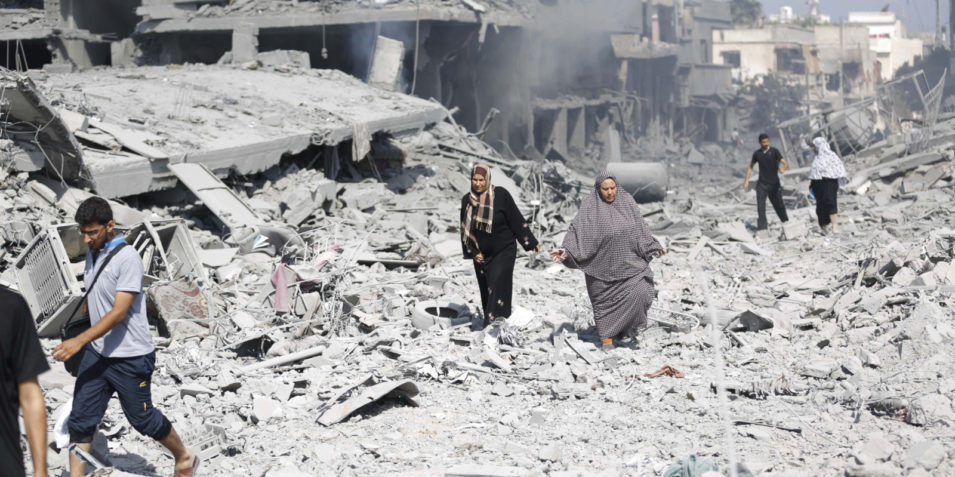
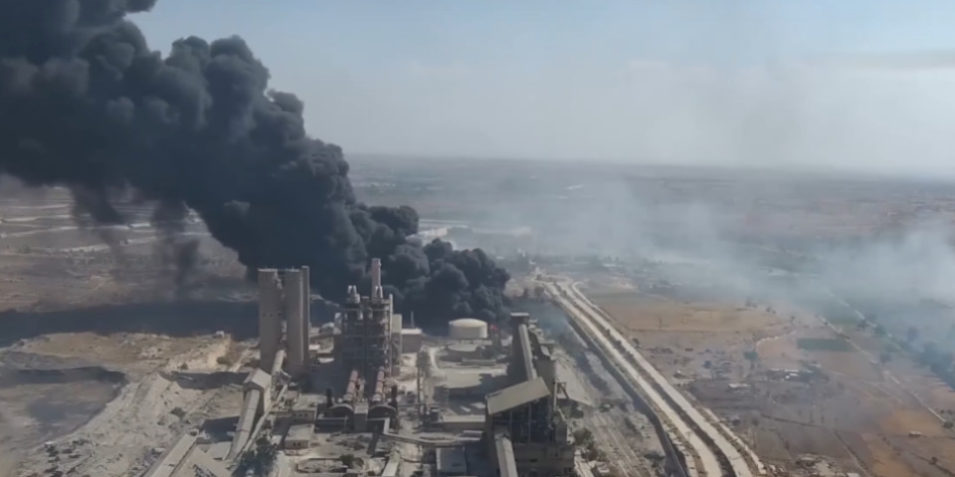
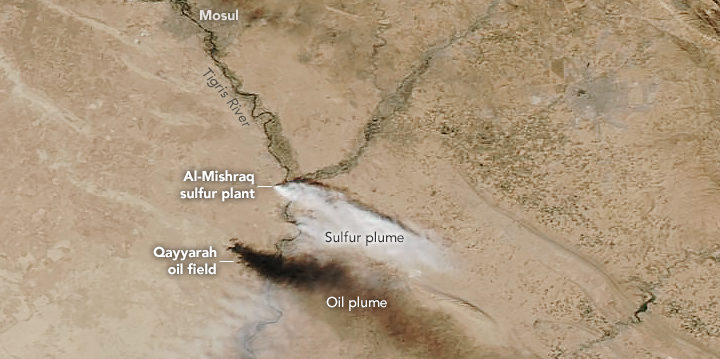
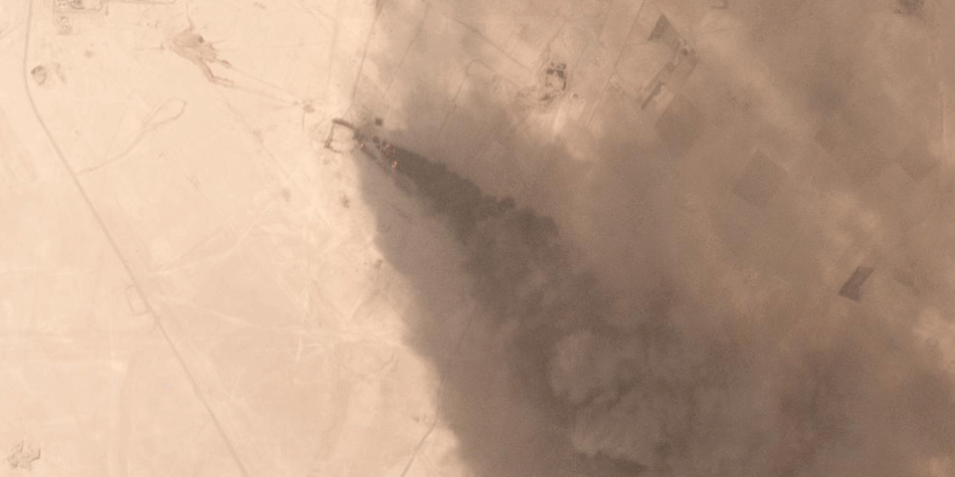
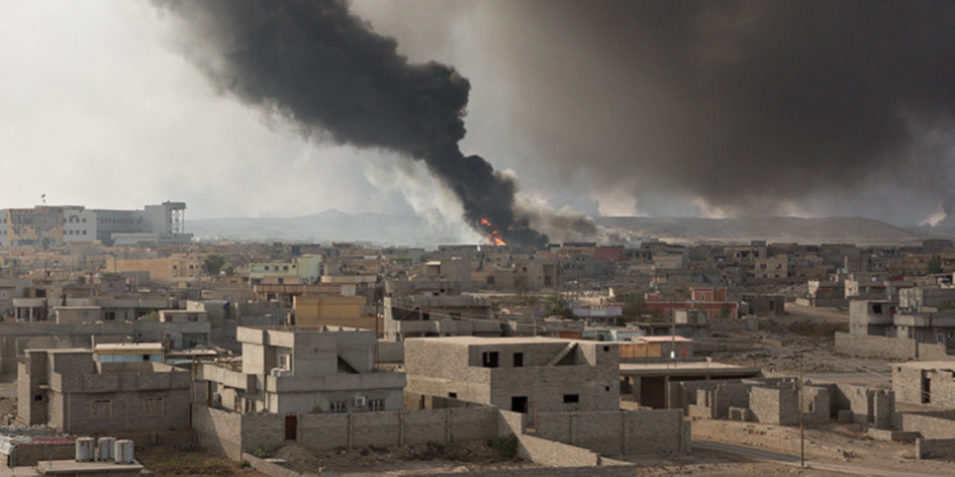
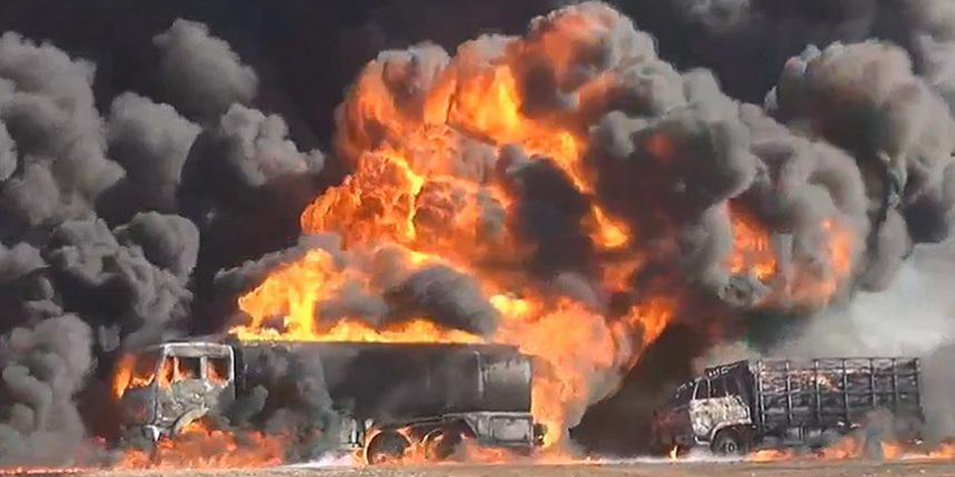
An updated overview of emerging environmental issues and perspectives arising from Operation Epic Fury in Iran, Israel, and the Gulf States. Serious pollution incidents continue to place people and ecosystems at risk of acute and long-term harm, while emerging trends could lead to substantial environmental damage as the war continues.
Rapid overview of emerging environmental issues and risks in Iran and the wider region from Operation Epic Fury. Three days in and we're already seeing pollution incidents that are placing people and ecosystems at risk of acute and chronic harm.
A month into the Israeli-US war against Iran we summarise current and emerging conflict trends and their potential implications for people and the environment.
The war against Iran is disrupting global fossil fuel supply chains and, while states increasingly recognise that renewables reduce exposure to geopolitical shocks, Grace Alexander finds that there are dangers that emergency energy policies are chosen that lock-in emissions and energy insecurity.
Online stakeholder event exploring Ukraine's environmental data needs for sustainable recovery, exploring data gaps and opportunities.
An updated overview of emerging environmental issues and perspectives arising from Operation Epic Fury in Iran, Israel, and the Gulf States. Serious pollution incidents continue to place people and ecosystems at risk of acute and long-term harm, while emerging trends could lead to substantial environmental damage as the war continues.
Rapid overview of emerging environmental issues and risks in Iran and the wider region from Operation Epic Fury. Three days in and we're already seeing pollution incidents that are placing people and ecosystems at risk of acute and chronic harm.
A month into the Israeli-US war against Iran we summarise current and emerging conflict trends and their potential implications for people and the environment.
The war against Iran is disrupting global fossil fuel supply chains and, while states increasingly recognise that renewables reduce exposure to geopolitical shocks, Grace Alexander finds that there are dangers that emergency energy policies are chosen that lock-in emissions and energy insecurity.
Online stakeholder event exploring Ukraine’s environmental data needs for sustainable recovery, exploring data gaps and opportunities.
An updated overview of emerging environmental issues and perspectives arising from Operation Epic Fury in Iran, Israel, and the Gulf States. Serious pollution incidents continue to place people and ecosystems at risk of acute and long-term harm, while emerging trends could lead to substantial environmental damage as the war continues.
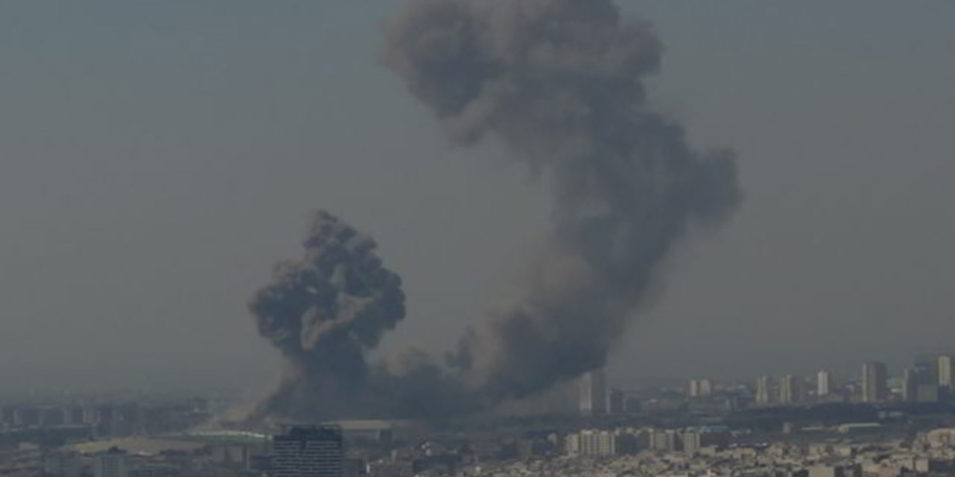
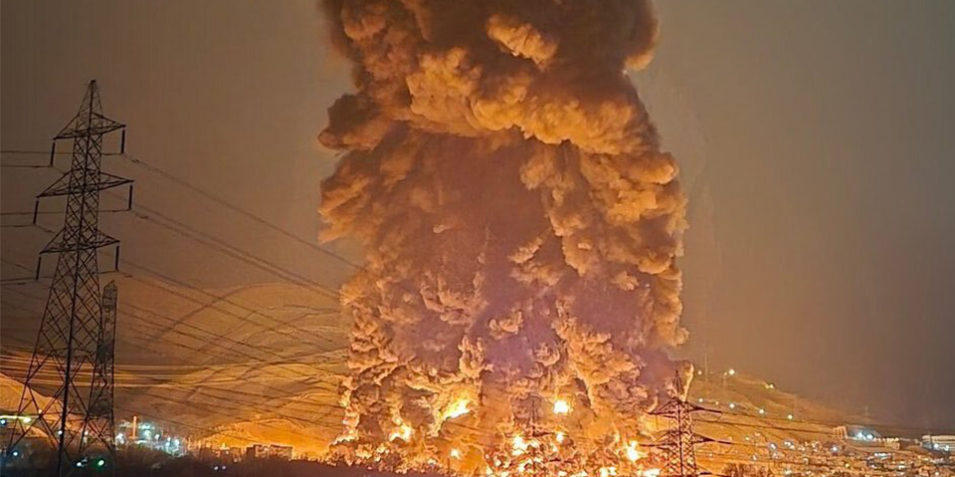
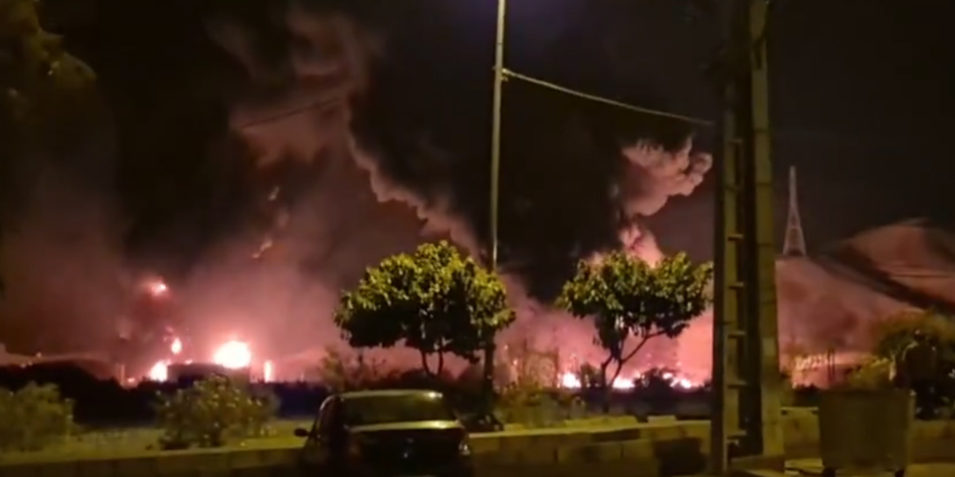
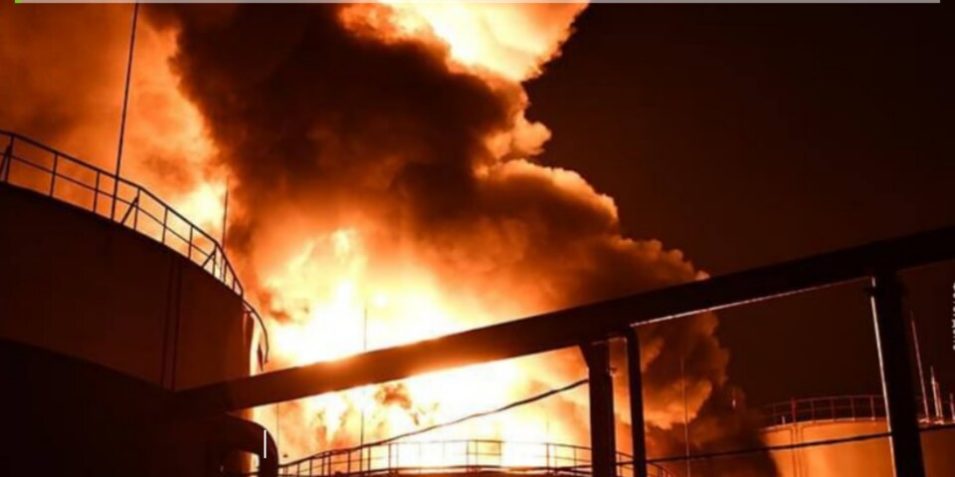
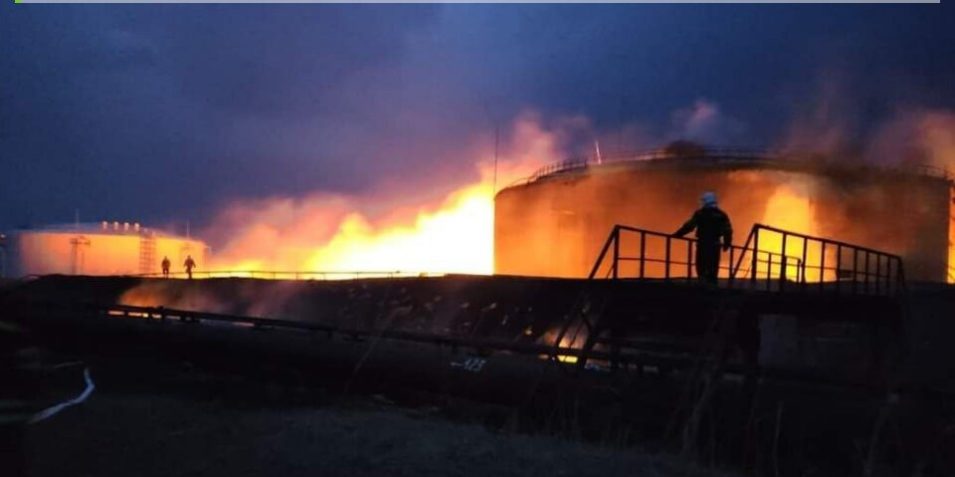
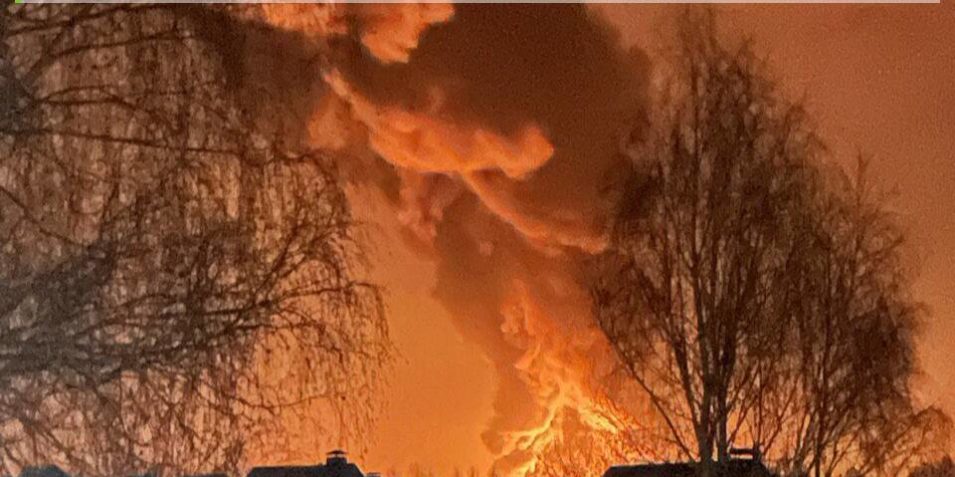
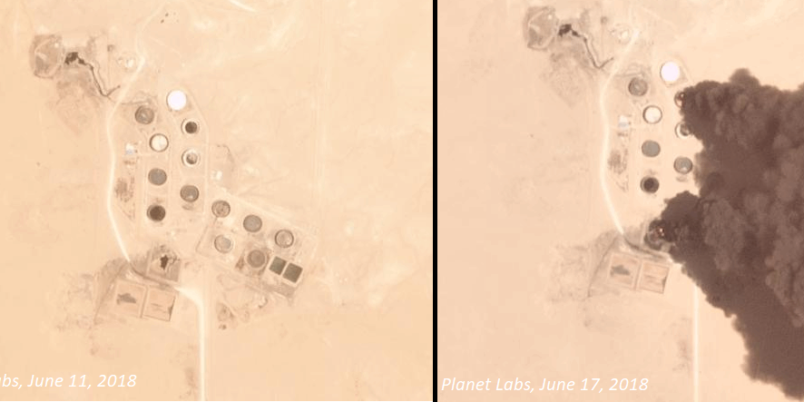
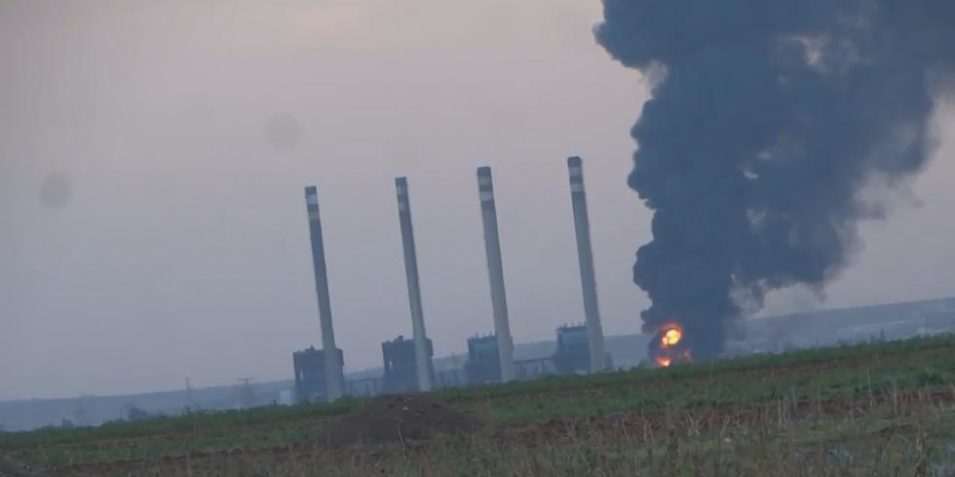
Israeli attacks on four oil facilities in Tehran have exposed millions of Iranians to harm. In this post we explore the attacks and unpack the health and environmental risks faced by the civilian population.
Rapid overview of emerging environmental issues and risks in Iran and the wider region from Operation Epic Fury. Three days in and we’re already seeing pollution incidents that are placing people and ecosystems at risk of acute and chronic harm.
As governments turn their attention to the intersections between nature, peace and security, civil society needs to speak up if we’re to avoid the dead-end securitisation of the climate crisis; to do so, argues Doug Weir, many of us will need to learn a new language.
Grace Alexander explains why exempting military products from the EU’s new Carbon Border Adjustment Mechanism (CBAM) undermines the bloc’s industrial decarbonisation goals and demonstrates a disconnect between its climate and defence policies.
The ICC has published a new policy on how environmental considerations can be integrated into its approach to humanity’s most serious crimes. Lydia Millar examines what the policy says, how it could contribute to accountability processes, and why it’s not the end of the story.
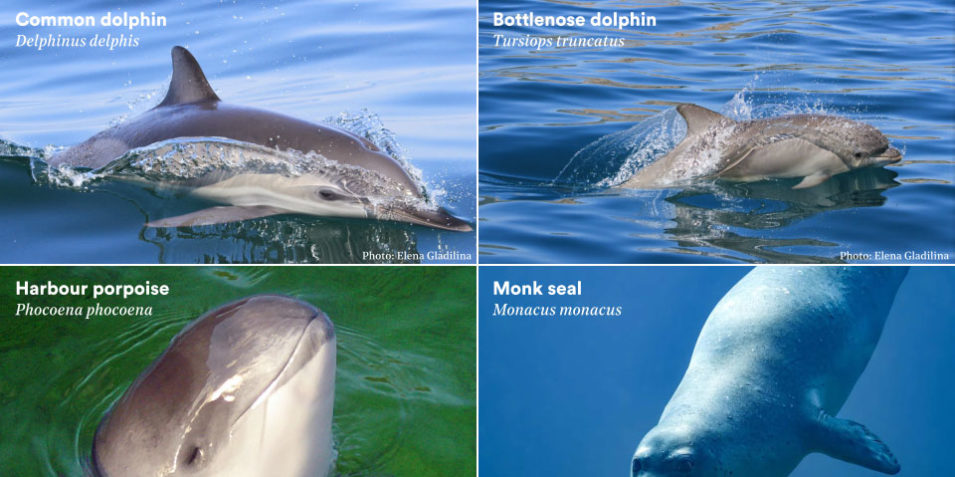
There is significant concern over the impact that Russia’s war against Ukraine has had on Black Sea dolphin and porpoise populations. Regional experts have proposed a recovery plan but as Linas Svolkinas explains, effective mitigation efforts require that we first understand conflict-linked threats.
NPA and CEOBS study examining the roll-out of the Green Field Tool across NPA mine action programmes in Angola, Bosnia and Herzegovina, Cambodia, Ukraine, Vietnam, Yemen, and Zimbabwe. The findings highlight both progress and challenges in integrating environmental and climate risk assessments into operations.
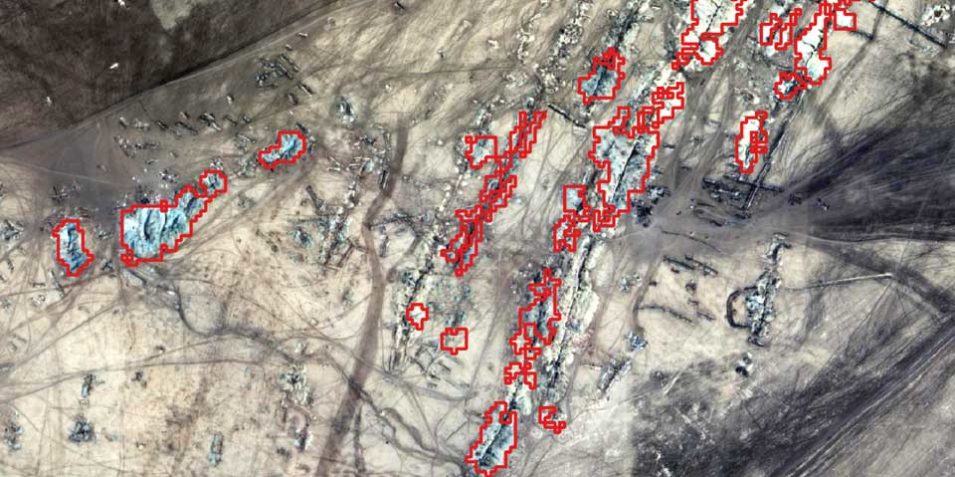
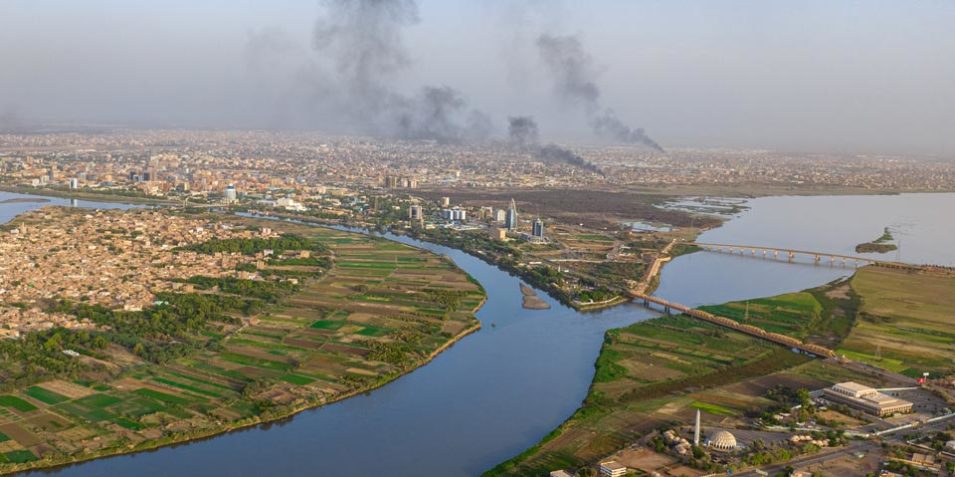
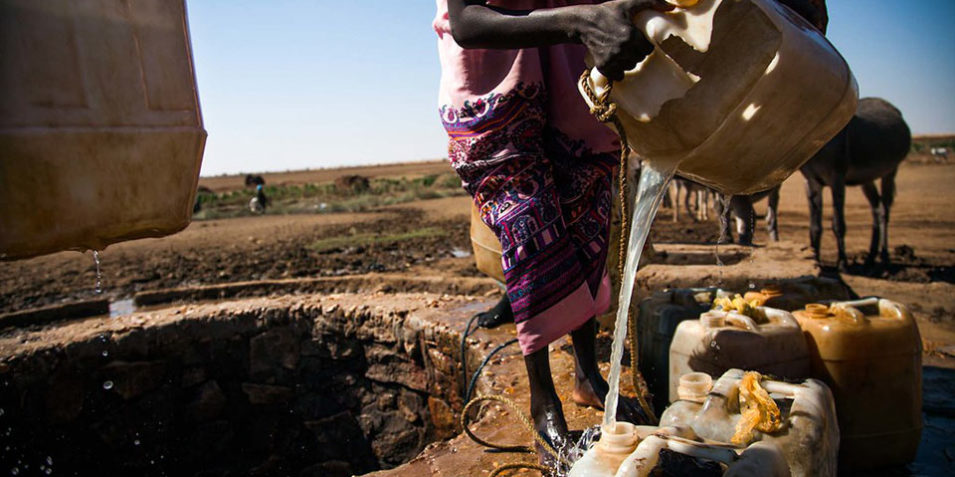
Gold is helping fuel the war in Sudan, and its extraction is causing environmental degradation and chemical pollution that threatens human health. In this report, Jonathan Walsh investigates whether open-source remote sensing can help us track Sudan’s artisanal gold mines.
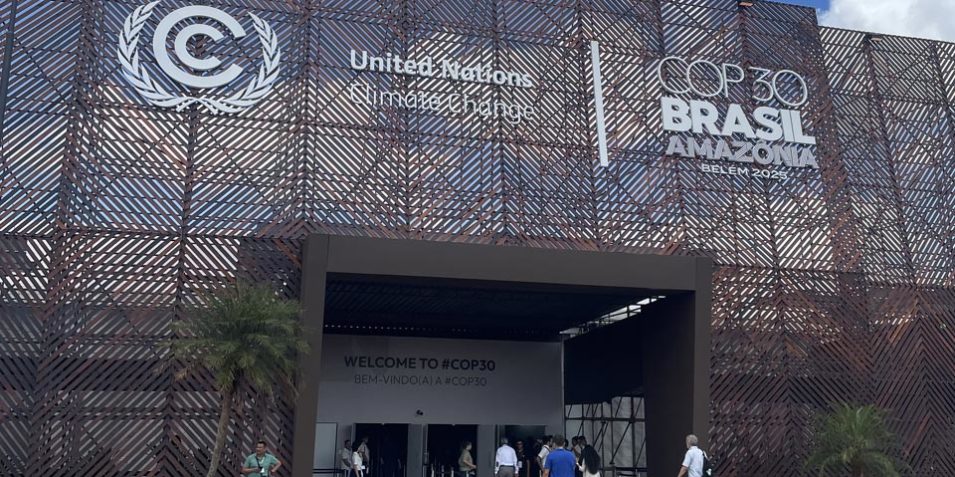
In this post Ellie Kinney reflects on COP30, what it achieved, where it failed, what comes next and on the ever growing profile of military and conflict GHG emissions.
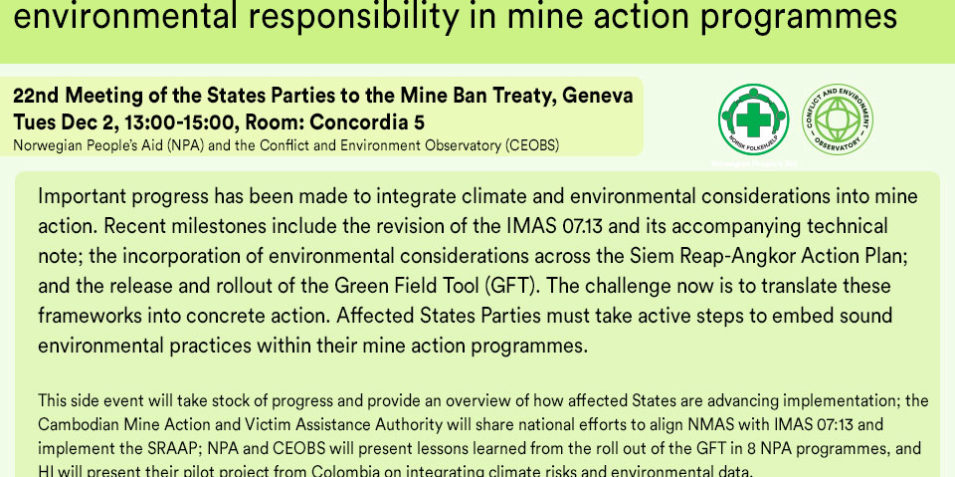
Side event on embedding new environmental standards in mine action programmes, our Green Field Tool and on how to respond to growing environmental and climate needs. Run in collaboration with NPA at the 22 Meeting of State Parties to the Mine Ban Treaty.
Joint briefing outlining the pathways through which explosive weapons cause environmental harm, with recommendations for governments on how environmental considerations can be integrated into the implementation of the 2022 EWIPA Declaration.
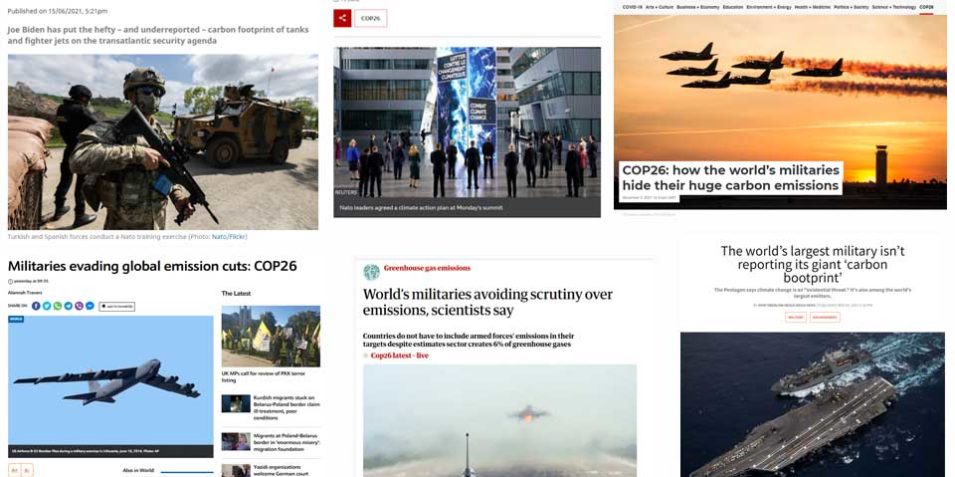
Policy briefing exploring the UNFCCC’s military emissions reporting blind spot, how rising military spending is exacerbating the problem and what needs to be done to address it.
Are you a stakeholder working on Ukraine’s green recovery? If so we would welcome your views on a project that we are working on.
With wars affecting every corner of the globe and military spending at a record high of $2.7 trillion, 2024 also saw humanity breach the Paris Agreement’s 1.5 degree target. In this post Ellie Kinney asks what, if anything, COP30 will deliver on conflict, climate and militarism.
Our 2025 analysis of the military emissions data that countries report to the UNFCCC reveals that reporting is getting worse. Grace Alexander explores how, at a time of growing military spending, the expanding military emissions gap is undermining climate accounting and ambition.
Countries in South Asia are being hard hit by the climate crisis. In this guest post, Usman Ali examines how Pakistan and India’s security choices are leading to increasing military spending and emissions, while undermining human and environmental security.
The scale of environmental devastation caused by armed conflicts and military activities is accelerating humanitarian crises and ecological collapse in ways we can no longer afford to ignore.
Policy briefing examining the intersection between militaries, armed conflicts, nature and the climate crisis, including military land management, the conduct of hostilities, and post-war recovery policies, with entry points for the IUCN and its members.
This CSF and CEOBS report aims to foster a greater understanding of how the environment interacts with conflict and peace in Sudan. Its findings illustrate that environmental issues remain urgent and critical, with both short- and long-term implications for aid, political engagement and recovery.
This month, representatives from many of the IUCN’s 1,400-strong membership will be in Abu Dhabi for the World Conservation Congress. In this post Doug Weir previews what we can expect on nature, peace and security, and introduces the themes and activities that we and partners have been working on.
The Assad regime’s embrace of Captagon production as a source of sanctions-busting revenue saw Syria become the world’s leading exporter of the drug. In this post, Leon Moreland examines whether we ought to be concerned about the industry’s largely undocumented environmental legacy.
On Friday October 24th the GROMADA project will be holding an afternoon conference in Copenhagen exploring the potential of citizen science for environmental accountability and empowerment in areas affected by armed conflict, informed by its two-year project on Ukraine.
The ICJ’s recent advisory opinion on climate change is the most significant development in climate law in this decade. In this post, Madara Melnika explains what the ICJ decided and how it might influence military and conflict emissions.
Europe’s defence spending is on the rise, its military emissions set to follow. In this guest post, Hannah Huibregtsen examines the 82% gap in EU military emissions reporting and argues that without it, the EU risks undermining both its climate goals and long-term security.
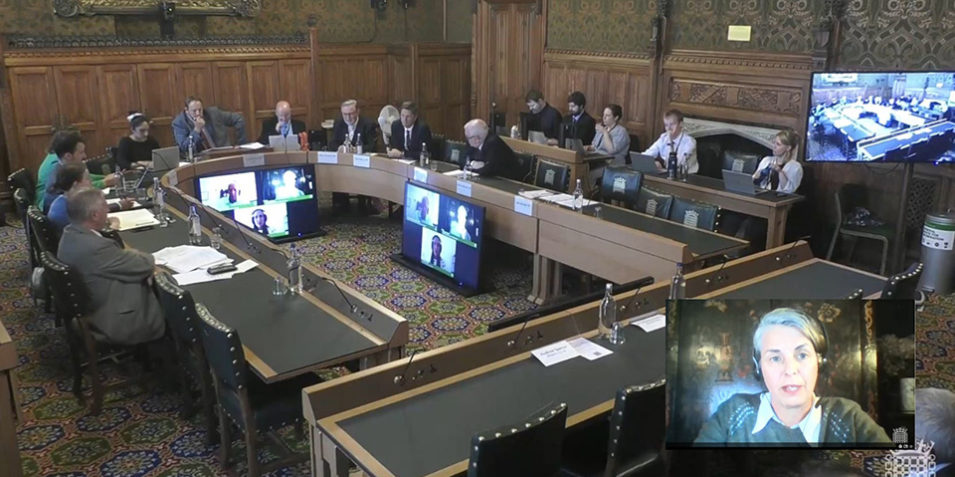
Attention on the military uses of PFAS ‘forever chemicals’ is largely restricted to firefighting foams, in our evidence to a UK parliamentary hearing on PFAS we argued that more research is urgently needed on releases from applications such as munitions.
In December 2024 two Russian oil tankers spilled 4,000 tonnes of heavy fuel oil in the Kerch Strait, Crimea. Persistent and difficult to clean up, the oil threatens northern Black Sea ecosystems. Iryna Babanina examines how the situation is developing six months on and how the war influenced the disaster.
A week into the conflict between Israel and Iran we review some of the key environmental issues and trends, moving beyond risks from attacks on nuclear facilities to the wider consequences of both parties’ military conduct.
Rapid rises in global military spending threaten climate action, undermining our collective security, this post highlights the findings of a new joint paper that explores how everything from direct emissions to diverted climate finance are threatening SDG 13 on Climate action.
Paper outlining the impact of rising military expenditure on the achievement of Sustainable Development Goal 13: Climate action, looking at the following targets: strengthening resilience; national policies and planning; climate finance; and capacity building for effective climate change management.
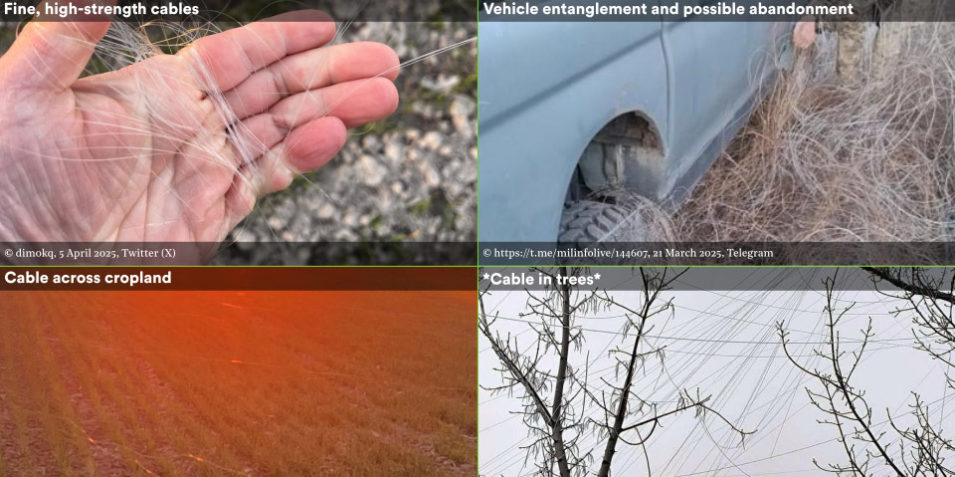
Russia’s war in Ukraine has encouraged a rapid increase in the deployment of drones that use fibre optic cables to protect them from being jammed or downed by electronic warfare: the drones trail kilometres of plastic cable across frontlines – what are the environmental risks of this tech?
Since 2023, CEOBS has been monitoring the environmental consequences of the war in Sudan. This overview explores some of the key themes and trends that we have identified, and suggests areas where further action and research are needed.
The European Citizen Science Association (ECSA) has launched a new working group to explore and promote the use of citizen science in areas affected by armed conflicts. Anna Berti Suman and Doug Weir explain why it has been launched and how people can contribute.
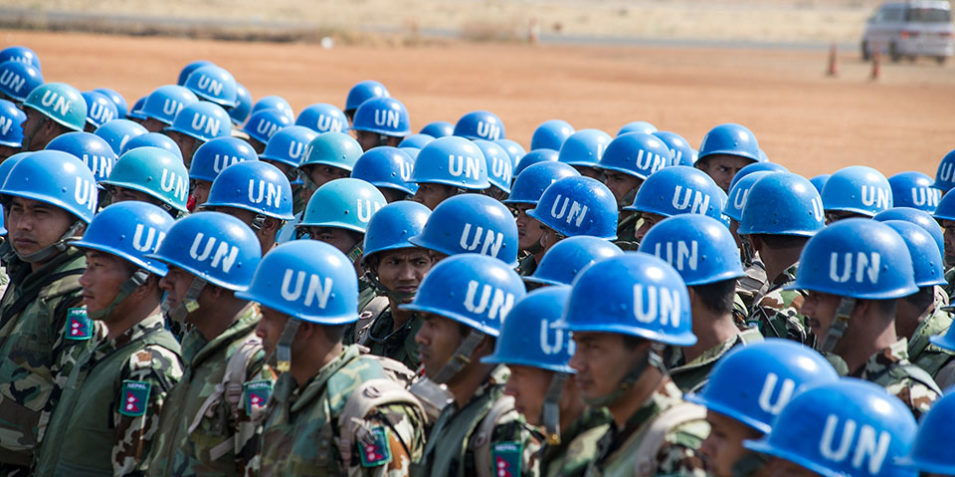
To mark this week’s UN Peacekeeping Ministerial in Berlin, Ellie Kinney explains its potential role in improving transparency over the reporting of military GHG emissions and shares recommendations that would help encourage decarbonisation.
Ever wondered what the environmental impacts of war are? Read our guide to the many different ways through which armed conflicts and militarism can damage the environment.
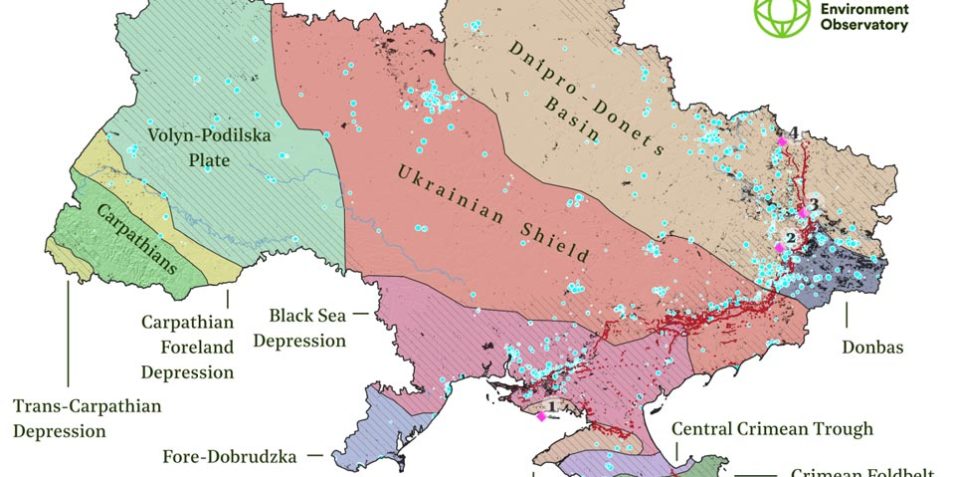
Huge swathes of Ukraine’s geological heritage have been affected by fighting or militarily occupied, in many places causing irreversible damage. CEOBS’ Rob Watson and Stella Shekhunova of the National Academy of Sciences of Ukraine examine the nature and extent of this loss of geodiversity.
We are in the middle of an unprecedented reconfiguration of global political attitudes towards the humanitarian-environmental sector. In this blog, we document the ramifications of these changes as recorded in a community survey and online meeting in collaboration with the Environmental Peacebuilding Association.
The Decentralized Damage Mapping Group, of which CEOBS is a member, has been awarded the European Space Agency’s 2025 Earth Observation Excellence Award.
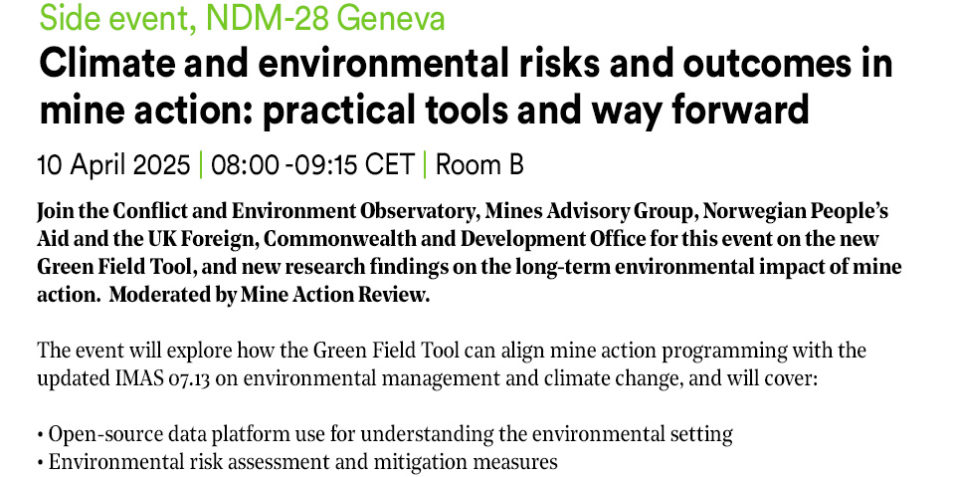
NDM-28 side event on the new Green Field Tool, and new research findings on the long-term environmental impact of mine action.
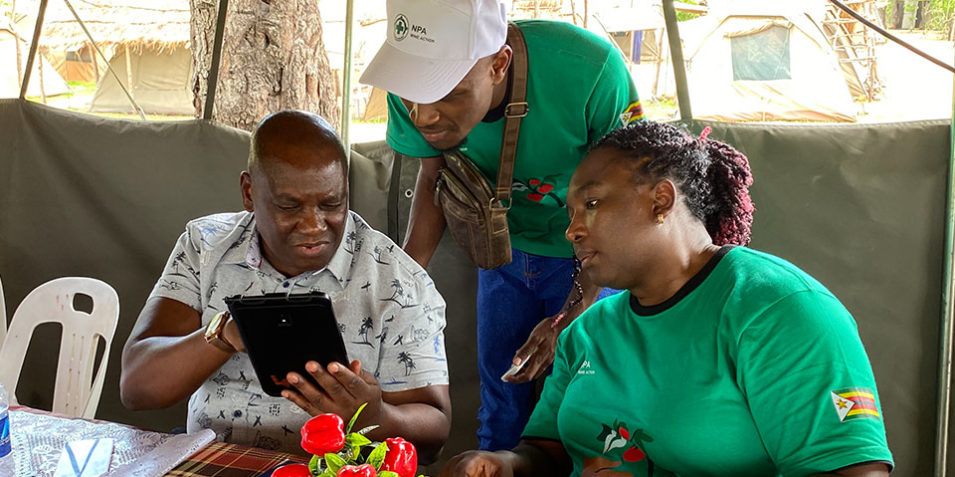
The Green Field Tool (GFT) is an environmental screening and assessment tool that has been developed by Norwegian People’s Aid and CEOBS, and designed to support the planning and implementation of mine action field operations.
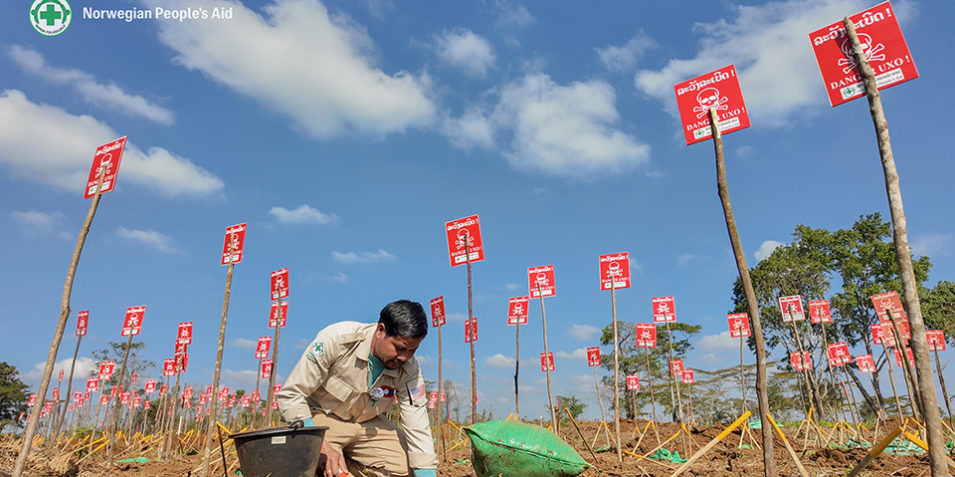
Clearing landmines is critical for safe access to land and local resources but doing so should comply with good environmental practice. Linsey Cottrell explains how our new Green Field Tool can help the mine action sector minimise the environmental footprint of demining and support affected communities.
Ellie Kinney explores why ramping up military spending while military decarbonisation is in its infancy risks locking in carbon-intensive military equipment for decades, why spiralling military spending is placing climate action and our collective security at risk, and what needs to happen next.
As part of the GROMADA project CEOBS developed and hosted an online hackathon to identify citizen science opportunities to track water quality issues linked to the war in Ukraine. In this post, the team report on the event and its results.
CEOBS is part of an Erasmus+ funded consortium exploring the potential for participatory environmental research in Ukraine to contribute to environmental protection, legal accountability and community engagement. In this post, Iryna Babanina introduces the project, its aims and outputs to date.
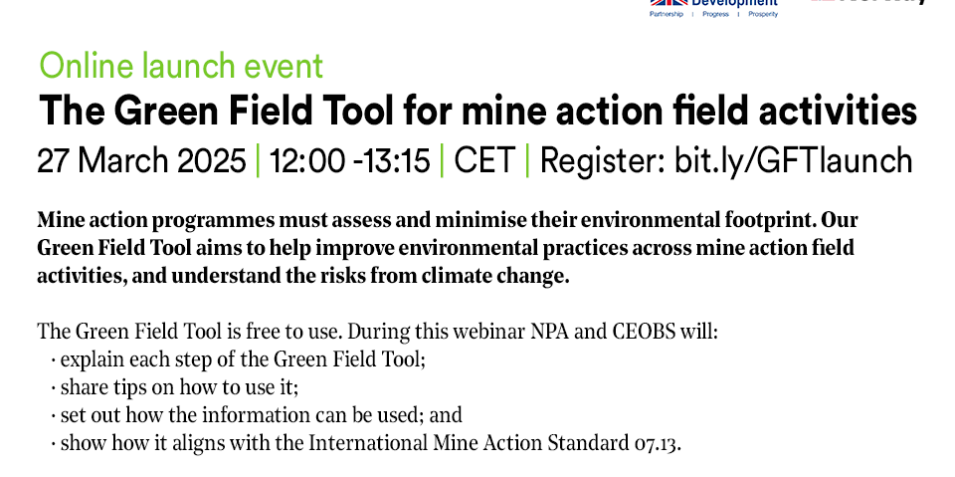
Online launch event for CEOBS and NPA’s new Green Field Tool to help minimise the environmental footprint of the mine action sector.
Pressure to ban PFAS ‘forever chemicals’ over their toxicity and environmental persistence is growing but their military applications beyond firefighting foams have received limited attention. Linsey Cottrell explores their broader military uses, and why regulators shouldn’t let militaries keep using them.
Alongside its civilian impact, the intensification of the Israeli-Hezbollah conflict after October 2023 had grave consequences for the environment. This report details preliminary CEOBS research into conflict-linked environmental harm in southern Lebanon
In a new report Norwegian People’s Aid and CEOBS highlight significant pollution, infrastructure damage, and threats to agriculture and ecosystems caused by the use of explosive weapons in Ukraine’s Kherson and Mykolaiv regions.
Register for our joint webinar and report launch: “Assessing Environmental Degradation from Explosive Weapons in Southern Ukraine”, on January 16th.
In many ways, peace and security had never enjoyed a higher profile than they did at COP29 in Baku and yet developed countries failed fragile and conflict-affected states. In this post Ellie Kinney takes stock of what happened at COP29 and looks ahead to COP30 next year.
The Conflict and Environment Academic Network (CEAN) has celebrated its first anniversary with a full day of talks and posters at the 2024 American Geophysical Union Fall Meeting. In this post, Rob Watson charts CEAN’s progress over the last 12 months and outlines the network’s aims for the following year.
Information the session “Tracking the Footprint of War: Earth and Environmental Science Perspectives on Monitoring Conflict Impacts”
25 years since the Anti-Personnel Mine Ban Convention entered into force, its Fifth Review Conference is taking place amidst the accelerating crises of climate change, biodiversity loss and pollution. Linsey Cottrell reviews how the mine action sector is responding to the triple crisis, and what more is needed.
This side event at the Mine Ban Treaty’s 5th Review Conference in Siem Reap Cambodia on November 27th will explore the progress that the humanitarian mine action sector is making on environmental mainstreaming.
World leaders, negotiators, and civil society are heading to Baku for what its Azerbaijani hosts have labelled the “COP of Peace”. Set against the backdrop of an increasingly unpeaceful world, and the urgent need for states to agree on a new climate finance goal, Ellie Kinney explores what we can expect on militarism, conflict and climate at COP29.
At this COP29 side event, militaries from Slovenia and Norway will discuss their decarbonisation journeys and emerging practice, including on transparent emissions reporting.
COP29 side event on 18 November will present new conflict emissions tracking methodology informed by research on Ukraine and Gaza.
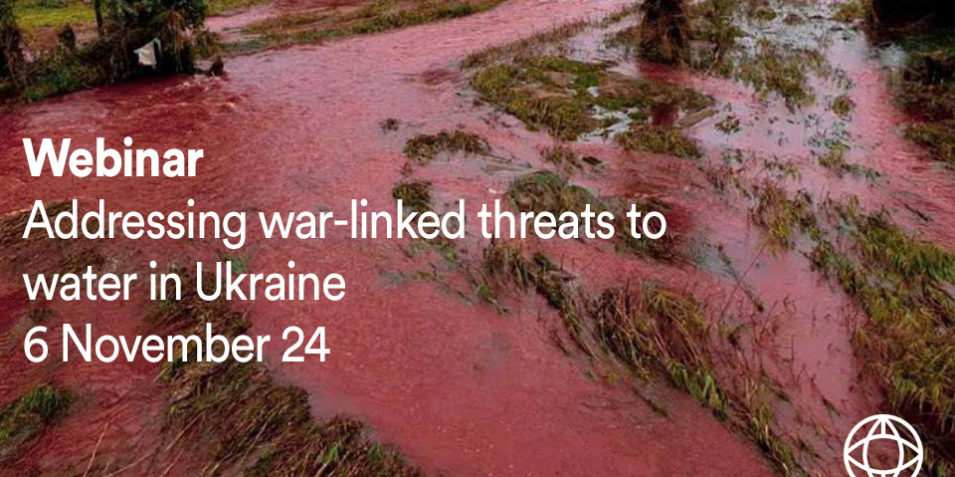
This webinar will show how the war is influencing water quality in Ukraine and about how water needs and threats may change over time, both in respect to Ukraine’s recovery but also as a result of climate change and future regulatory alignment with the European Union.
The Colombian presidency of COP16 and its Paz Con La Naturaleza initiative is a huge opportunity to begin to integrate peace and security considerations into the implementation of the Global Biodiversity Framework, to encourage research and to operationalise the Convention on Biological Diversity to support biodiversity protection in fragile and conflict-affected countries.
In this post Doug Weir examines whether framing the climate crisis primarily as a security threat slowed the growth of the partnerships and public consent needed to support rapid military decarbonisation.
Ми запрошуємо студентів та викладачів українських та закордонних вищих навчальних закладів, а також громадських активістів, до участі в онлайн-хакатоні 13-14 листопада, на якому учасники винаходитимуть рішення у сфері громадянської науки, що стосуватимуться випадків шкоди, спричиненої бойовими діями, які вплинули на якість води в громадах України.
We are looking for Ukrainian and international university students, teaching staff and activists to participate in an online hackathon on November 13-14th 2024 to identify citizen science solutions for war-related incidents that have impacted water quality in Ukrainian communities.
A year of escalating conflict across the Middle East has had a range of direct and reverberating consequences for the region’s environment. In this post we identify the current and emerging trends that are threatening human health and often fragile and degraded ecosystems.
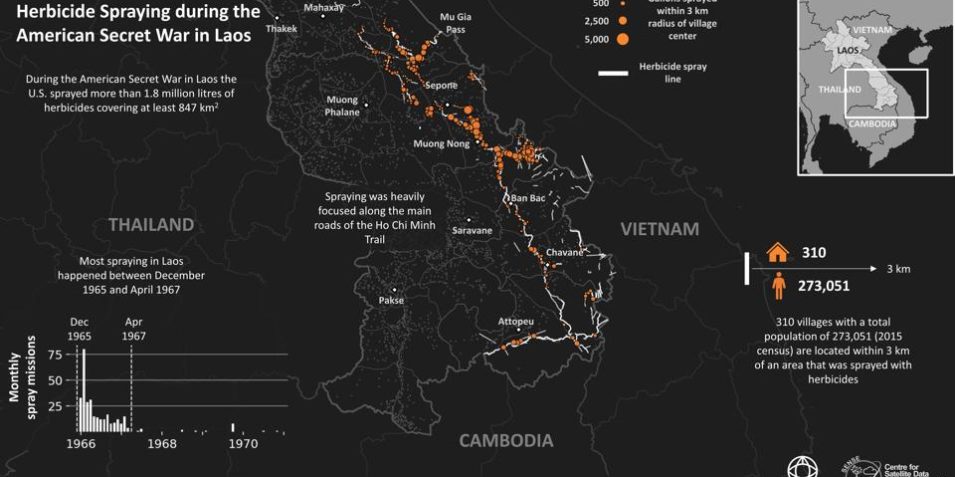
Successive US governments have been reluctant to come clean over the human and environmental cost of the secret war in Laos. This report shows how declassified spy satellite imagery can now help us track potential dioxin exposures from the use of Agent Orange in the country.
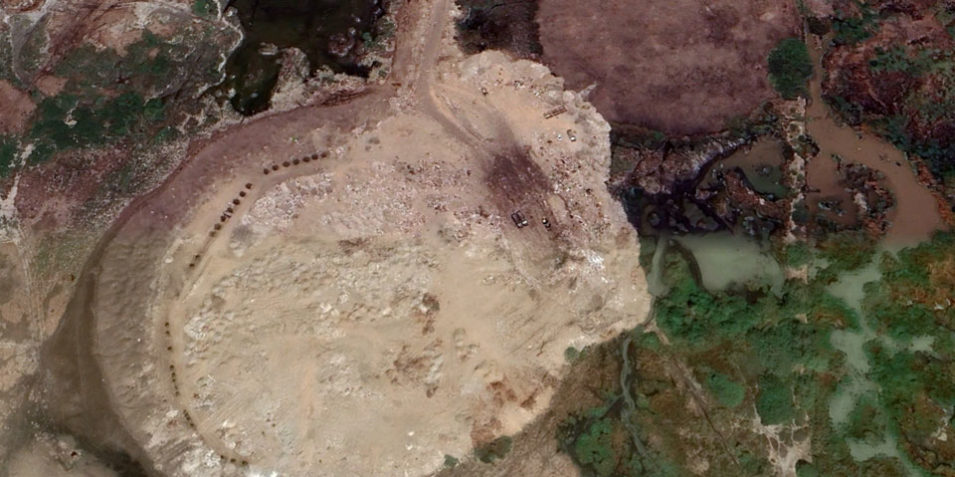
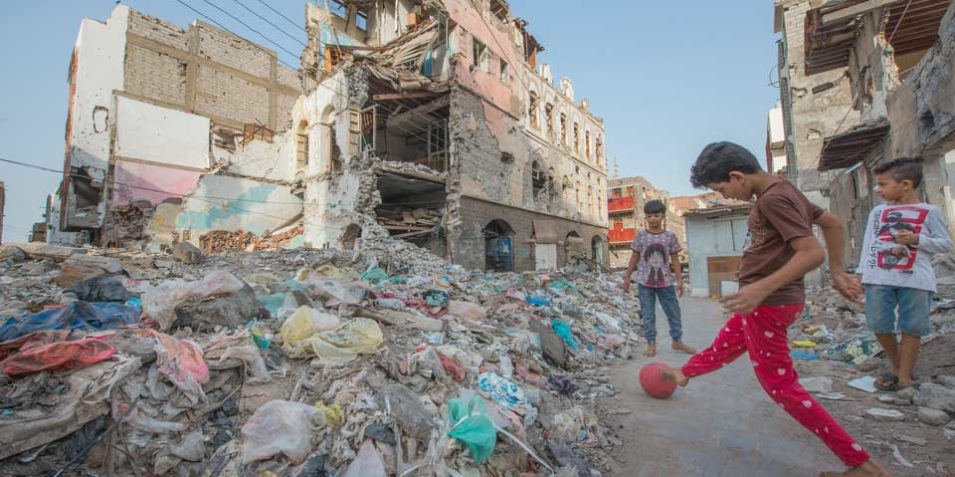
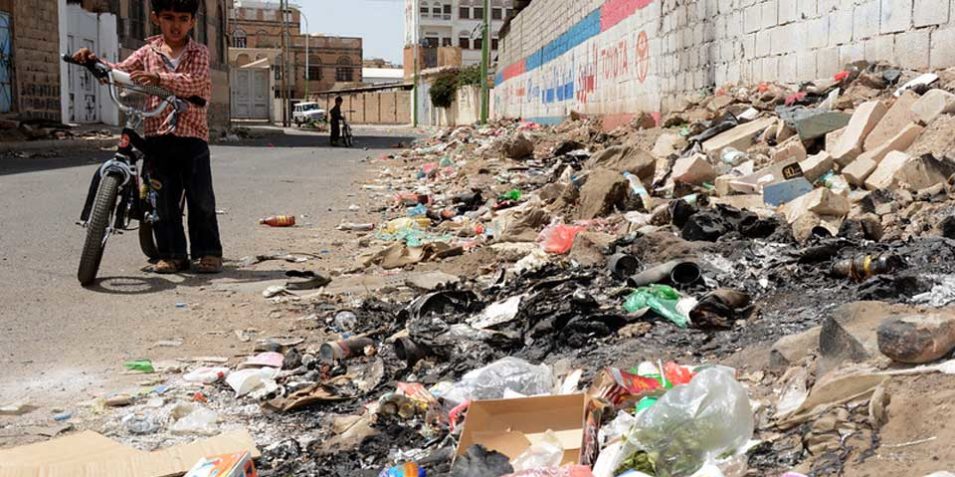
The war in Yemen has profoundly affected solid waste management, increasing open dumping and with it risks to the environment and public health. In this post, Hanna Schulten explores how satellites can identify dumpsites and so help inform remedial measures and waste management policies.
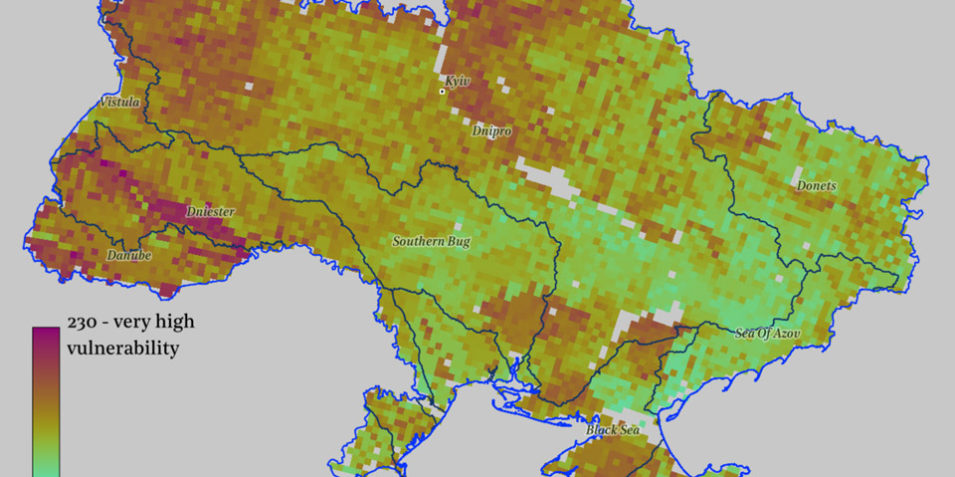
As part of the continual refinement of our remote assessment methodology for our Ukraine incident database, we often integrate new features and tools. Rob Watson and Jay Lindle introduce our latest project – a map of how vulnerable Ukraine’s groundwater is to pollution caused by the conflict.
We are delighted to announces our newly expanded Board of Trustees, including four new members appointed in July. The Board now comprises seven members with expertise from across the charitable, public and international development sectors.
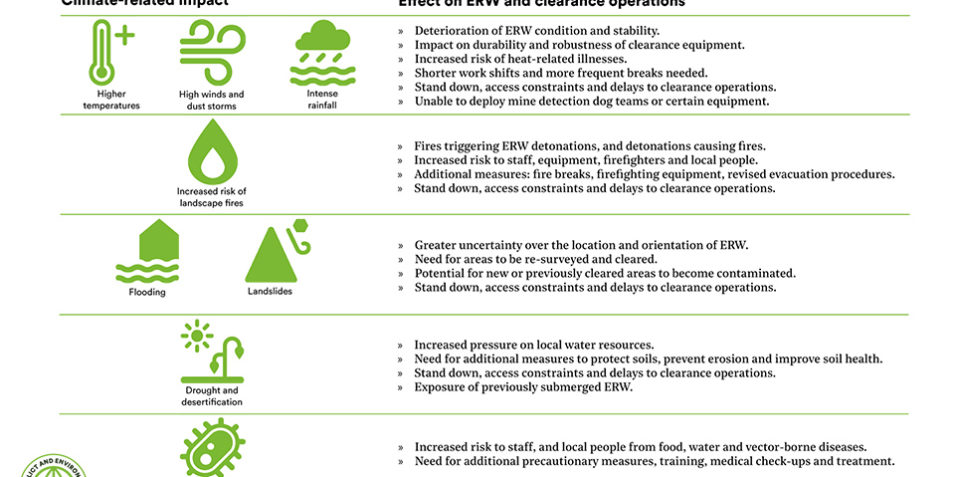
Climate change is already affecting areas contaminated by landmines and other explosive remnants of war. Linsey Cottrell explains the key issues, and how the mine action sector should prepare and adopt newly published environmental guidance.
Part 1 of a joint open source investigation by the Ukrainian Archive and CEOBS into the recurring Russian attacks on Ukraine’s Kremenchuk Oil Refinery, which focuses on air pollution and examines the applicable legal framework.
CEOBS has been remotely tracking and assessing environmentally-relevant incidents in Ukraine since February 2022. We share our data with relevant stakeholders, it informs our research and advocacy activities, and it is our hope that the dataset will also contribute to Ukraine’s green recovery. We’ve now used it to create an interactive map.
COP28 agreed that countries must submit new NDCs by February 2025. These national plans for climate action are important but at present military emissions are largely absent from them. As Linsey Cottrell finds, failing to include them this year could delay their inclusion until 2030.
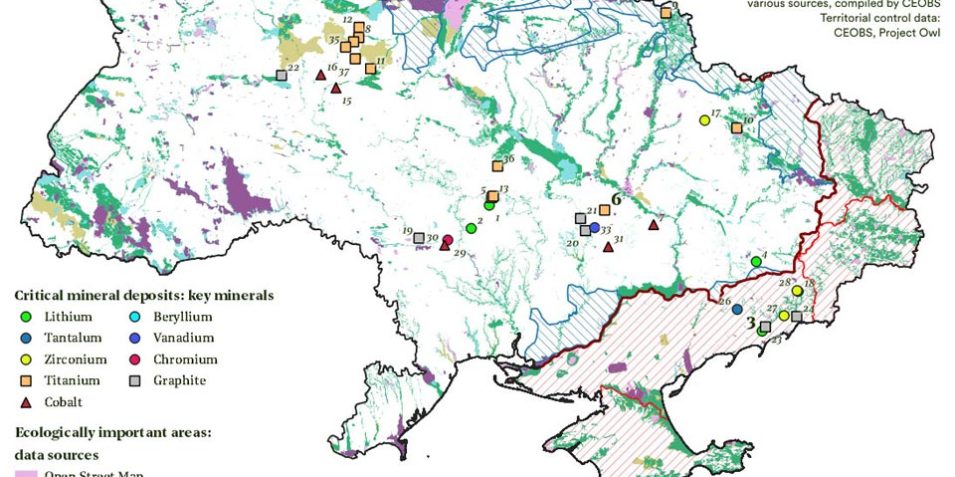
Since February 2022, Ukraine has sought to attract international investment and political partnerships by licensing deposits of critical minerals. In this analysis, Iryna Babanina and Rob Watson examine how the demands of the conflict, economy and recovery are exacerbating the threats that their exploitation could pose for Ukraine’s environment.
Joint statement on behalf of 13 organisations on food security and mine action, delivered at the 27th International Meeting of Mine Action National Directors and United Nations Advisers, Geneva.
Joint statement on the need to address the environmental dimensions of the use of EWIPA delivered at the 2024 Oslo Conference on Explosive Weapons in Populated Areas.
Summary of a joint project with NPA to assess the presence and likely extent of soil pollution and wider environmental and socio-economic harm from explosive weapons use in two areas of Ukraine.
Workshop examining the potential role of citizen science and civic monitoring as part of Ukraine’s environmental recovery.
Illustrated overview of the environmental damage caused by the war against Ukraine during its first 12 months, plus recommendations for how it should be addressed.
UNEA-6’s adoption of a Ukrainian resolution could help reinvigorate UNEP’s work on conflicts and create much-needed guidance for states and others stakeholders on assessing conflict-linked environmental damage.
Papers prepared by CEOBS and Zoï Environment Network that were commissioned as a contribution to Ukraine’s High-Level Working Group on the Environmental Consequences of the War, they assess Ukraine’s environmental monitoring landscape, and priorities to restore its natural environment.
Militaries are increasingly publishing climate mitigation strategies, so we’ve developed checklists to evaluate them. In this post Linsey Cottrell introduces the checklists, and also compares military decarbonisation with another challenging sector: healthcare.
Easy to use checklists that allow users to judge the likely effectiveness or military climate mitigation strategies and the quality of emissions reporting.
With 50 recommendations across three priority areas: monitoring, accountability and recovery, this compact by the High Level Working Group on the Environment Consequences of the War maps out environmental priorities for Ukraine.
In this post, Linsey Cottrell explore whether it is credible for states to refuse to report their military emissions on the grounds of national security.
Наш сьомий випуск спільних брифінгів CEOBS та Zoï Environment Network щодо України досліджує вплив конфлікту на екосистеми та біорізноманіття України, а також важливість відновлення, дружнього до природи.
Report with recommendations examining the role that local authorities and the private sector have in protecting environmental human rights in Syria.
Our seventh in a series of joint CEOBS-Zoï Environment Network briefings on Ukraine explores how the conflict is affecting Ukraine’s ecosystems and biodiversity, and the importance of ensuring a nature positive recovery.
Examples of environmental harm in Ukraine: Remote environmental assessment of the damage at the Vuhlehirska Thermal Power Plant.
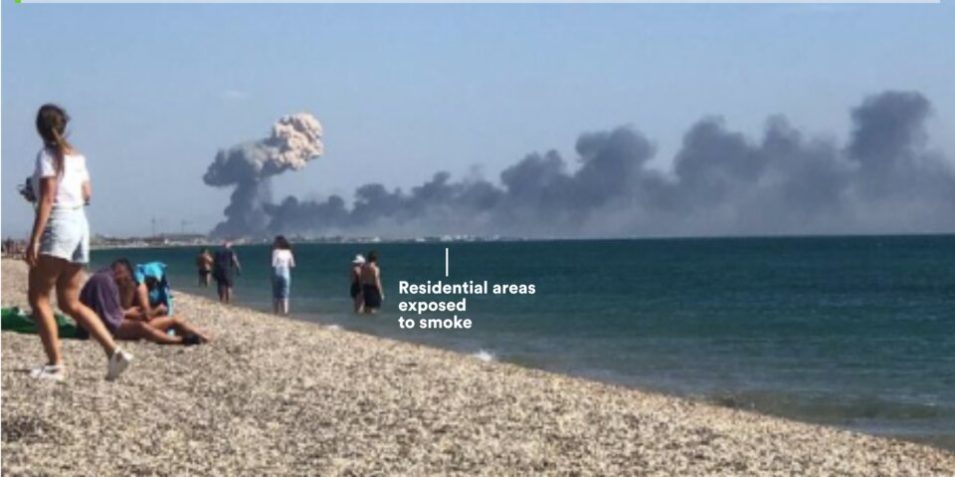
Examples of environmental harm in Ukraine: Remote environmental assessment of the damage at Saky Airbase.
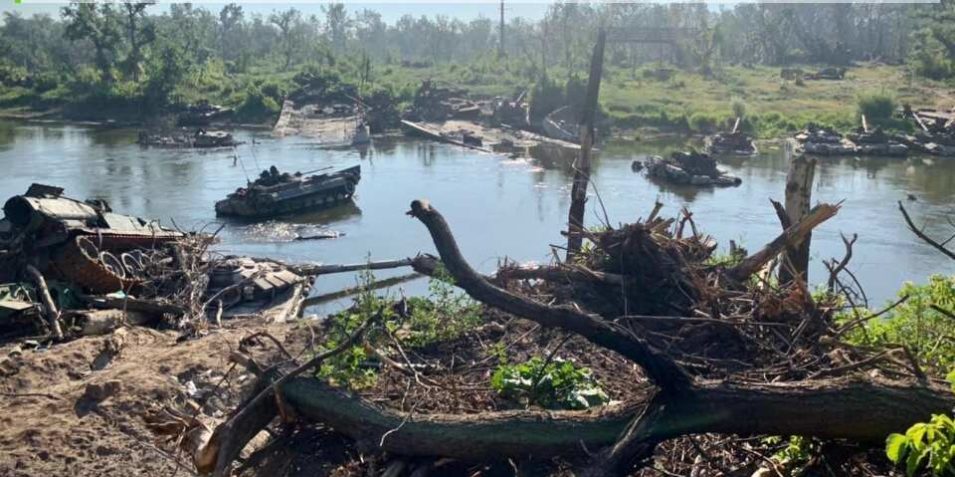
Examples of environmental harm in Ukraine: Remote environmental assessment of the damage caused during an attempted river crossing near Bilohorivka.
Examples of environmental harm in Ukraine: Remote environmental assessment of the damage at the Stirol Chemical Plant.
Examples of environmental harm in Ukraine: Remote environmental assessment of the damage at the Everi port terminal.
Examples of environmental harm in Ukraine: Remote environmental assessment of the damage at BK-1 stationary gas drilling platform.
Examples of environmental harm in Ukraine: Remote environmental assessment of the damage at Ilyich Iron and Steel Works.
Examples of environmental harm in Ukraine: Remote environmental assessment of the damage at the Sievierodonetsk Azot Association.
Examples of environmental harm in Ukraine: Remote environmental assessment of the damage at Lysychansk Oil Refinery.
Examples of environmental harm in Ukraine: Remote environmental assessment of the damage at Zmiiny (Snake) Island.
Examples of environmental harm in Ukraine: Remote environmental assessment of the damage at Azovstal Iron and Steel Works.
Examples of environmental harm in Ukraine: Remote environmental assessment of the damage at the Zaporizhzhia Nuclear Power Plant.
Examples of environmental harm in Ukraine: Remote environmental assessment of the damage at Vasylkiv Airbase.
Examples of environmental harm in Ukraine: Remote environmental assessment of the damage from an ammunition store blast in Khrustalnyi.
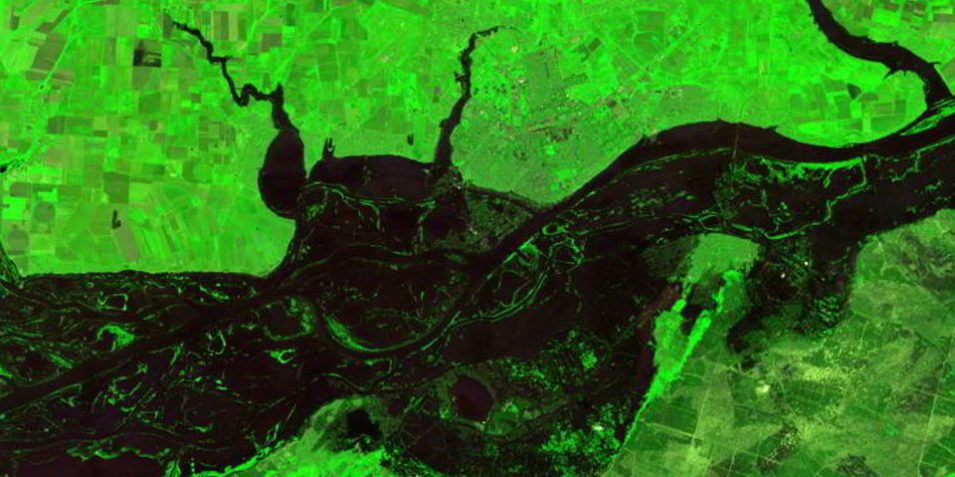
Examples of environmental harm in Ukraine: Remote environmental assessment of the damage associated with the destruction of the Kakhovka Dam.
Examples of environmental harm in Ukraine: Remote environmental assessment of the damage at the Avdiivka coke and chemical plant.
Examples of environmental harm in Ukraine: Remote environmental assessment of the damage at Lutsk oil depot.
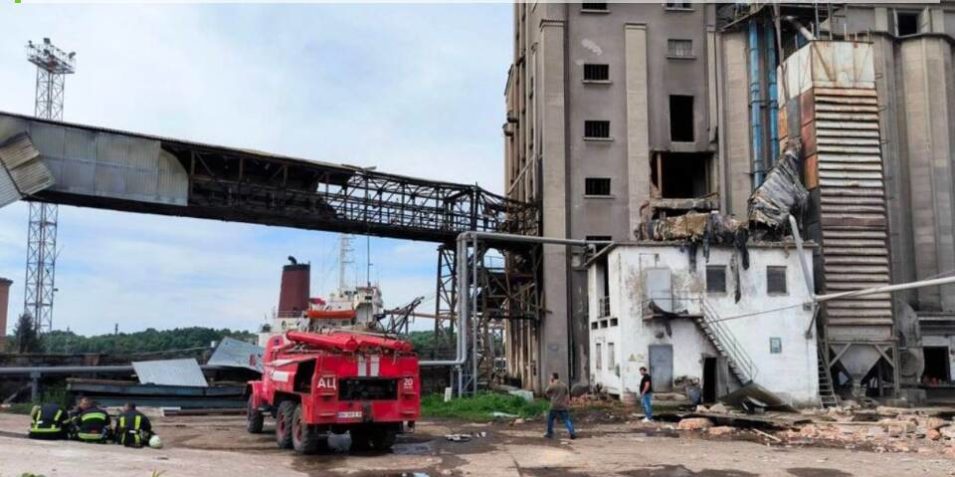
Examples of environmental harm in Ukraine: Remote environmental assessment of the damage to the “Golden Agro” grain elevator complex, Rubizhne.
Examples of environmental harm in Ukraine: Remote environmental assessment of the damage at the Kremenchuk Oil Refinery.
Examples of environmental harm in Ukraine: Remote environmental assessment of the damage associated with the destruction of the Karlivka Reservoir dam.
Examples of environmental harm in Ukraine: Remote environmental assessment of the damage caused by the destruction of the Karachunivske Reservoir dam.
Examples of environmental harm in Ukraine: Remote environmental assessment of the damage linked to the destruction of the Irpin Dam.
Examples of environmental harm in Ukraine: Remote environmental assessment of the damage to the Togliatti-Odesa ammonia pipeline.
Examples of environmental harm in Ukraine: Remote environmental assessment of the damage at Izmail Sea Trade Port.
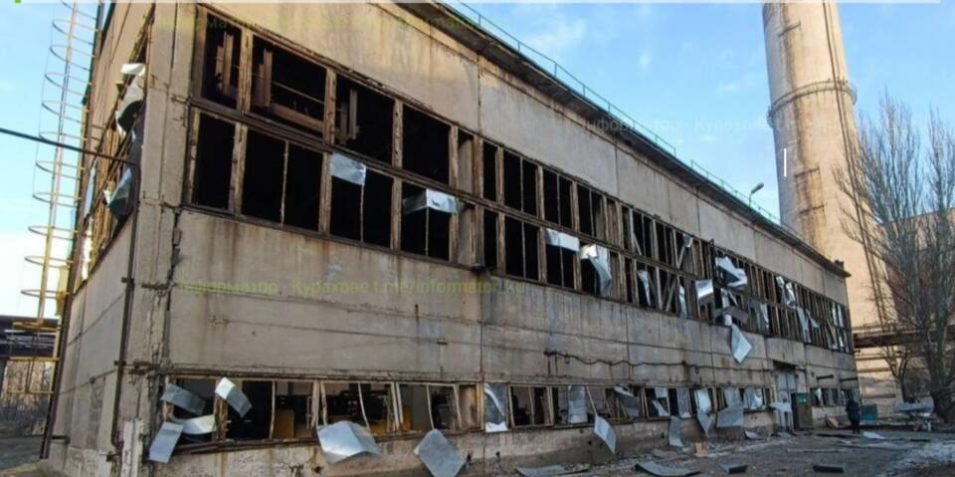
Examples of environmental harm in Ukraine: Remote environmental assessment of the damage at the Kurakhivska Thermal Power Plant.
Ellie Kinney reflects on the role that militaries played in COP28, whether behind closed doors, centre stage, or by their absence, and on the prospects for international action on military and conflict emissions at COP29.
Why we are launching the Conflict and Environment Academic Network (CEAN) – a new community for academics and researchers engaged in the environmental monitoring and assessment of armed conflicts.
Joint statement on behalf of 14 organisations calling for the proposed intergovernmental Science-Policy Panel on chemicals, waste and pollution include conflict pollution and the toxic remnants of war within the scope of its work.
The Conflict and Environment Academic Network (CEAN) is a community for academics and researchers engaged in the environmental monitoring and assessment of armed conflicts.
Наш шостий випуск із серії екологічних брифінгів CEOBS та Zoï Environment Network про Україну досліджує те, як конфлікт впливає на глобальний клімат, і те, яких заходів вживає Україна для зменшення кількості викидів та адаптації до кліматичної кризи.
Curated list of publications within the scope of CEAN from 2023 For the most recent pulications list, or to learn more, visit the main page of the Conflict and Environment Academic Network. Want to add your paper or spot anything missing? Get in touch with rob[at]ceobs.org Almashat, S. and McDiarmid, M. (2023) ‘Toxic chemical exposures…
Ahead of arriving in Dubai for COP28, Ellie Kinney outlines the key topics and trends at the intersection between climate change, conflicts and peace. As global military emissions rise, and with new and protracted conflicts capturing international attention, how is this impacting climate diplomacy?
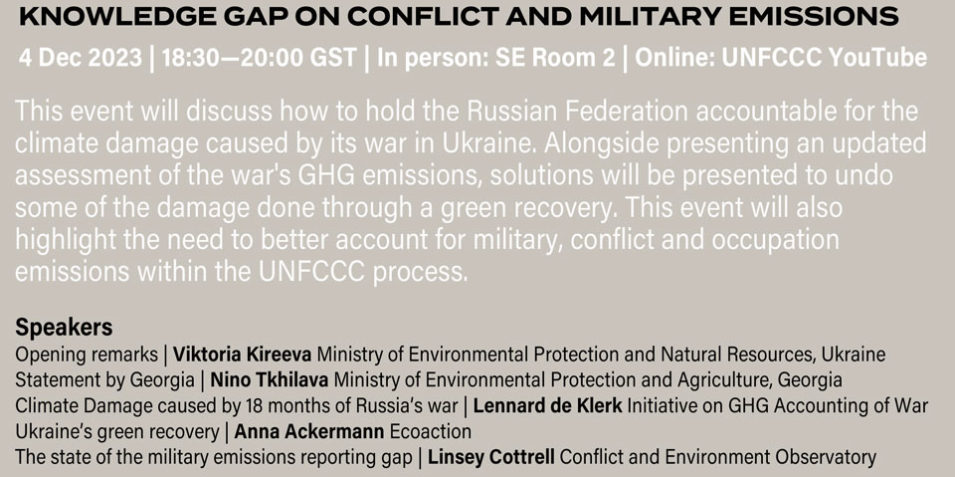
Official COP28 side event on how to hold the Russian Federation accountable for the climate damage caused by its war in Ukraine, and the need to better account for military, conflict and occupation emissions within the UNFCCC process.
Our sixth in a series of joint CEOBS-Zoï Environment Network briefings on Ukraine explores how the conflict is affecting the global climate, and Ukraine’s efforts to mitigate its emissions and adapt to the climate crisis.
The European Parliament has called for the closure of the military emissions gap ahead of COP28 after three amendments on military emissions reporting and decarbonisation were included in its annual climate summit resolution.
The UK government has responded to the House of Commons Defence Committee report on Defence and Climate Change. Linsey Cottrell analyses the key points made, remaining gaps and the road ahead for reducing the UK’s military greenhouse gas emissions.
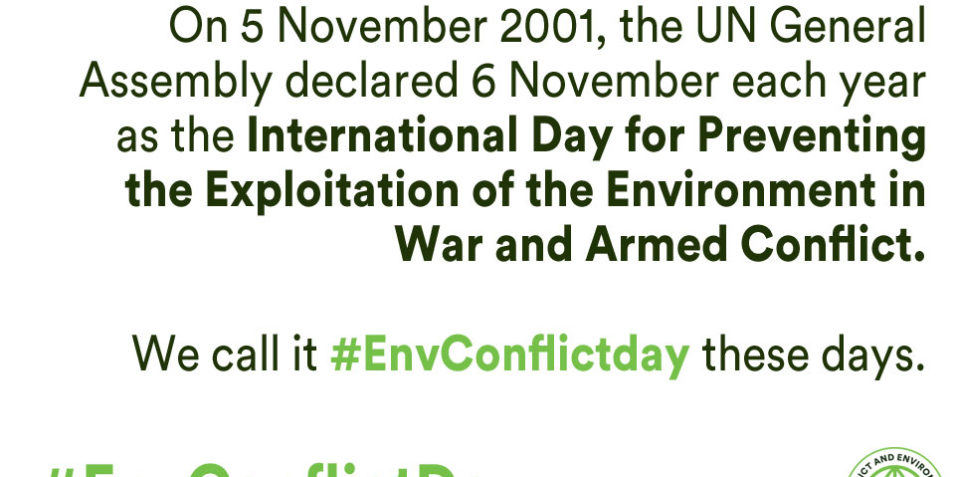
To mark the United Nation’s International Day for Preventing the Exploitation of the Environment Through War and Armed Conflict 2023 – #EnvConflictDay, we invited friends and colleagues from areas affected by armed conflicts to share a message. Here’s what they wrote.
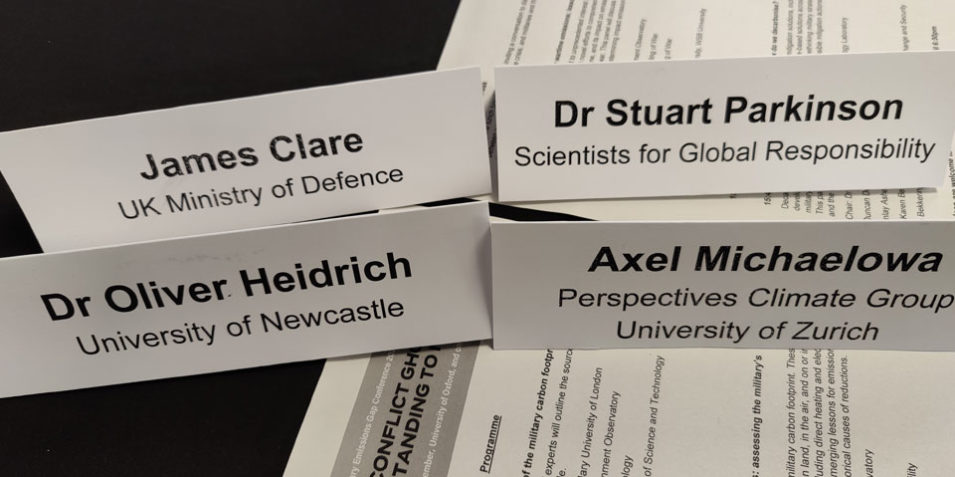
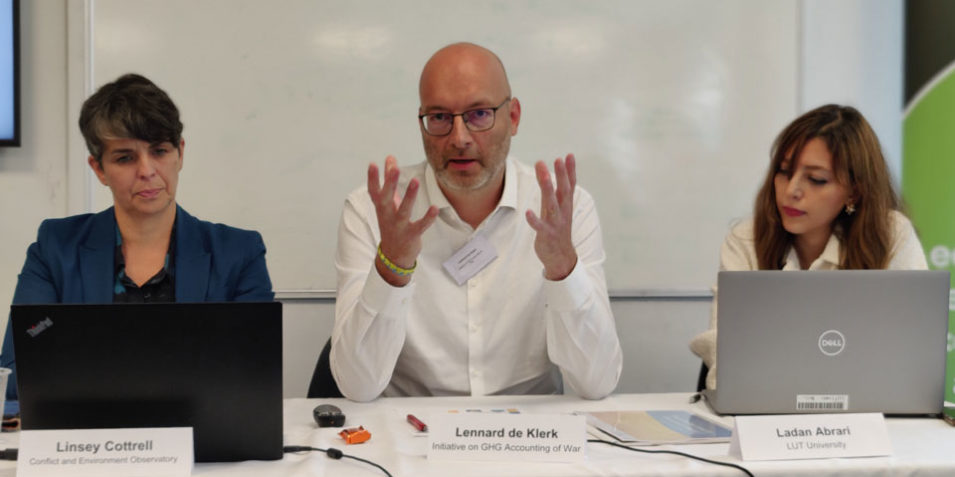
CEOBS’ Military Emissions Campaigner Ellie Kinney reflects on the first Military Emissions Gap conference, which brought together academia, civil society and military representatives to discuss military and conflict greenhouse gas emissions.
The first international Military Emissions Gap conference took place in September 2023. In this review, members of the conference’s organising working group explore each panel in depth and the questions raised by audience members online and in person.
Session on innovative techniques and perspectives to characterize the environmental and geophysical dimensions of armed conflicts, bringing together scientists, nonprofits, and government representatives.
AGU 2023 features three in person, hybrid and remote sessions addressing the environmental consequences of armed conflicts, with a focus on earth observation.
The assessment encompasses damage caused both upstream and downstream, including hydrological and geomorphic impacts, chemical contamination, waste, and ecological damage, including to protected areas.
This report focuses on two districts in Yemen which have been particularly affected by climate change and are likely to suffer further consequences in the future: Hajar district, Hadhramaut, and Tawahi district, Aden.
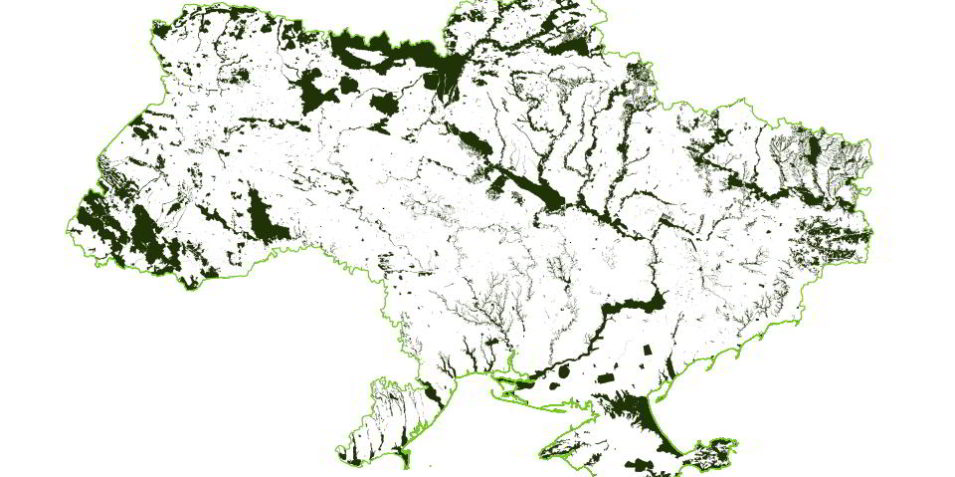
War in Ukraine has made it vital that we understand where its ecologically important areas are. We’ve collaborated with the Ukrainian Nature Conservation Group and Zoï Environment Network to build the most comprehensive digital map available of its most important areas for nature.
The Environmental Peacebuilding Association and the Grotius Center for International Legal Studies at Leiden University have announced that the Third International Conference on Environmental Peacebuilding will be held on June 19-21, 2024.
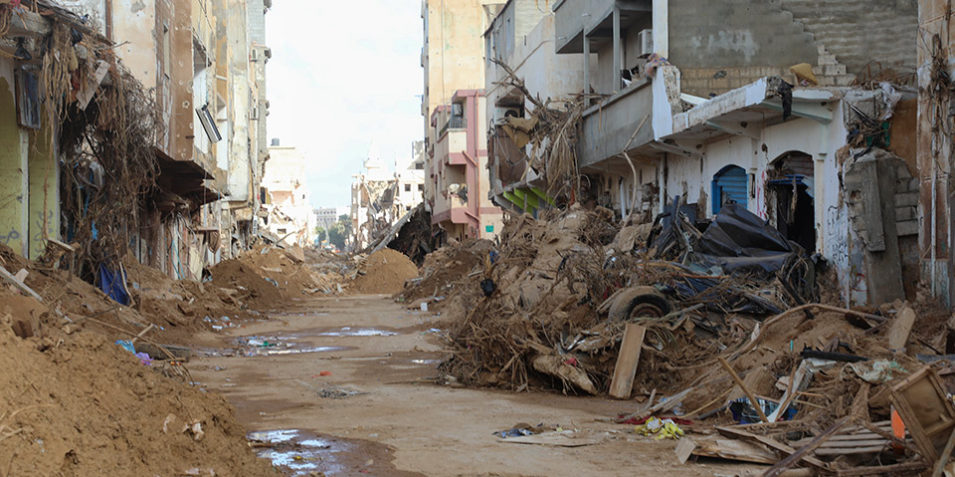
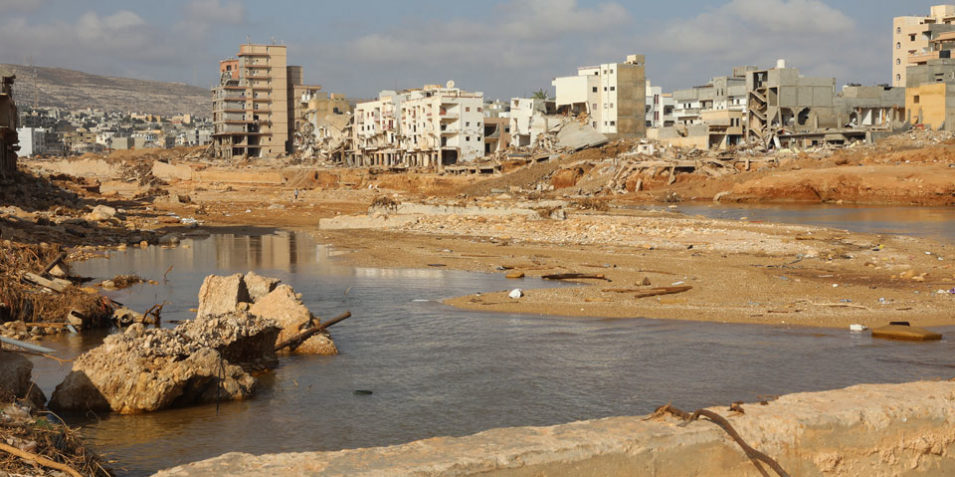
Initial analysis of some short and long environmental dimensions of the flood disaster in Libya, with an assessment of how the conflict has made its people more vulnerable to climate disasters.
CEOBS and the PAX Environment, Peace, and Security Project jointly received 2023’s Al-Moumin Award from the Environmental Peacebuilding Association. Accepting the award on CEOBS’ behalf, Doug Weir discusses how CEOBS works to challenge the status of the environment as a silent victim in conflicts.
Chair’s summary of a state meeting in early 2023 that reviewed the measures that militaries could take to reduce their impact on the environment,
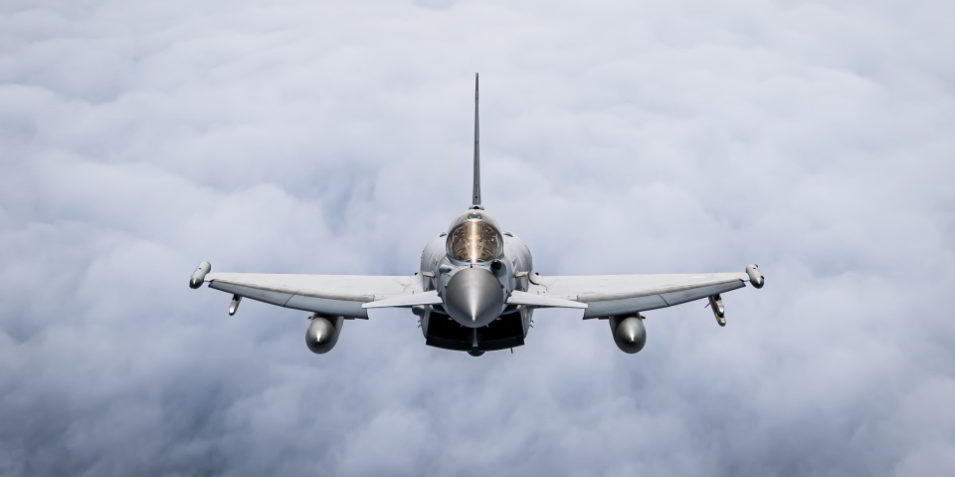
A RAF Typhoon takes part in air defence training over the Baltic region in May 2022. The RAF has set an ambitious target to reach net-zero by 2040, but there are no consistent milestone or targets across other UK Commands. (Credit: NATO) The UK House of Commons Defence Committee has released the Defence and Climate…
A one day conference bringing together academia, civil society and industry experts to consider how best to mitigate the military’s contribution to the climate crisis, and how to better understand the emissions footprint of armed conflicts.
Following the destruction of the Nova Kakhovka dam, CEOBS was asked by UNEP to provide an initial assessment of the potential risks to the environment. Leon Moreland introduces the findings of our rapid analysis, situating them in the wider environmental context of the disaster.
Linsey Cottrell assesses NATO’s latest Climate Impact Assessment, its methodology for emissions tracking, and its compendium of best practice on military emissions, providing initial recommendations for how NATO should progress its emissions mitigation activities.
NATO’s Vilnius summit saw the publication of three new documents on climate action, including its long-awaited Greenhouse Gases Emission Mapping and Analytical Methodology. In this post, Ellie Kinney examines the summit’s climate outputs and their context.
CEOBS recognised for its thought leadership in monitoring and communicating the environmental dimensions of armed conflict and military activities in order to inform policy change.
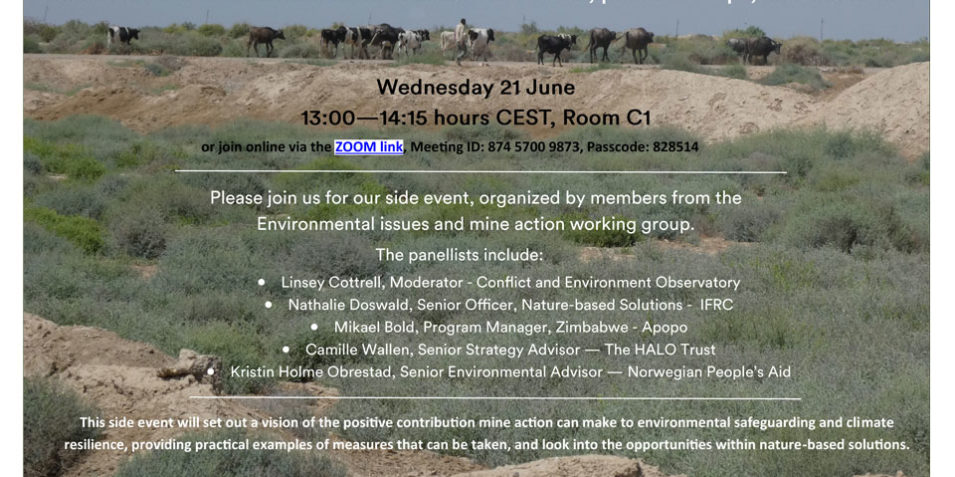
Event at the 2023 Intersessional Meetings of the AP Mine Ban Convention that will set out a vision of the positive contribution mine action can make to environmental safeguarding and climate resilience, providing examples of measures that can be taken at each stage of humanitarian demining operations.
Colombia’s president Petro has signed a six-month ceasefire with the ELN armed group, in this post, James Osbourne examines the environmental benefits that could follow in the event of a lasting settlement.
This paper critically examines UK Ministry of Defence claims over reducing greenhouse gas emissions from its UK military bases. It is found that the MOD is on course to exceed these targets, but that is only because the targets are very weak and undemanding.
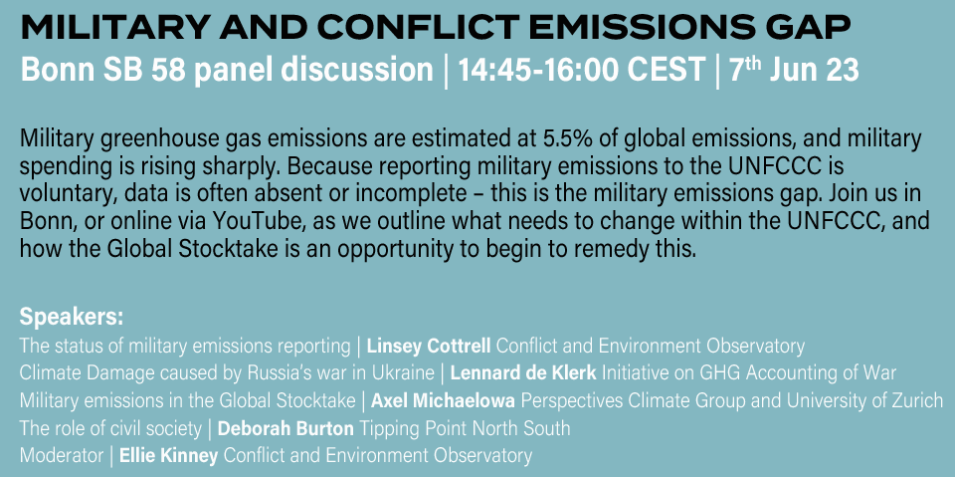
Bonn Climate Change Conference side event on how the UNFCCC’s Global Stocktake could help close the military and conflict emissions gap.
Joint submission to the Convention on Biological Diversity explaining how mine action can help to promote global biodiversity goals in fragile and conflict-affected areas.
How the humanitarian consequences of environmental degradation and climate change are aggravated by armed conflict in the Near and Middle East, and which adaptation approaches are emerging to face the compounding impact using examples from Iraq, Syria and Yemen.
The IPCC’s failure to mention military or conflict emissions in its recent synthesis report points to a deeper problem. Ellie Kinney explains why solving it will require a concerted effort from states, researchers and civil society.
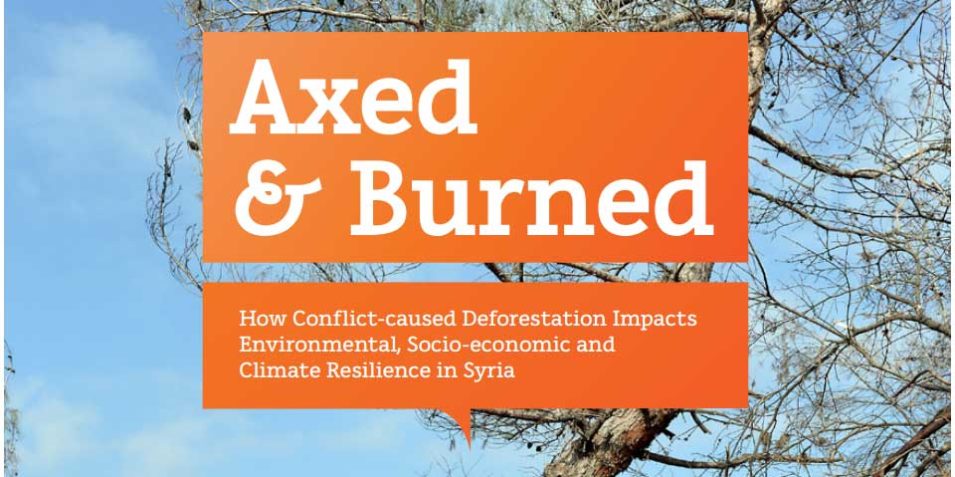
The destruction of natural resources and damage to ecosystems has potentially severe consequences for the lives, livelihoods and future of Syrian citizens, as well as for the country’s climate resilience.
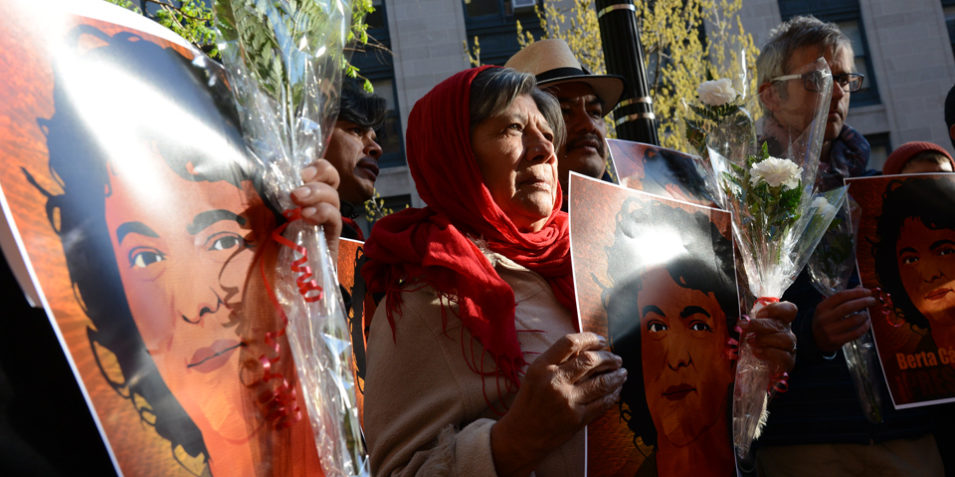
In this International Women’s Day blog, Peixuan Xie argues that major changes are needed in policy and practice to better protect women environmental defenders working in conflict-affected areas.
Joint statement on the first anniversary of the invasion of Ukraine with recommendations for the international community aimed at mitigating harm, at preventing further environmental degradation, and at ensuring the future restoration of Ukraine’s environment.
Наш п’ятий випуск серії бюлетенів Обсерваторії конфліктів та довкілля / Екологічної мережі «Зой» про Україну досліджує те, як військові дії впливають на прибережні та морські екосистеми, а також містить аналіз окремих інцидентів забруднення Бузького лиману, на півдні від Миколаєва.
This report looks at the question of electricity access in relationship to South Sudan’s conflict and the unique options to help harness renewable energy as a tool for peace and development across the country.
Our fifth in a series of joint CEOBS-Zoï Environment Network briefings on Ukraine explores how the conflict is affecting coastal and marine ecosystems, and analyses a series of pollution incidents in the Buh Estuary south of Mykolaiv.
In this blog, Linsey Cottrell summarises the key findings from our report into the state of “greening” policies across EU militaries.
Report mapping out EU military environmental policies and “greening” initiatives, including the extent to which environmental performance reporting is made publicly available. The review also draws on direct feedback from EU defence ministries on their environmental policies, as well as from other stakeholders with an interest in military environmental policy.
Ellie Kinney landed at COP27 in Sharm el-Sheikh on a mission to advocate for better reporting of military greenhouse gas emissions, here’s what she found.
Grievances over how to manage water, land, and oil played an indispensable role in three long civil wars that have left the citizens of South Sudan highly vulnerable to economic and environmental shocks.
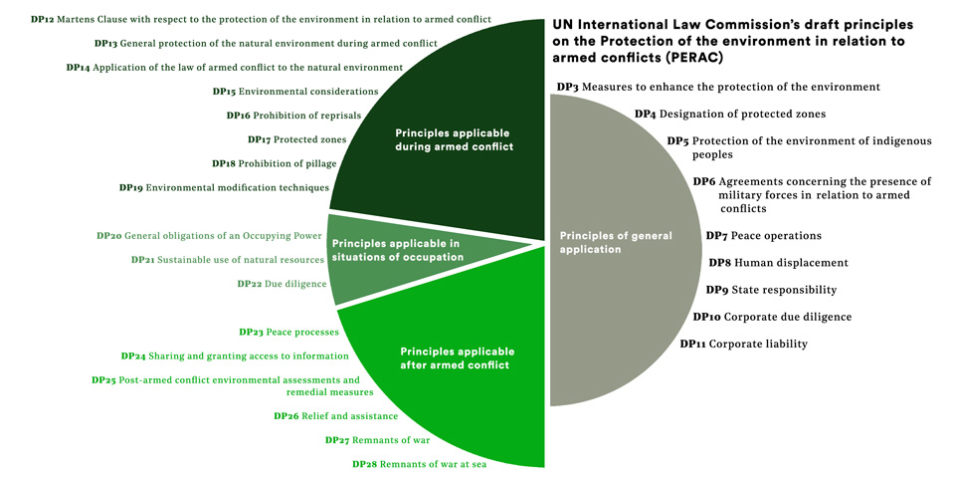
States have formally adopted a set of 27 legal principles intended to enhance the protection of the environment throughout the cycle of armed conflicts, marking the end of a 10-year process and with it the most significant advance in the legal framework since the 1970s.
In a collaboration between Airwars and CEOBS, we explore the immediate and reverberating consequences of the use explosive weapons during the 11 day conflict in Gaza in May 2021.
Ellie Kinney explores how liberal and conservative MEPs blocked an initiative that would have contributed towards improving European military emissions reporting in the run up to COP27.
Our fourth in a series of joint CEOBS-Zoï Environment Network briefings on Ukraine explores how the conflict has impacted fossil fuel infrastructure across the country, and features a deep dive into the immediate and reverberating environmental effects of a fuel depot attack.
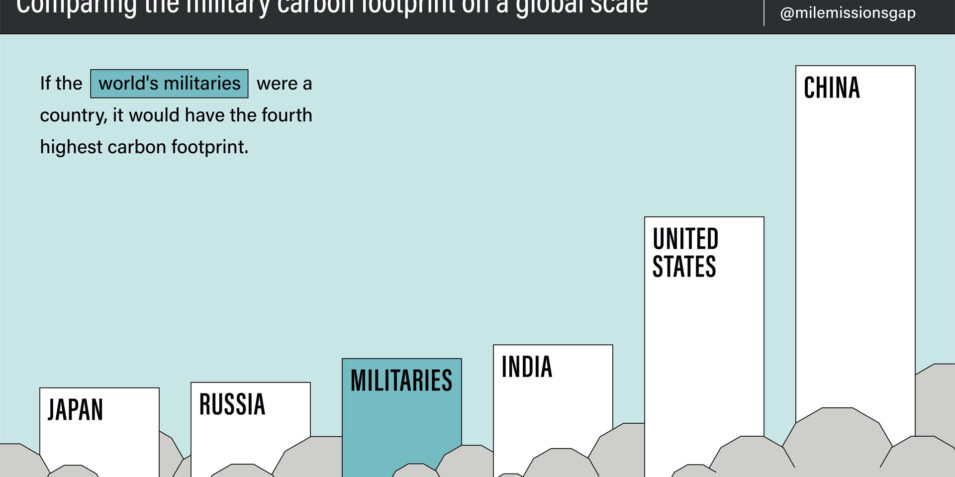
As the impact of the climate crisis continues to grow, rapid emissions cuts are becoming ever more urgent. Our new report finds that militaries may be responsible for 5.5% of global emissions – a proportion so great that it can no longer be ignored.
In this joint study with Scientists for Global Responsibility, we provide updated estimates for global and regional military GHG emissions, finding that the total military carbon footprint is approximately 5.5% of global emissions.
A concise policy brief on military and conflict greenhouse gas emissions with recommendations for states on reporting and mitigating them.
CEOBS worked with our academic partners in the Military Emissions Gap to produce a Nature commentary ahead of COP27.
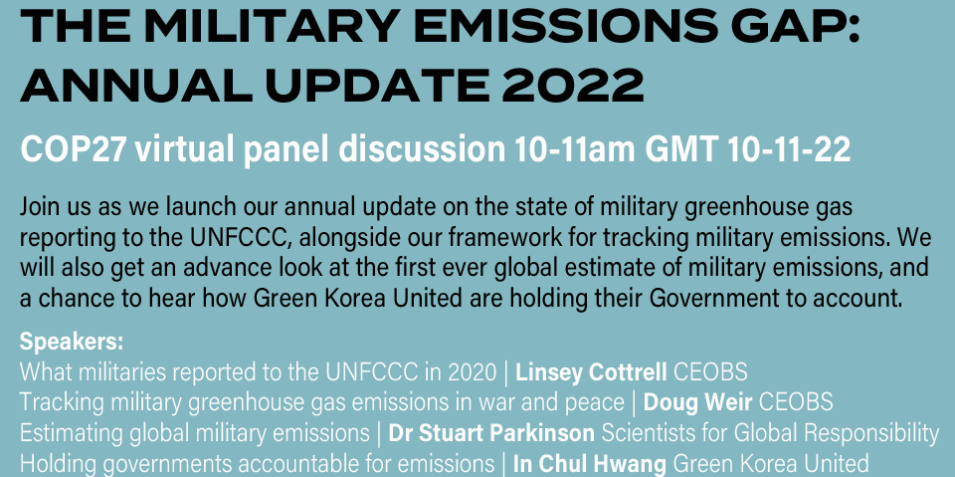
Join us as we launch our annual update on the state of military greenhouse gas reporting, plus an advance look at the first ever global military emissions estimate.
Using the example of Ukraine, this paper explores how remote data collection and data from mine action operations can be used to better address the environmental consequences of the use of explosive weapons.
Our third in a series of joint CEOBS-Zoï Environment Network briefings on Ukraine explores how the conflict has impacted industrial sites across the country, and features a remote assessment of the notorious Azovstal iron and steelworks in Mariupol.
Joint statement on the potential role of a science-policy panel in addressing the health and ecological impact of conflict pollution and the toxic remnants of war.
On 25th October, CEOBS will be co-hosting an interactive dialogue on the International Law Commission’s principles on the protection of the environment in relation to armed conflicts in New York.
For nearly a decade we have been publishing blog posts and reports on the emerging legal framework protecting the environment in relation to armed conflicts, and monitoring and reporting on UN meetings, we’ve now brought our PERAC publications together into one place.
The Syria crisis continues to fuel the largest displacement crisis in the world. Ecological degradation and climate disruption are impacting and shaping the humanitarian and development operations that have been mounted in response.
Lawyers and states have been working on the PERAC framework for more than a decade, this October it will be adopted at the UN General Assembly.
What are the PERAC principles and how will they reduce harm to the environment from war? Our FAQ explains what they are, how they were developed and the impact that they could have.
RUSI invited CEOBS to collaborate on a series of podcasts looking at the steps that the UK Ministry of Defence and the industries that support it are taking to address and reduce their environmental footprint.
NATO has pledged to cut its carbon emissions but is refusing to share how it will count them. Will your organisation join us in calling for NATO to make its methodology public, and for NATO member states to commit to military emissions reductions that are consistent with the Paris Agreement?
Ellie Kinney explains why we have launched a new campaign ahead of COP27 urging NATO to come clean on its military emissions reporting.
This second in our series of joint CEOBS-Zoï Environment Network briefings on Ukraine explores how the conflict has impacted Ukraine’s water infrastructure and resources, harming people and ecosystems.
Climate action tracking websites and reports play a vital role in driving the climate action of states and corporations but as Ellie Kinney writes, the leading climate tracking sites remain silent on military emissions.
Online side event as part of the 10th Meeting of State Parties to the Convention on Cluster Munitions that examines how mine action operators can meet and exceed the environmental requirements of the Lausanne Action Plan.
An unprecedented volume of environmental data is being gathered on the invasion of Ukraine. Doug Weir explores what kind of data is being gathered, and by whom, as well as the environmental narratives that are developing and the implications of this level of documentation.
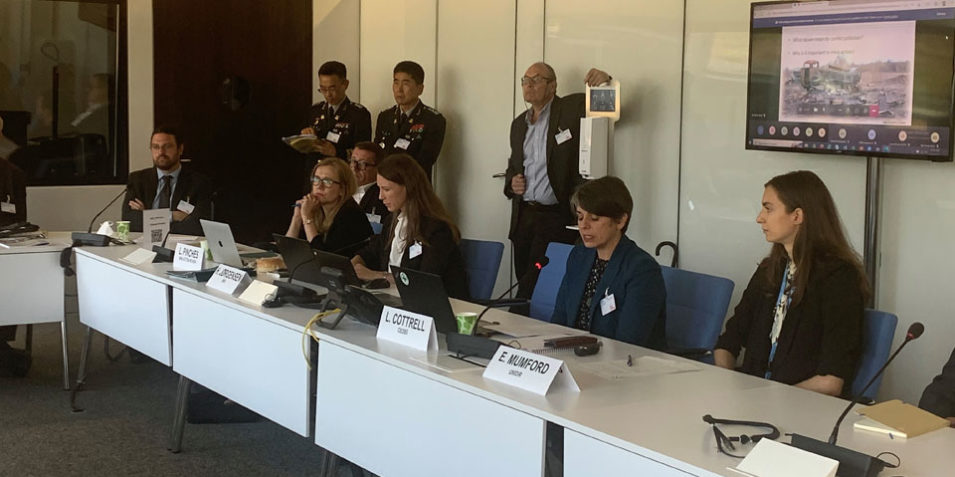
Mine action organisations could help protect communities from conflict pollution by integrating more environmental data collection into their activities. In this post Linsey Cottrell explores this idea, which was the focus of a recent panel event in Geneva.
This first in a series of joint CEOBS-Zoï Environment Network briefings on Ukraine explores how the conflict has impacted Ukraine’s nuclear facilities, threatening people and the environment.
It looks like NATO has pledged to reduce its institutional emissions but won’t publish the methodology it will use to count them. Doug Weir argues that this lack of transparency underscores the importance of military emissions instead being addressed by the UNFCCC.
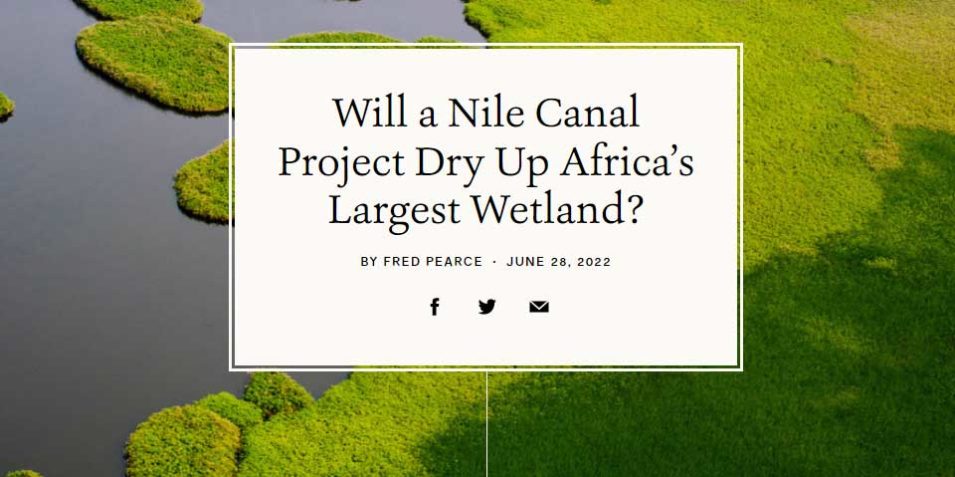
A 240-mile canal to divert water from the White Nile and send it to Egypt would desiccate the world’s second largest wetland, impacting its rich wildlife and the rains on which the region depends.
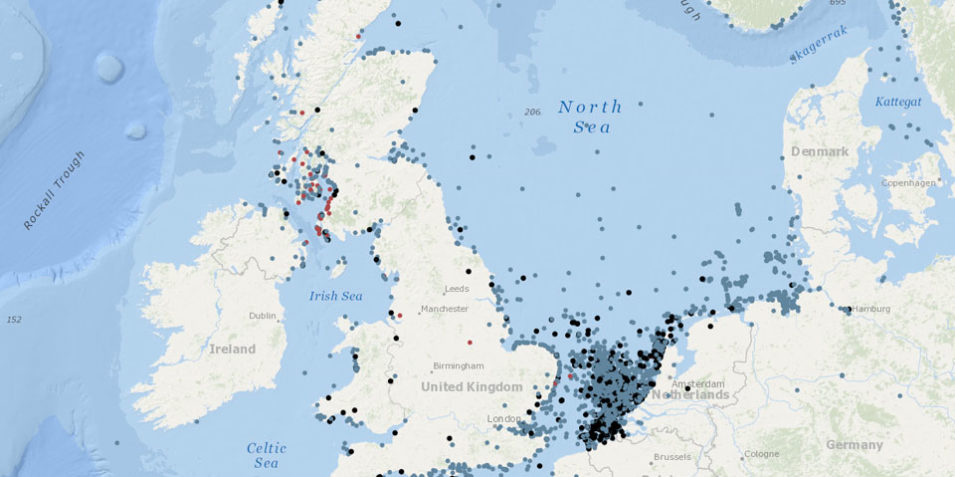
In this post, Rowan Smith and Linsey Cottrell explore the risks that sea-dumped munitions pose in British waters, and find that UK management policy is falling behind that of Europe.
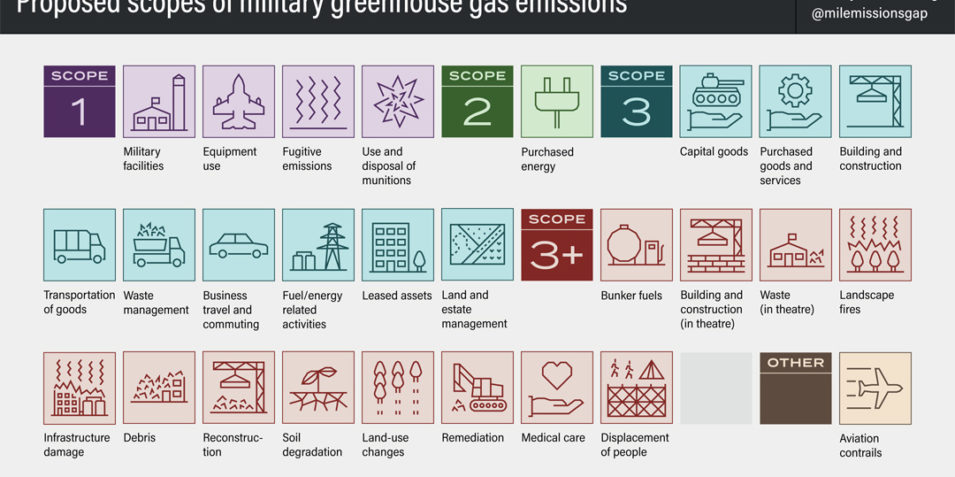
What sources of greenhouse gas emissions should militaries be tracking and reporting on? Ellie Kinney introduces our new report, which examines military emissions in both peacetime and during conflicts.
This paper examines the need for military greenhouse gas emissions reporting, its functions and components, and sets out an initial framework for the military sources that emissions reporting should cover, including those associated with armed conflicts.
Facing Fallout identifies 19 principles for remediating the environment contaminated by nuclear weapons; it also includes a commentary that elaborates on the principles and provides legal and policy precedent for each.
Bonnie Docherty of Harvard Law School introduces a new joint report with CEOBS on the principles that should guide environmental remediation as part of the Treaty on the Prohibition of Nuclear Weapons.
Together with UNIDIR, NPA and the Mine Action Review we will be discussing how best to integrate environmental considerations into the response to the use of explosive weapons.
Report of a pilot study into the levels of munitions residues present at a site in Viet Nam, the methodology is designed for mine action projects.
A brief arguing that the lack of effective regulation throughout the charcoal value chain in South Sudan is leading to tragic consequences.
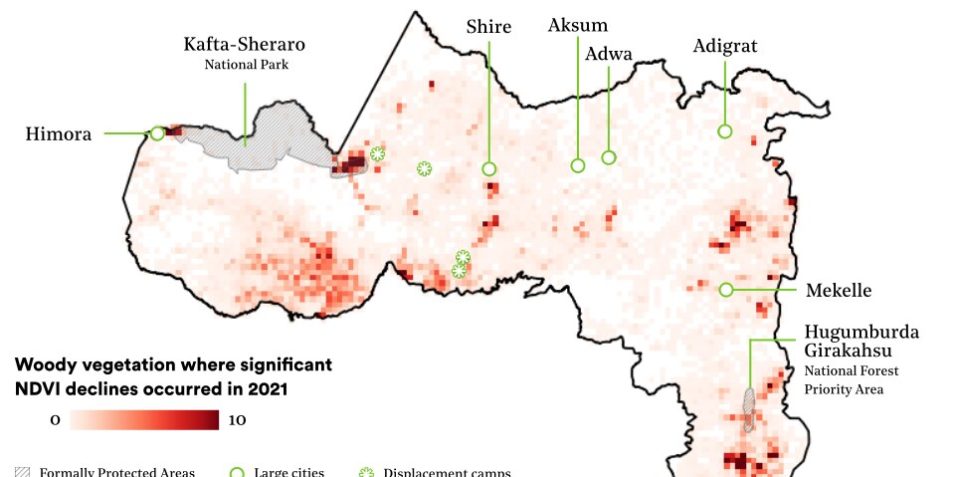
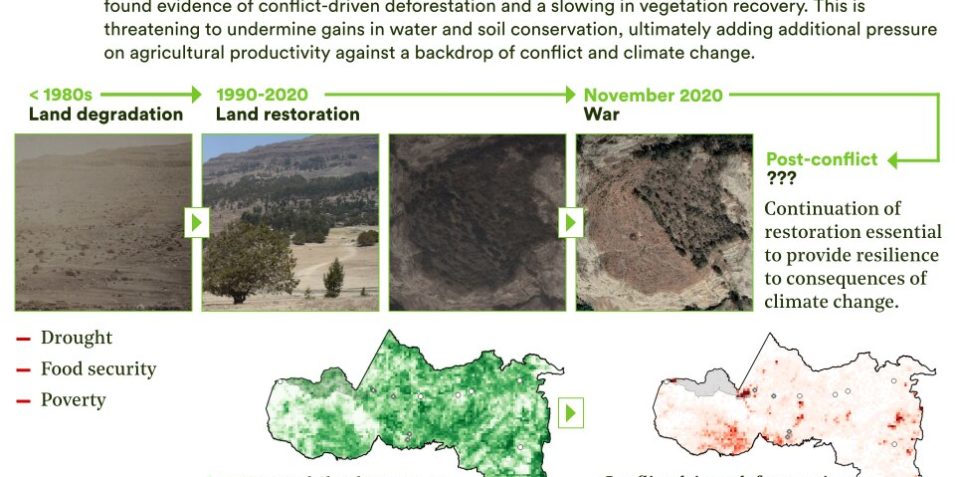
Nature-based solutions can help make communities less vulnerable to the climate crisis, this post summarises the findings of our study exploring how Tigray’s has been impacted by war.
Report exploring how the war in Tigray is undoing decades of landscape level environmental restoration, with long-term implications for food security. The study also examines the potential role of nature-based solutions in buffering communities during conflict, and in supporting recovery.
Commentary arguing that conservation organisations urgently need to speak up about the impacts of armed conflicts on biodiversity in order to mainstream conflict-sensitive conservation in international policy making.
Join us on 26th April 2022 as we explore the findings of a CEOBS study into how the war in Tigray has impacted its decade old environmental restoration programme, and the implications for food security and post-conflict recovery.
Statement by six organisations on the environmental impact and legacy of the use of explosive weapons in populated areas, delivered during negotiations on a draft declaration on EWIPA in Geneva.
NUPI briefing paper on Iraq’s exposure to the effects of climate change.
This CARPO Report addresses the relationship between violent conflict and environmental governance in Yemen.
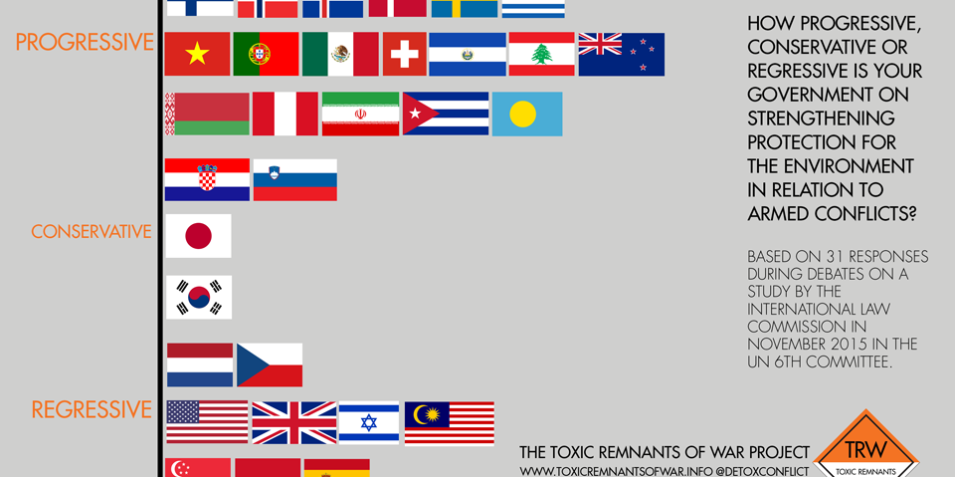
Our new analysis of government views on a UN project to enhance the legal protection of the environment in relation to armed conflicts has found considerable reluctance to strengthen rules that would help protect people and ecosystems.
The International Law Commission’s project to strengthen the law protecting the environment in relation to armed conflicts concludes in 2022. This report analyses the written comments of 24 states as we approach second reading of the principles, ahead of their adoption.
Russia’s invasion of Ukraine is a stark reminder of the human and environmental costs of armed conflict. In this post, Rachel Killean examines the legal avenues that could be open for Ukraine in seeking accountability and redress for environmental damage.
This update provides an overview of some of the environmental trends caused by Russia’s invasion of Ukraine. It builds on our initial rapid assessment, which was published on Feb 25th.
Rapid overview of emerging environmental issues and perspectives arising from the Russian invasion of Ukraine.
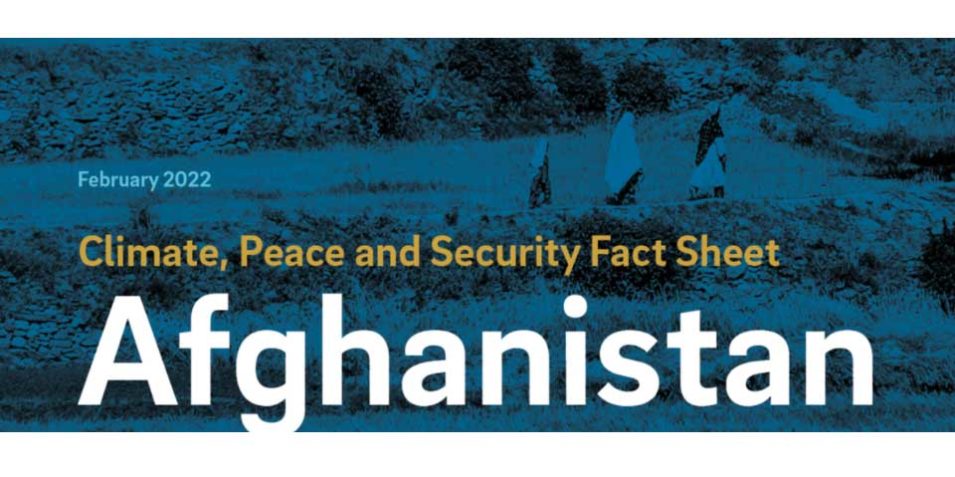
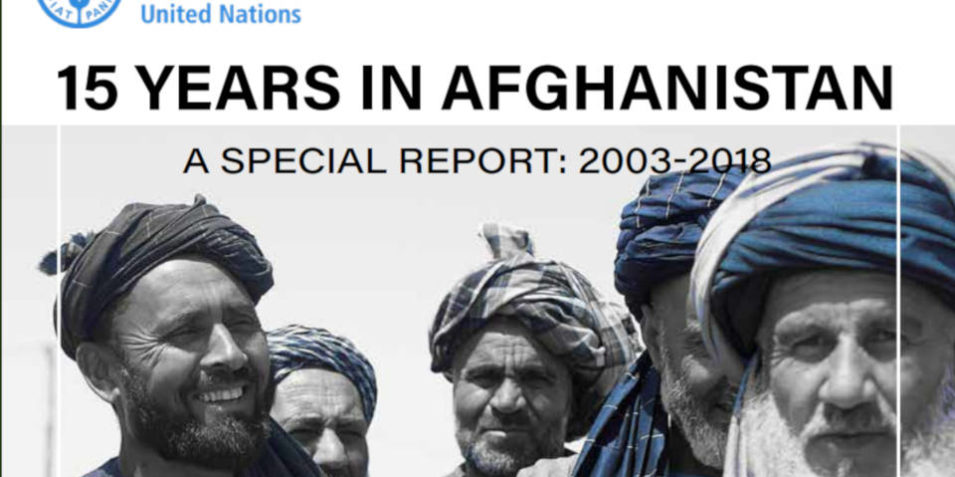
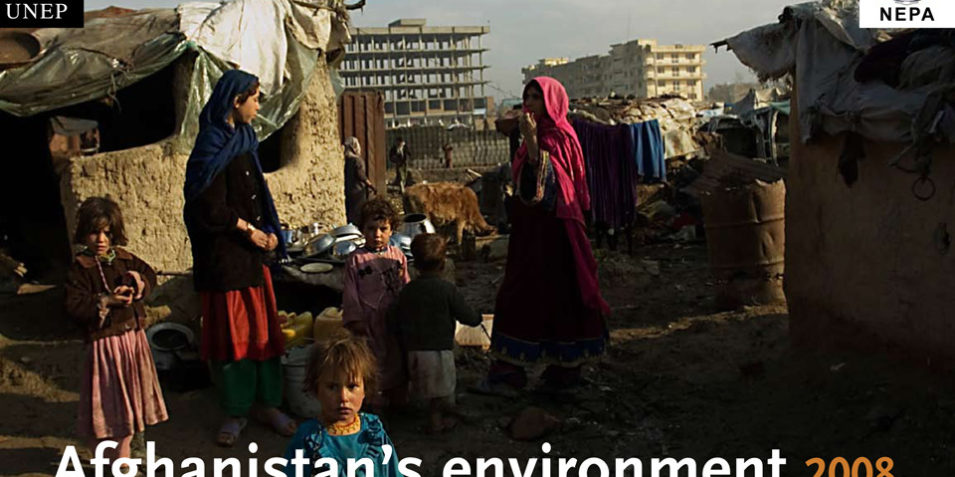
Afghanistan is highly vulnerable to the effects of climate change: rising temperatures, changing precipitation patterns and increasingly frequent extreme weather events.
The electrification of military vehicles will increase demand for batteries, yet forthcoming EU battery legislation contains a blanket military exemption. Piotr Barczak and Linsey Cottrell explain why the exemption challenges military greening claims.
States should support the establishment of an intergovernmental science-policy panel on chemicals, waste and pollution, argues Linsey Cottrell. Doing so could also help draw attention to conflict pollution.
Linsey Cottrell and Carlie Stowe examine the impact that our changing climate will have on humanitarian mine action and why operators need to start implementing climate risk analysis into their planning.
In this report, Leonie Nimmo and Hana Manjusak examine the environmental Corporate Social Responsibility reporting of some of the world’s biggest arms companies, and discover that it may be far more useful than you might think.
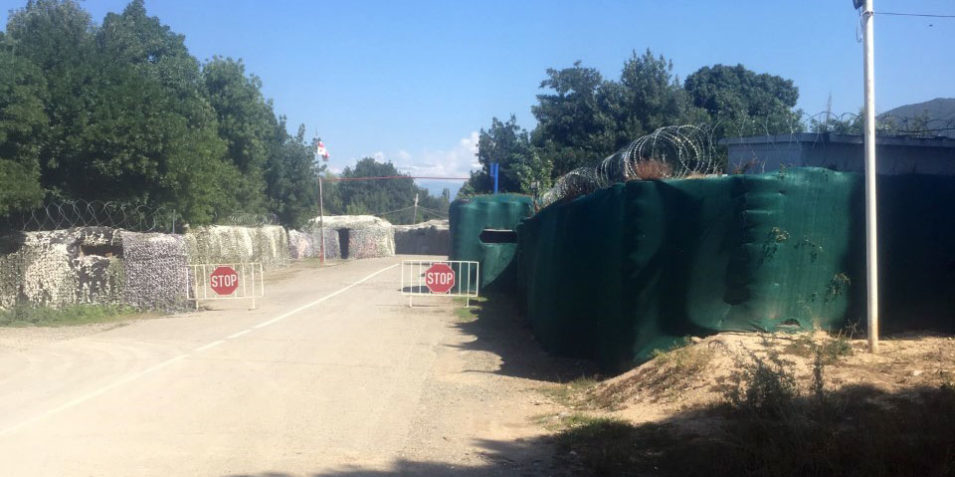
When wars end without clear resolution, conflicts can become frozen. In this post, Clayton Payne examines how the frozen conflicts affecting Georgia’s breakaway republics of Abkhazia and South Ossetia have influenced their environment, and how it is managed.
This guest commentary from UNIDIR argues that we need to explore how climate change is influencing the trade, use and legacy of conventional weapons – and how arms flows will exacerbate climate insecurity.
It’s been an extraordinary year for the campaign to hold militaries accountable for their contribution to the climate emergency, in this post Doug Weir takes stock of where we are, and how we can build on the achievements of COP26.
Linsey Cottrell introduces the key findings from our analysis of the military emissions data that governments report to the UNFCCC. We found that the standard and scope of reporting is unacceptable, underscoring the need for greater transparency and tougher standards.
Thousands of people have helped raise the profile of the environment causes and consequences of war over the last 20 years, this #EnvConflictDay post explores how they have done that, and encourages us to take a day to reflect on our collective achievements.
South Sudan’s Sudd wetlands are crucial for regulating water and climate, and for the habitats and resources they provide, but oil production and hydropolitics are threatening their survival. Eoghan Darbyshire looks at the choices the government needs to make.
Climate change can drive variation in the availability of natural resources, so Charlotta Ruuskanen looked at whether annual changes in the area of the Sudd wetland in South Sudan influenced the intensity of conflict between pastoralist communities.
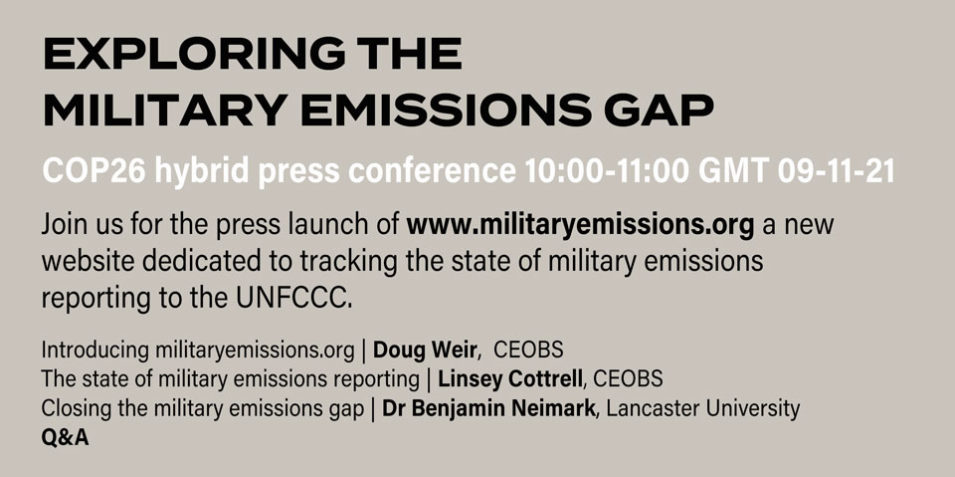
Join CEOBS and Concrete Impacts live from Glasgow for the media launch of www.militaryemissions.org a new website dedicated to tracking the dire state of military emissions reporting to the UNFCCC.
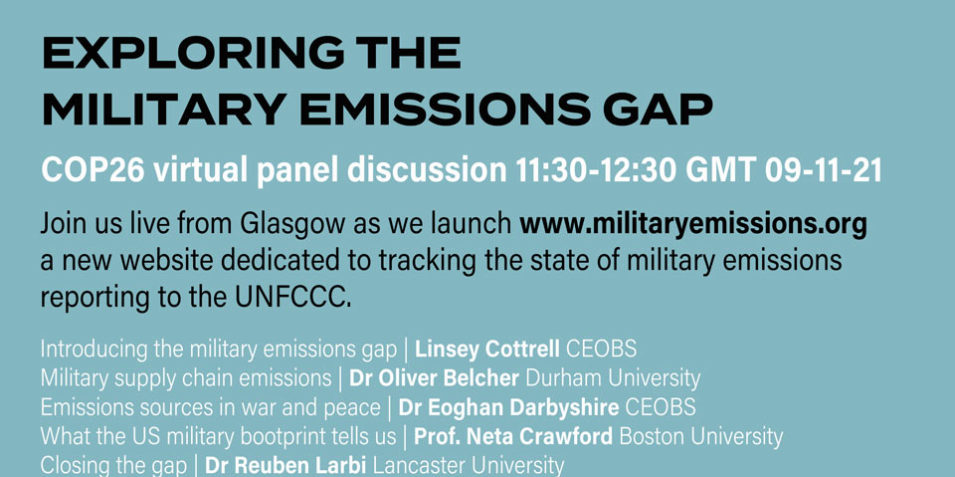
COP26 panel discussion to mark the launch of militaryemissions.org that will explore the flaws in military emissions reporting, and why the scope of reporting needs to be expanded to cover emissions created across the cycle of conflicts, and across militaries’ massive supply chains.
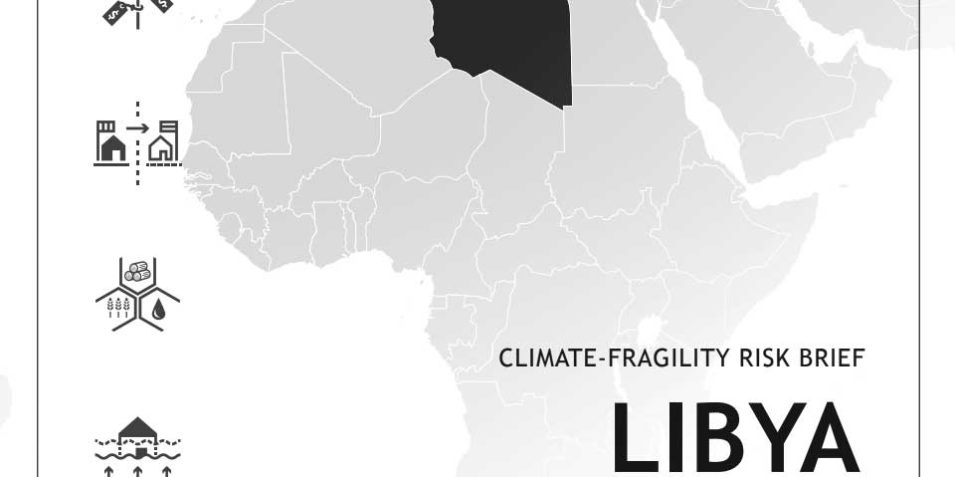
CSEN find that climate change poses an existential threat to Libya, that if left unaddressed, threatens basic state functionality and stability. The risk brief also discusses potential entry points for addressing the climate-fragility risks in Libya.
Mine Action Review policy brief for national authorities and their implementing partners aimed at minimising mine action’s environmental impact.
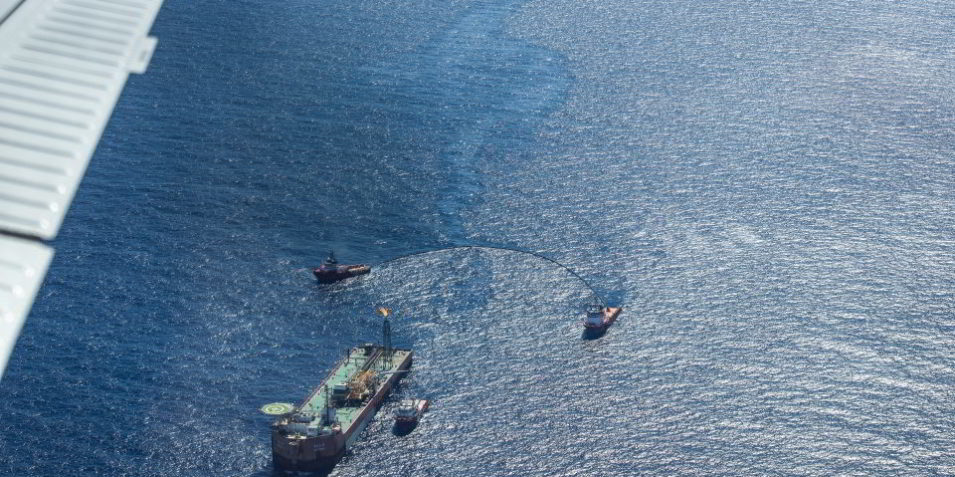
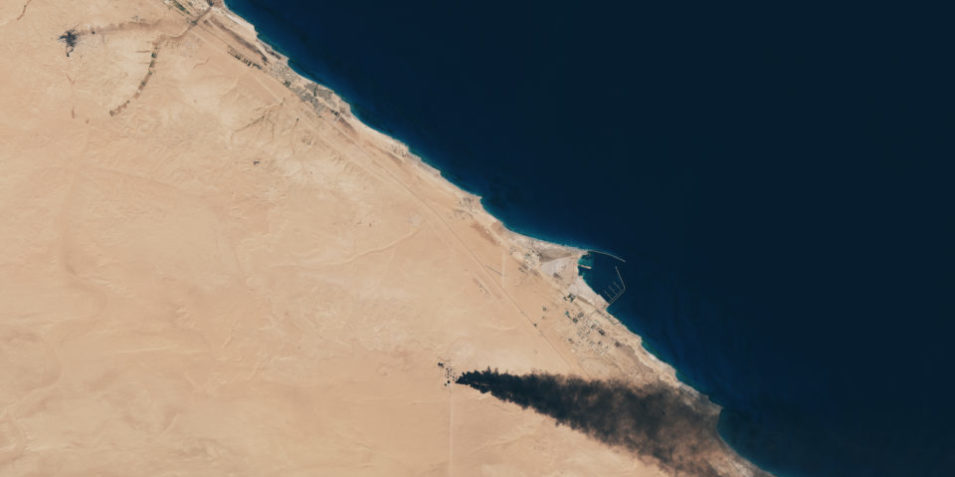
In this post Dr Eoghan Darbyshire uses satellite imagery to examine claims made by the Libyan National Oil Corporation than an offshore oil spill has been controlled. What he finds underscores the importance of independent scrutiny of the oil industry in insecure and conflict settings.
16 NGOs urge states at the UN General Assembly to mainstream the environment in the work of its First Committee, and beyond.
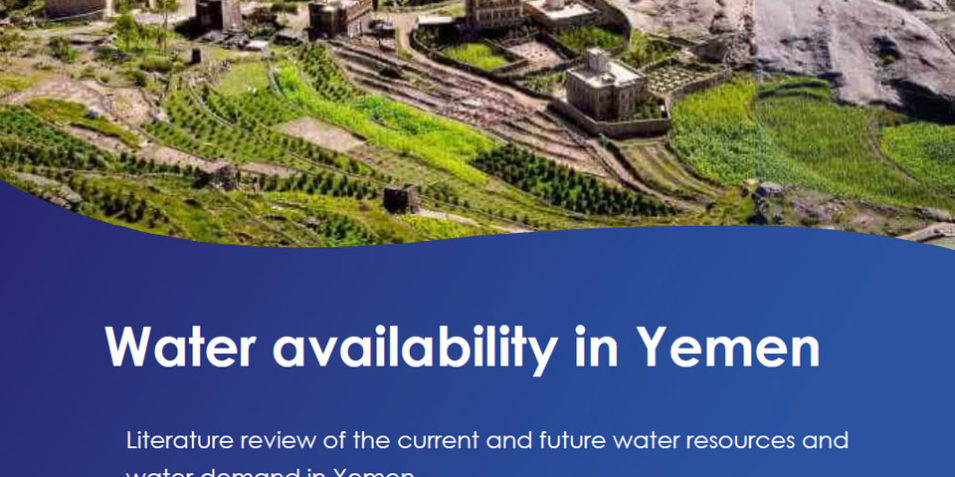
Review of Yemen’s water security, which finds that its severe water imbalance is currently being bridged by unsustainable groundwater pumping.
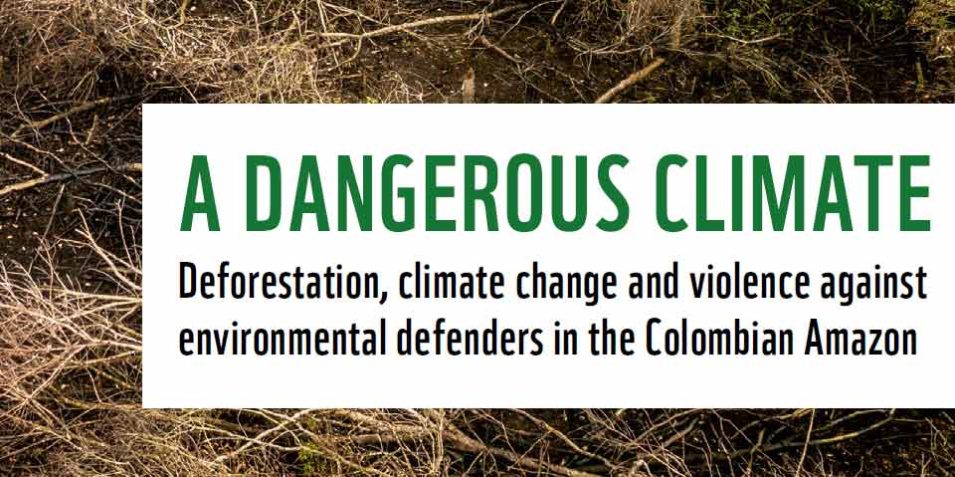
The worsening spiral of environmental destruction and violence since 2016 peace treaty between government and FARC. This study finds that a twin human rights and environmental crisis has intensified in Colombia since the government and rebel army FARC signed a peace treaty in 2016. The demobilisation and disarmament of FARC created a power vacuum in…
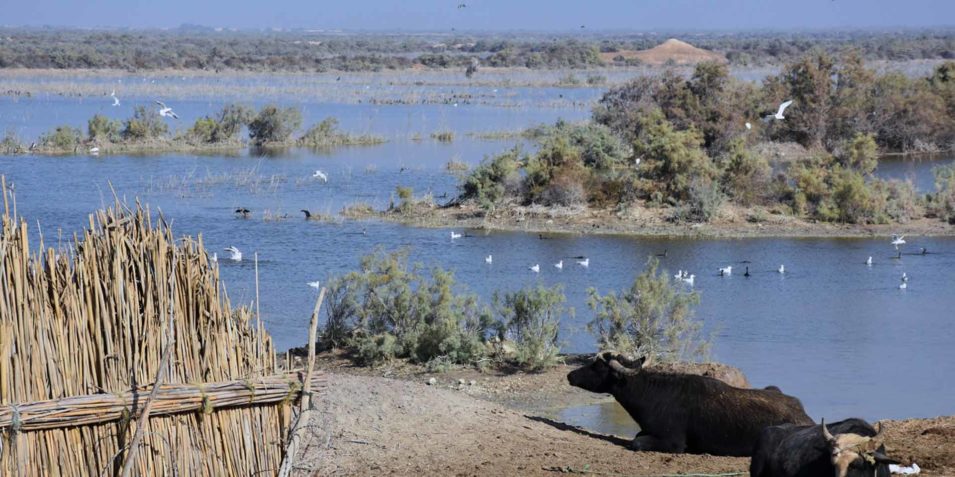
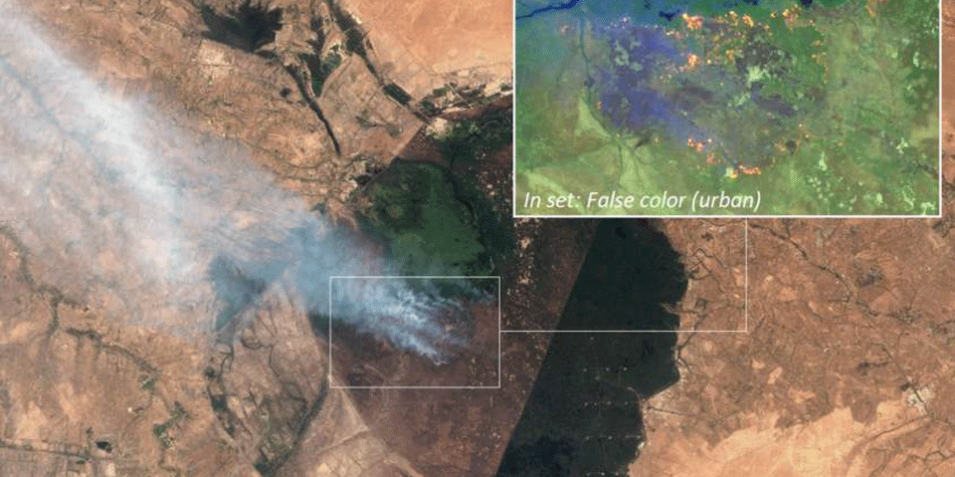
This report presents new visualisation-led perspectives on the Mesopotamian marshes, exploring the scale of the Marsh Arabs’ cultural erasure, the contemporary threats from pollution, fire, saltwater intrusion and the oil industry, and how their ecosystem services could mitigate a heating climate.
In this paper Linsey Cottrell and NPA’s Kendra Dupuy examine the environmental impact of the open burning and detonation of munitions in mine action programmes, and why the sector needs to do better.
This post explores how a new study from Gaza has added weight to the hypothesis that prolonged conflicts in urban areas may be creating the perfect environmental conditions for antibiotic resistant bacteria to emerge.
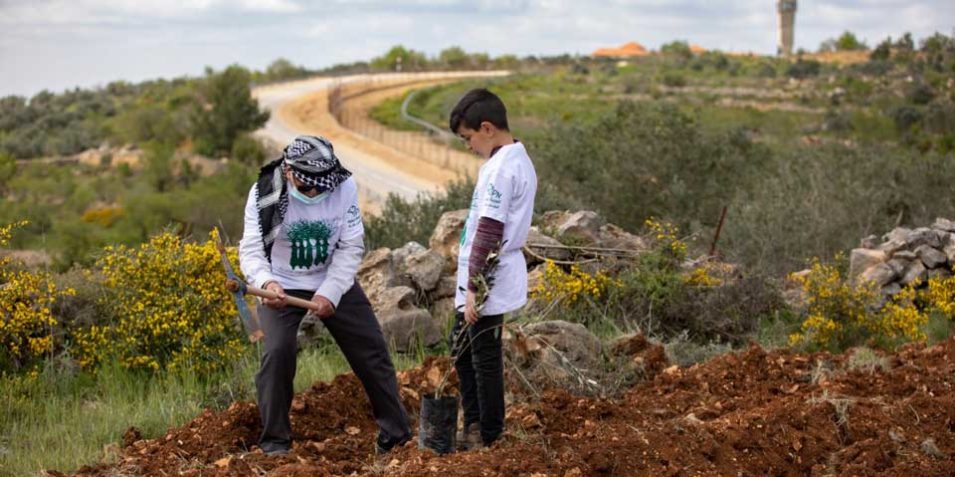
In this guest post, Elle Ambler of the Arab Group for the Protection of Nature explores the impact of the Israeli occupation on agriculture and food security, and the role that tree planting can play as an act of resistance.
Kendra Dupuy and Linsey Cottrell examine the environmental consequences of harvesting unexploded and abandoned ordnance for blast fishing, and consider the support that local communities need to end the highly destructive practice.
How and why satellite data can help across disarmament programming, including for mine action, tracking the use of explosive weapons in populated areas, for monitoring the influence of climate change and in reducing risks to communities.
This paper provides a comprehensive assessment of Syria’s electricity sector after a decade of war.
Our report examines the impact that the conflict in Yemen is having on its protected areas by exploring the fate of five of them, we identify multiple pressures that are being caused or worsened by the conflict.
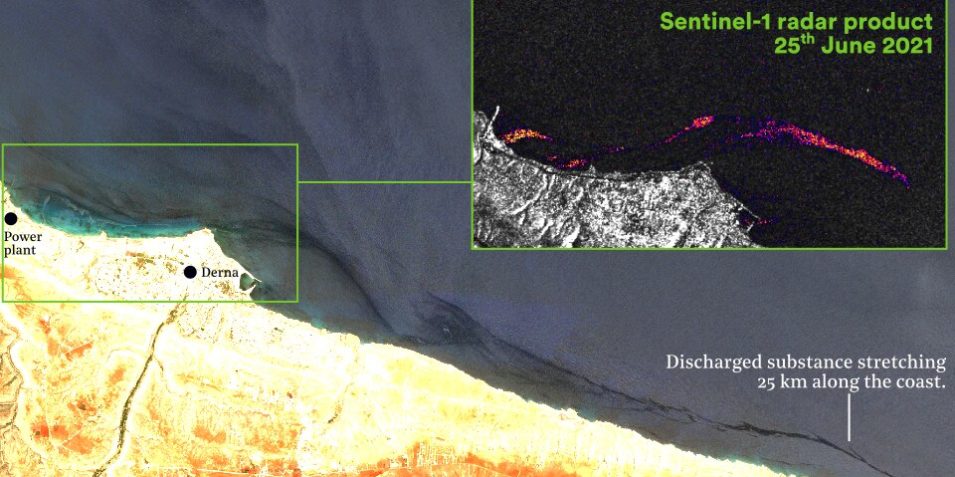
Using satellite imagery, Eoghan Darbyshire identifies recurring oil spills from Derna power and desalination plant in Libya, examining their threat they pose to its biodiverse coastline and the wider context of the country’s decaying infrastructure.
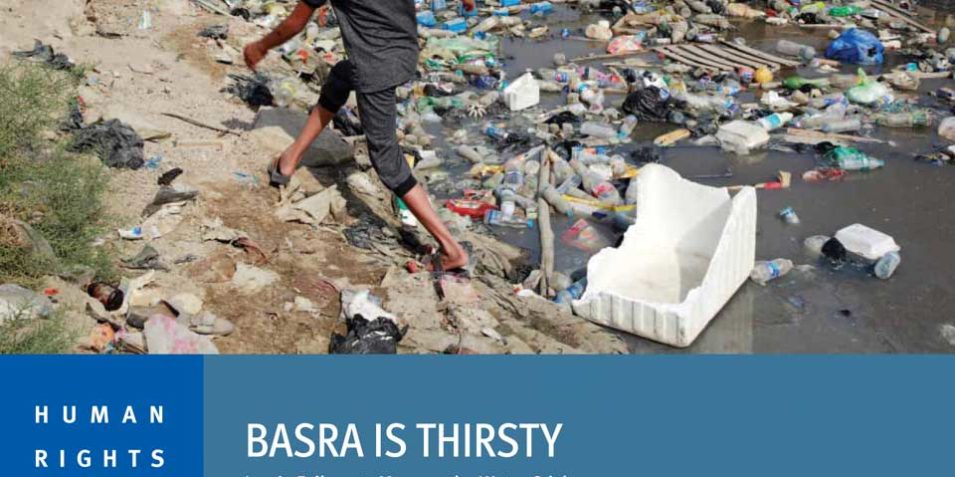
This policy brief examines the public water infrastructure in Basra Governorate, southern Iraq. Crucial to the delivery of water services to the population, the longterm deterioration of this infrastructure is a result of armed conflict, international sanctions and defective governance.
With interest growing in reducing military emissions, Linsey Cottrell and Eoghan Darbyshire explore why they emit so much and what it will take to reduce their contribution to climate change.
Doug Weir untangles what it actually was that NATO and its member states committed to at June’s summit. While there were some positive signs, the pledges fell short of what is needed to address military contributions to the climate crisis, in line with the Paris Agreement.
With so much focus on how climate change can influence security, have we neglected the question of how conflicts influence emissions? As Eoghan Darbyshire and Doug Weir explain, environmental and social changes in conflict-affected and post-conflict areas can mean significant changes in emissions.
Designating biodiversity hotspots as protected areas during conflicts could help reduce environmental harm but this must be done in non-violent, conflict-sensitive and inclusive ways if it is to secure biodiversity, not just from war, but also for peace. This post is part of a series on war, law and the environment co-hosted with the ICRC.
Environmental safeguarding is receiving increasing attention in the humanitarian mine action and disarmament sector, and in this post Linsey Cottrell and Kendra Dupuy introduce the principles of environmental impact assessments for mine action operations.
This post is part of a series on war, law and the environment co-hosted with the ICRC. It explores six complementary measures the international community should be implementing to more fully address the environmental dimensions of armed conflicts and insecurity.
There are signs that some countries may pledge to reduce military greenhouse gas emissions at COP26 in November. This call sets out the scope of what these pledges should include and is open for signature by organisations before and during the COP.
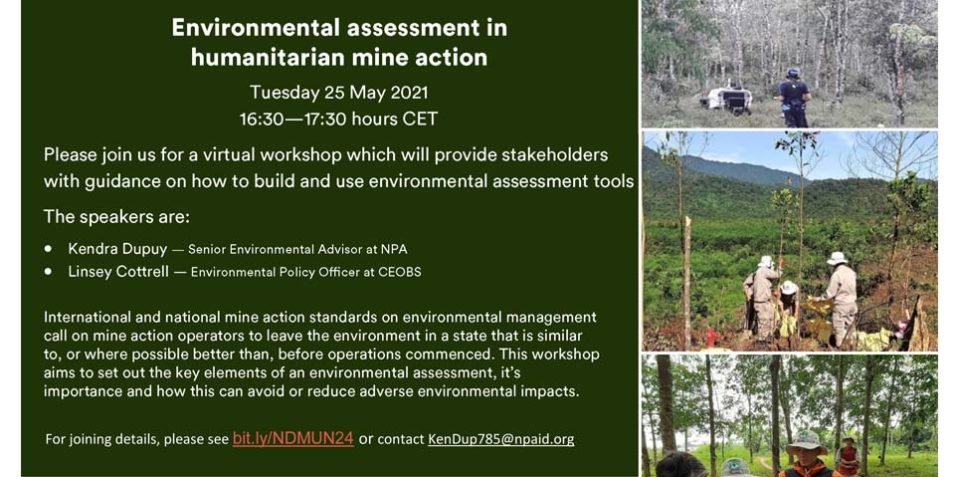
Virtual workshop as part of #NDMUN24 to provide mine action stakeholders with guidance on how to build and use environmental assessment tools.
With talks on a political declaration on the use of explosive weapons in populated areas nearing completion later this year, Linsey Cottrell and Kendra Dupuy argue that it’s critical that their environmental impact is also addressed.
A joint submission by Al Haq, Amnesty, CEOBS, Geneva Water Hub and Harvard University identifying opportunities to strengthen the ILC’s draft principles on the protection of the environment in relation to armed conflicts before they are finalised in 2022.
116 recommendations developed by a civil society collaboration to improve NATO’s environmental performance and policies.
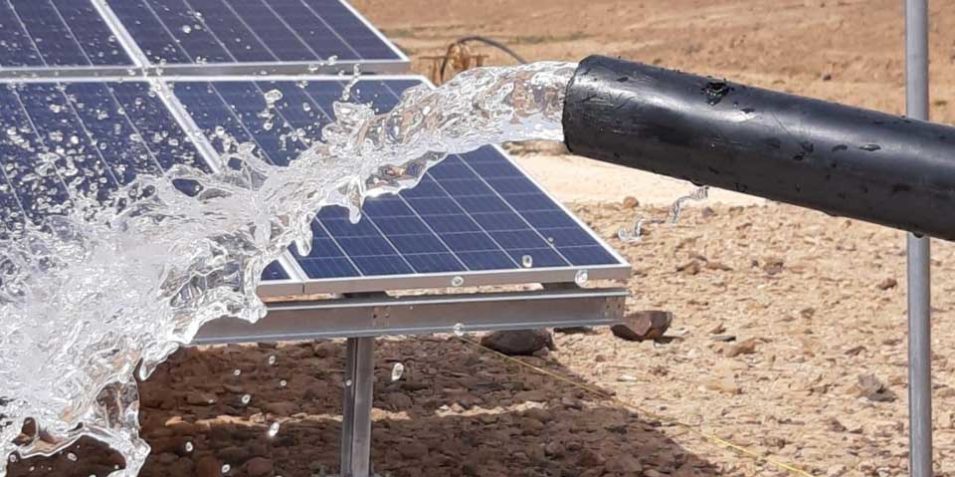
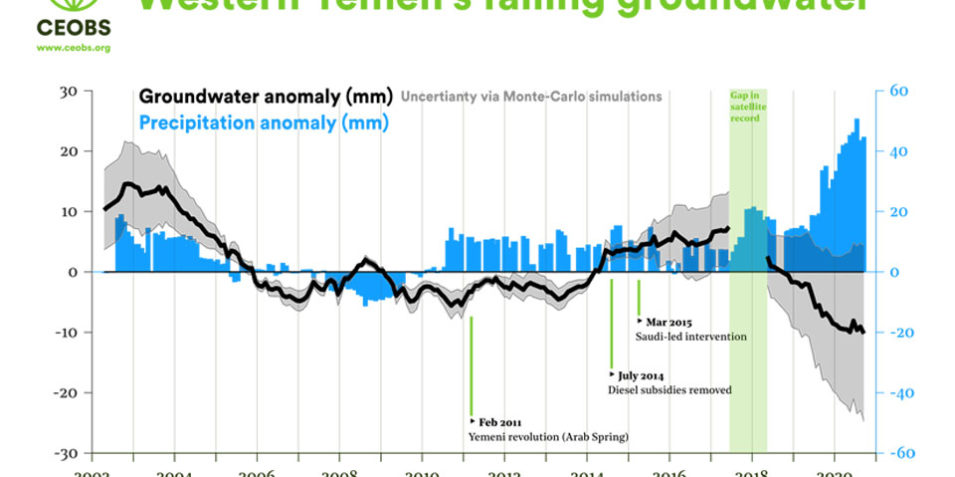
In a major new study CEOBS has identified a potential link between steep declines in groundwater in Yemen and the expansion of solar power in agriculture. In this blog, Leonie Nimmo introduces our findings.
A CEOBS investigation using remote sensing and open source data suggests that the expansion of solar powered agricultural groundwater abstraction in Yemen may be unsustainable, and already responsible for steep declines since 2018.
Deforestation is a common problem for countries affected by conflict. In 2020, COVID-19 placed further constraints on forest management in these areas. This report reviews the latest satellite data on forest loss in seven countries, analysing the forces driving deforestation.
The campaign to criminalise ‘ecocide’ has gained momentum in recent years. In this blog, Dr Rachel Killean explores the possibilities and challenges associated with introducing ecocide as a new international crime at the International Criminal Court.
Policy brief assessing the impact of the armed conflict in Colombia on the environment and on indigenous peoples, and the application of the rules of IHL and international criminal law to the armed conflict as well as their implications for the Special Jurisdiction for Peace (JEP).
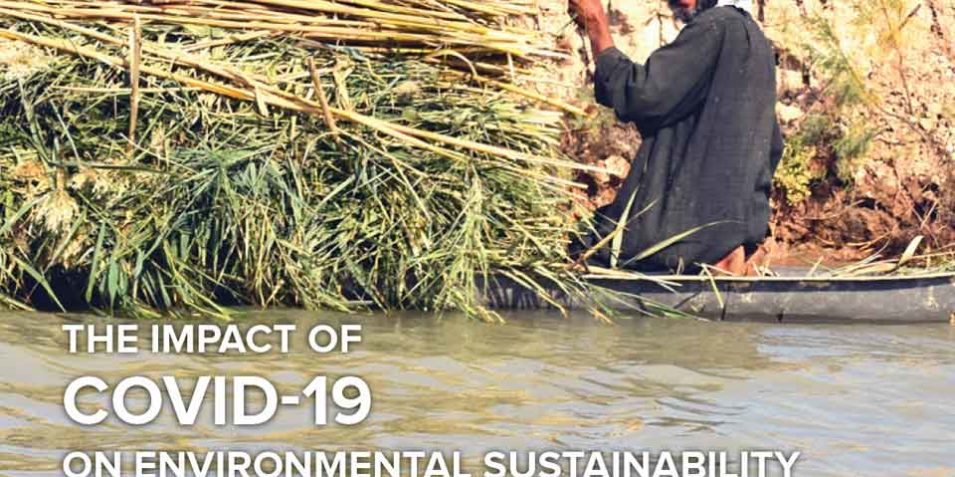
This paper investigates the direct and indirect environmental impacts in Iraq, set against the existing situation of environmental sustainability in the country.
This paper provides a preliminary survey of a set of environmental challenges in Syria that impose significant health, social and economic costs, and suggests green solutions for post-conflict relief and reconstruction.
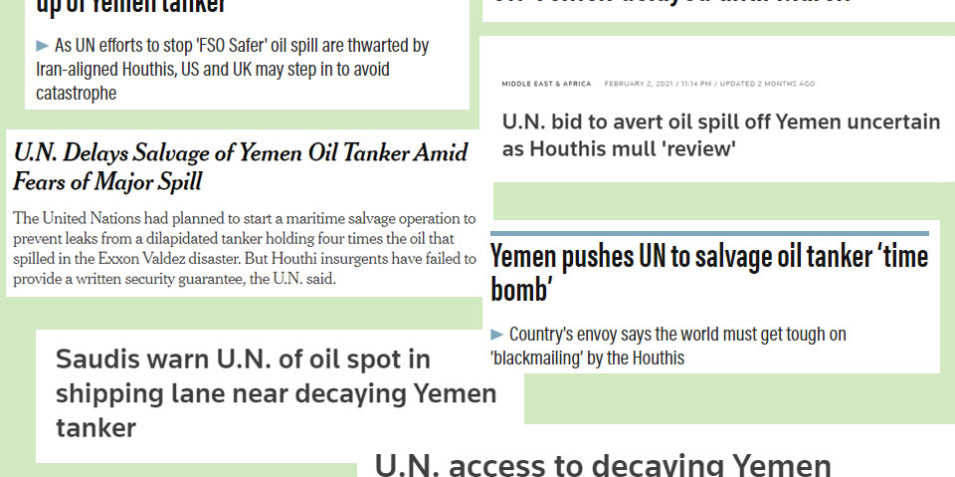
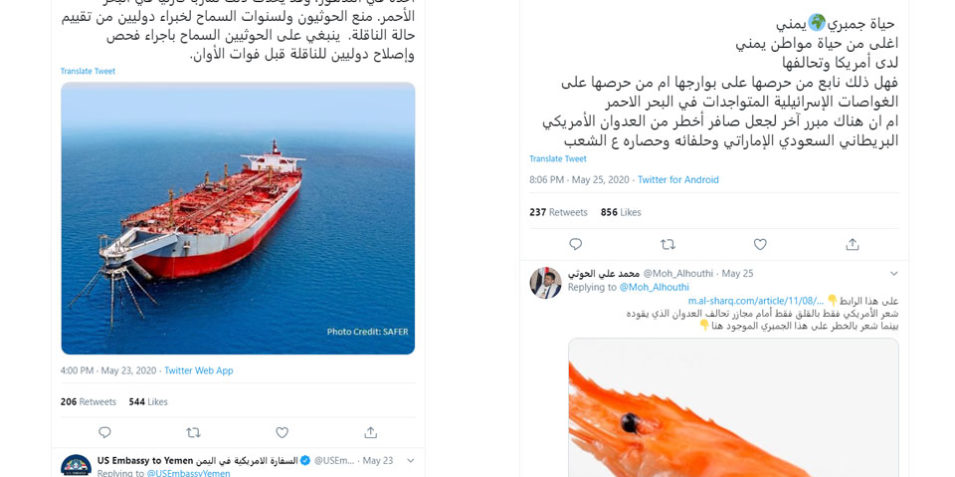
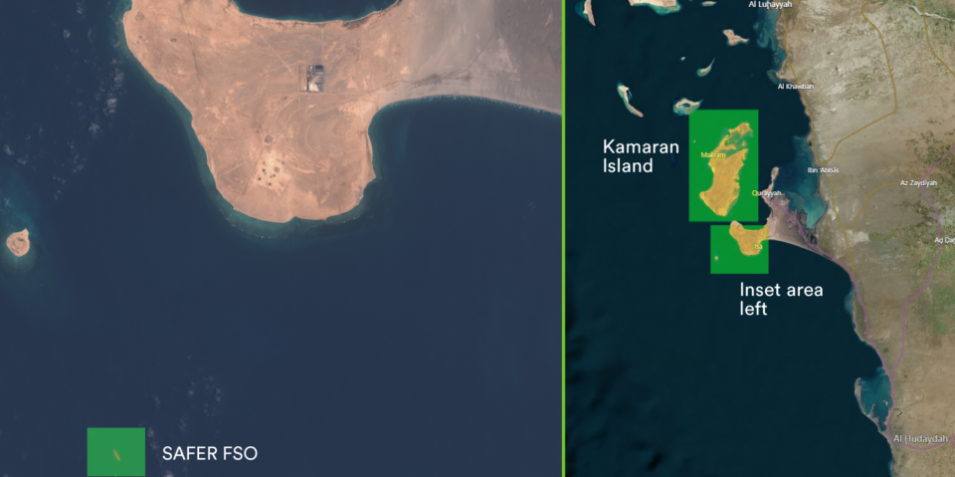
There are calls for the UN Security Council to authorise a military-backed response to the crisis over the SAFER oil tanker off the coast of Yemen. We argue that not only is this unrealistic, it would also have long-term consequences for how the international community addresses the environment, peace and security.
Wild and domesticated animals have long-suffered abuse, injury or death in armed conflicts. In this blog, Janice Cox and Jackson Zee explore this history of harm and the reasons behind it, arguing that the animal victims of war require greater recognition and protection.
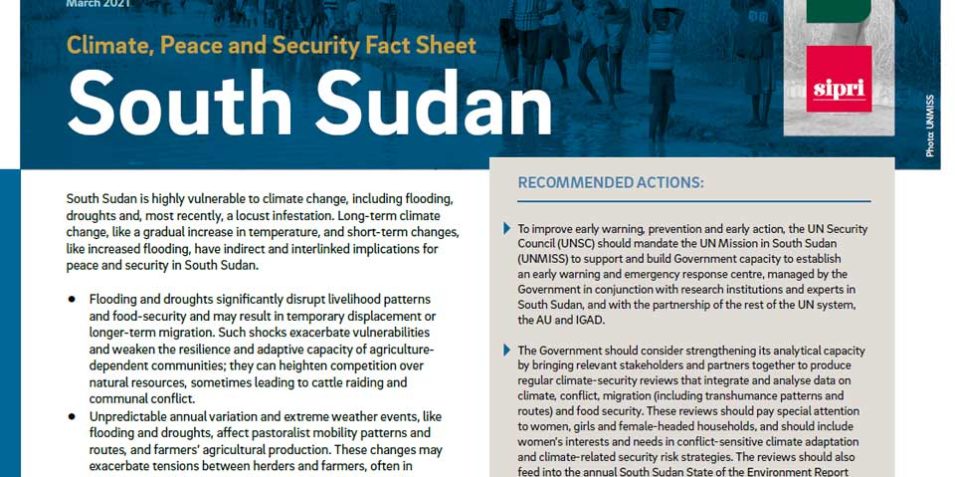
South Sudan is highly vulnerable to climate change, including flooding, droughts and, most recently, a locust infestation. Long-term climate change, like a gradual increase in temperature, and short-term changes, like increased flooding, have indirect and interlinked implications for peace and security in South Sudan.
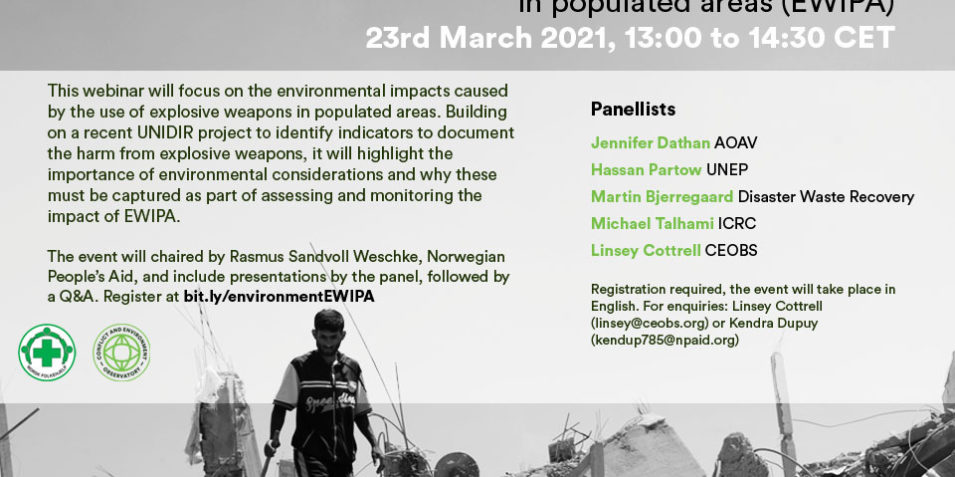
Webinar co-organised by NPA and CEOBS focusing on the direct and reverberating environmental impacts of the use of explosive weapons in populated areas.
Women already play a critical role in mine action, with the number of women working in humanitarian demining programmes increasing. Given gender differences in perception and behaviour towards environmental protection, women already have an important role in environmental mainstreaming in the sector.
Comments submitted to the government of Ireland’s March 2021 negotiations on a political declaration on the use of explosive weapons in populated areas, which identifies opportunities for addressing their environmental impact.
In a new report, CEOBS and SGR reveal for the first time the level of carbon emissions from the largest EU militaries and the EU military sector. This blog summaries our findings.
This CEOBS/SGR study set out to estimate the carbon footprint of the EU’s military sectors. The report also provides a broad overview of the policies and measures currently being pursued to reduce military GHG emissions in the EU, and their likely effectiveness.
A joint position paper arguing that states should use the Fifth United Nations Environment Assembly to help promote the use of nature-based solutions before, during and after armed conflicts.
We explore a new CEOBS report that examines how states and the private sector could use international guidelines to reduce the environmental harm associated with corporate activities in fragile and conflict affected areas.
Report examining what steps states and private companies should take to reduce corporate environmental harm in areas affected by armed conflicts, exploring the OECD Guidelines on Multinational Enterprises, UN Guiding Principles on Business and Human Rights and the ILC’s PERAC principles.
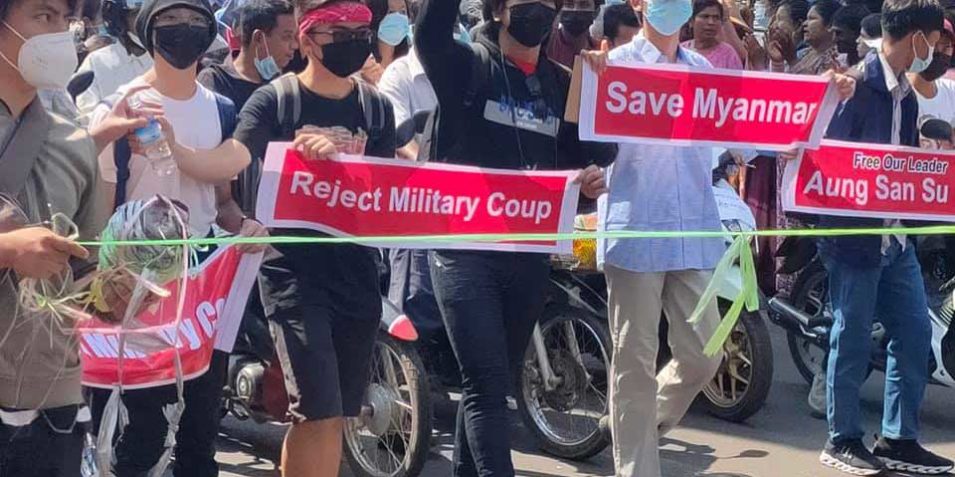
The military coup in Myanmar is likely to have severe and reverberating effects for the country’s environment and natural resources argues Thiri Shwesin Aung, undoing recent progress in environmental governance and sustainable development.
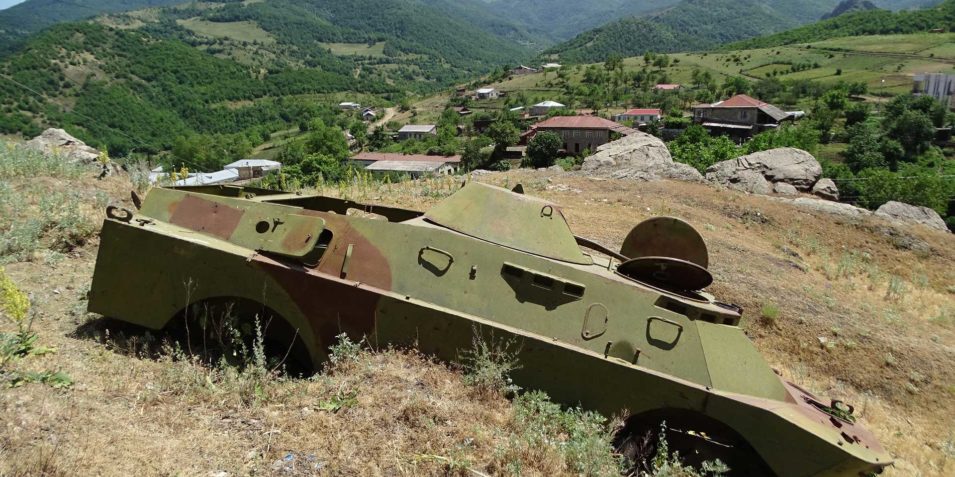
Report providing initial analysis of the environmental dimensions of the 2020 conflict between Armenia and Azerbaijan over Nagorno-Karabach, and which considers environmental propaganda, the use of incendiary weapons, and water and mineral resources.
Why does Russia object to international processes aimed at integrating the environment into international policymaking on peace and security? Nina Lesikhina and Doug Weir summarise the findings of CEOBS’ major new report exploring how and why the concept of environmental security features in Russian domestic, security and foreign policies.
Report seeking to understand why Russia opposes measures to more effectively integrate the environment into international policymaking on peace and security. To do so it explores how and why the concept of environmental security features in Russian domestic, security and foreign policies.
We reviewed Canada’s policies and practice on the protection of the environment in relation to armed conflicts. We found some positives but issues like corporate conduct, Indigenous rights, nuclear weapons and occupation law need attention.
This report reviews Canada’s state practice on the protection of the environment in relation to armed conflicts, or PERAC. It uses draft legal principles developed by the UN’s International Law Commission as benchmarks against which to measure Canadian conduct before, during and after armed conflicts, and in occupation.
South Sudan is rich in biodiversity but it has suffered as a result of its recurring civil wars. In this blog Adrian Garside examines wildlife conservation efforts that took place before, during and after its latest civil war in an effort to protect its natural heritage.
Adrian Garside examines the complex issue of arms proliferation in South Sudan, and the threat it poses to biodiversity protection during and after armed conflict. The ready availability of weapons accelerates biodiversity loss and makes wildlife conservation more dangerous.
A brief introductory overview of the environmental dimensions of the conflict in South Sudan, with facts, figures and further reading.
Virtual side event on mine action and the SDGs co-hosted by Norwegian People’s Aid and CEOBS as part of the 18th Meeting of State Parties to the Anti-Personnel Mine Ban Treaty.
This #EnvConflictDay we argue that a new Environment, Peace and Security agenda is needed to ensure attention for the environment in the global peace and security discourse, to encourage transformative policymaking and to bring meaningful change to people and ecosystems in the world’s most fragile states.
Is environmental damage inevitable in war, or is it possible for it be afforded more protection? Might there be psychological barriers that have prevented governments developing more effective protection? Gabriela Kolpak and Klaudija Visockyte investigate.
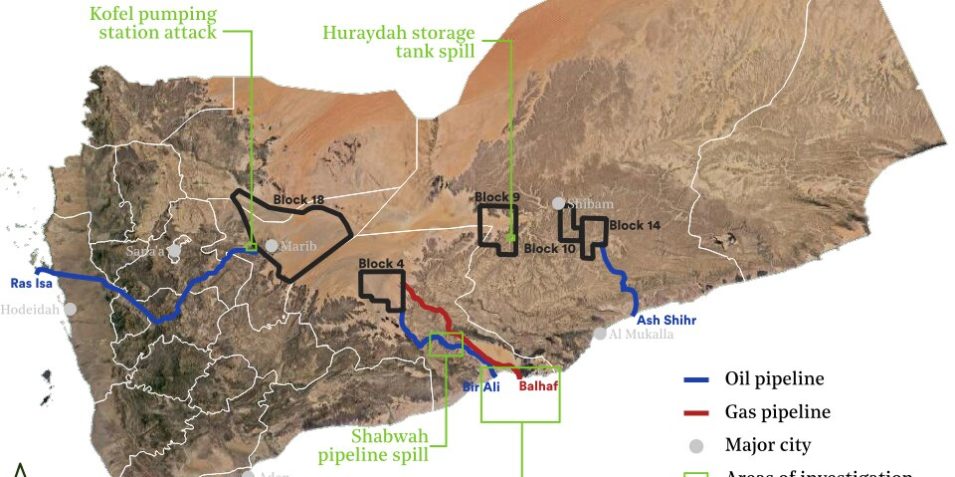
An open source investigation into recent terrestrial and marine oil spills in Yemen, all of which are linked in different ways to its ongoing conflict.
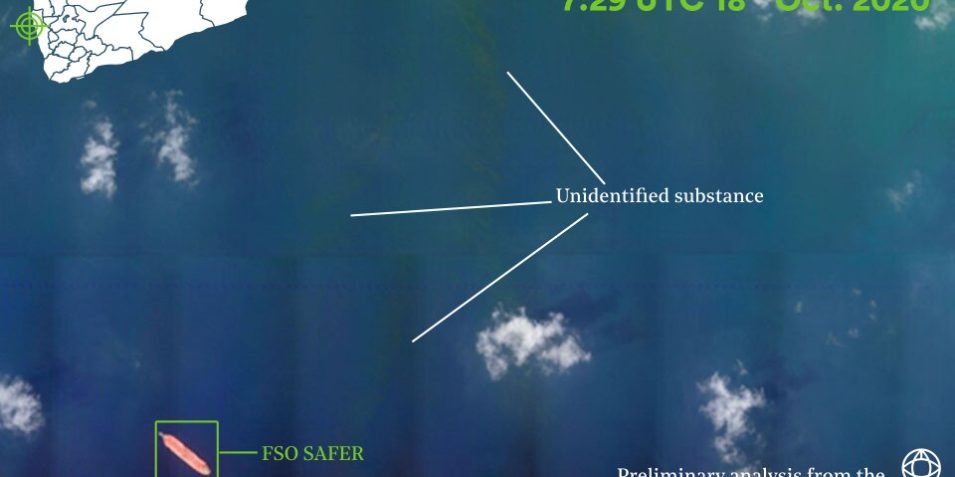
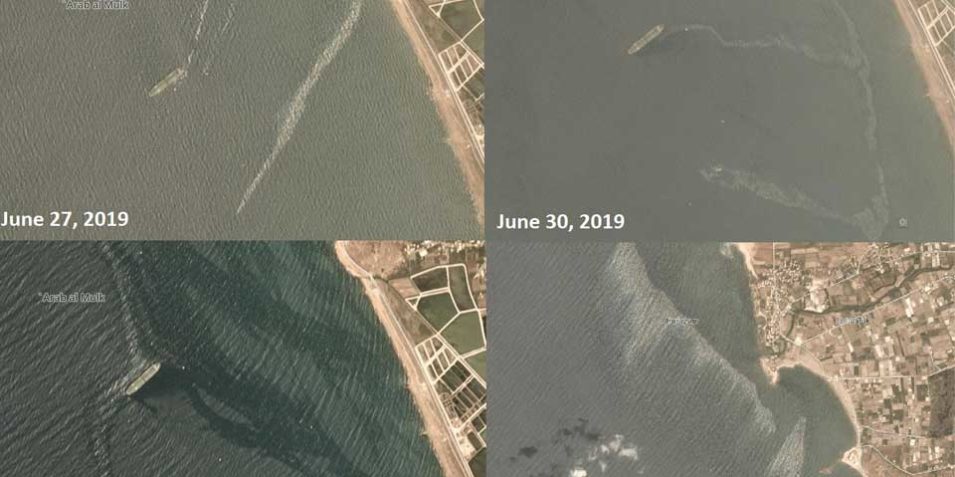
In September, oil leaked from the dilapidated FSO SAFER oil tanker moored off Yemen. Further material was seen in the water during October but this revised analysis of satellite imagery confirms that this material is the result of plankton blooms.
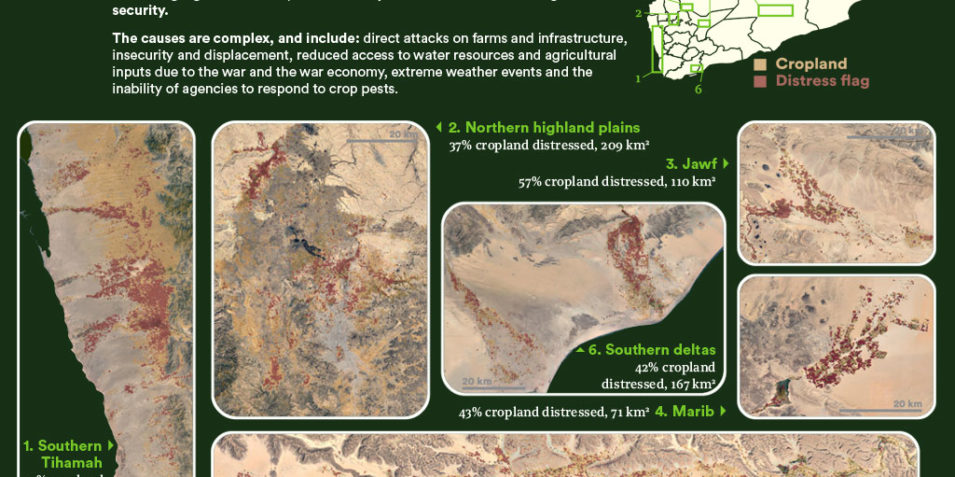
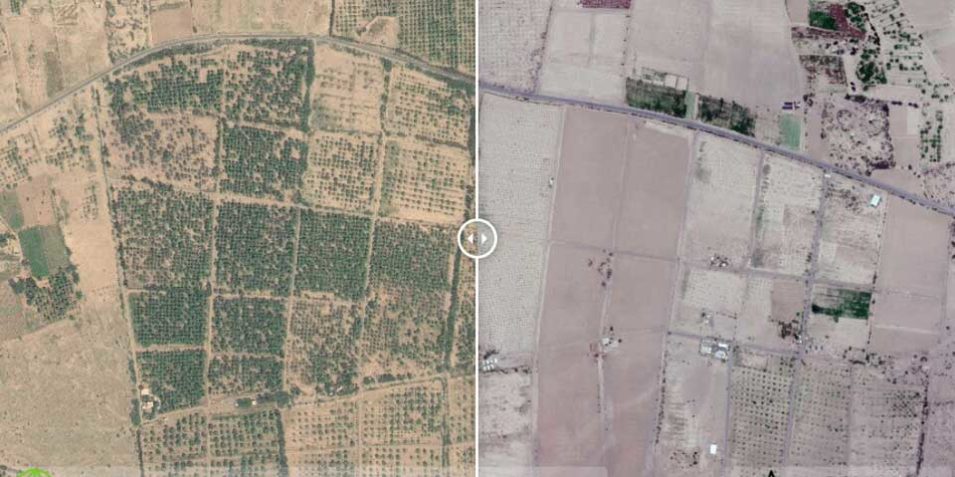
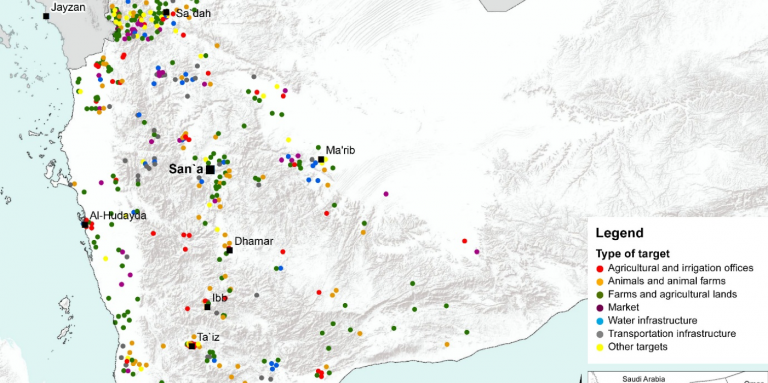
Our major satellite analysis of the state of agricultural land in Yemen finds that 257,000 hectares of its most important agricultural areas have exhibited signs of degradation during the current conflict. This is an area equivalent to the total cropland in Jordan or Lebanon.
Agriculture in wadis Zabid and Rima in the Tihamah plain has been hard hit by Yemen’s conflict. Using open-source datasets, Eoghan Darbyshire takes a deep dive into the situation that has unfolded in this area, and analyses the complex relationship between the conflict and the deteriorating agricultural situation.
Statement on behalf of CEOBS, PAX and Zoï Environment Network arguing that states at the 2020 UNGA First Committee need to do more to articulate the environmental dimensions of the weapons and security issues on its agenda.
In this piece, Linsey Cottrell and Kendra Dupuy provide an overview of the relationship between humanitarian mine action and the environment, examining both how mines and mine action can impact the environment, and how environmental change can influence mine action.
Workshop report from our session on citizen science in areas affected by armed conflict at 2020’s European Citizen Science Association conference. This report summarises the presentations, follow-on discussions and plans for the way forward.
Armed conflicts can have a devastating impact on habitats and wildlife, and historically biodiversity hotspots have been disproportionately affected by warfare. Stavros Pantazopoulos examines whether it is possible to designate such areas as off limits, using protected zones enshrined in law?
Conflict areas are typically data poor, particularly for environmental measurements. Earth observation via satellite remote sensing can fill these data gaps and provide a wealth of information ranging from short-term environmental risks to long-term changes.
Event report on the launch webinar for Harvard’s International Human Rights Clinic and CEOBS’ report Confronting Conflict Pollution, which establishes a framework for victim assistance for people affected by toxic remnants of war.
From nuclear weapons testing to oil well fires and sick veterans, new legal principles use the frameworks developed for assisting those harmed by land mines and cluster munitions to inform how we help the victims of conflict and military pollution.
Harvard Law School’s International Human Rights Clinic and CEOBS have adapted humanitarian disarmament’s norms of victim assistance to the context of toxic remnants of war, with 14 principles designed to establish a framework for assistance.
2020 update to the International Committee of the Red Cross’s 1994 guidelines on international humanitarian law’s provisions for environmental protection during armed conflicts.
Webinar to launch a new report from the Harvard Law School International Human Rights Clinic and CEOBS on a newly developed framework to assist victims of toxic remnants of war. September 30th 16:00-17:30 CEST, 10:00-11:30 EST – registration is now open.
Mine action operators could help to address the climate and biodiversity crises as part of releasing land back to local communities, and re-greening projects in Africa and elsewhere show how this could be done writes Linsey Cottrell.
Climate change is already influencing humanitarian mine action activities. The experience of Tajikistan is an example of how humanitarian disarmament practices and policies may need to change in response.
NGOs encourage states and other stakeholders to do more to integrate environmental considerations into cluster munition clearance policies ahead of the Second Review Conference of States Parties to the Convention on Cluster Munitions.
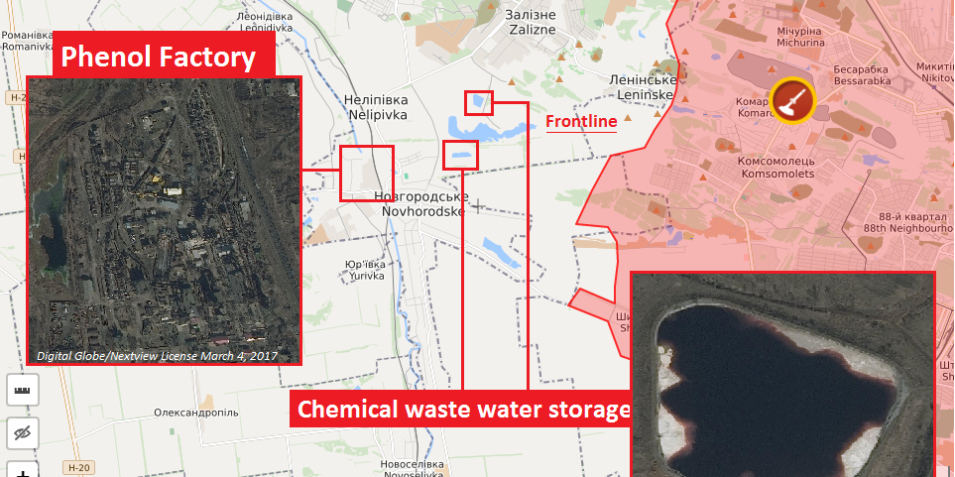
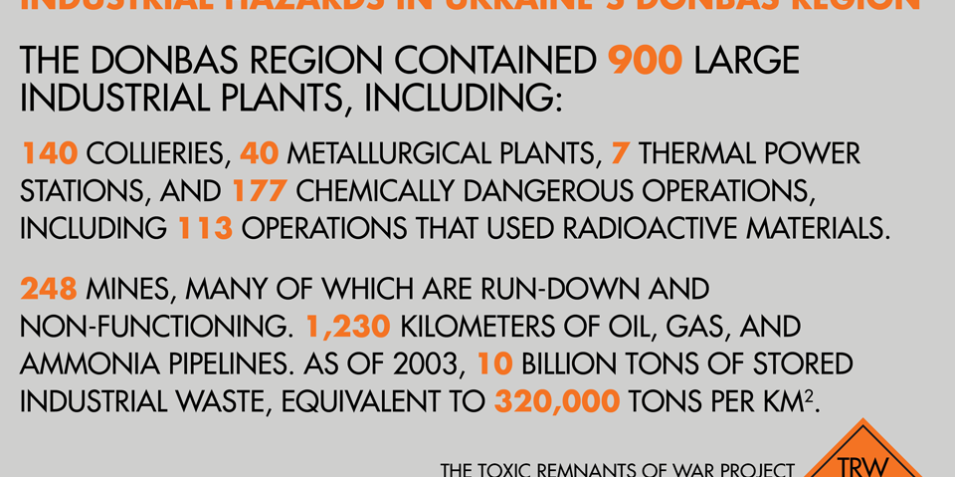
939 millions tons of industrial waste are stored in tailings facilities in Donetsk and Luhansk Oblasts, the conflict is increasing the risk of a serious environmental emergency through direct damage, and by mines and heavy fighting obstructing access for assessments and repairs.
Unless we know how the environment has been harmed during conflicts, planning assistance to people and ecosystems is impossible. Could low cost participatory research help plug the current data collection gap in areas affected by conflicts?
Focusing on Syria and Ukraine, AOAV review four key areas of environmental concern to gain some understanding of the environmental consequences from the use of explosive weapons. These areas are unexploded ordnance, agriculture, infrastructural damage, and flora and fauna.
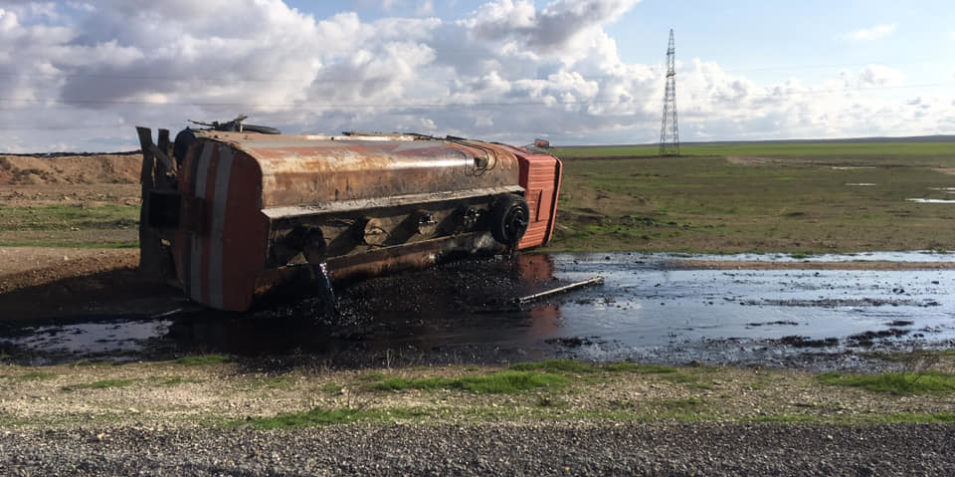
Rivers of crude oil and oil waste are flowing through northeast Syria, with no solution in sight for the thousands of people affected by the pollution.
This blog summarises the findings of a new UNEP assessment of environmental conditions in the West Bank and Gaza, which has revealed the severity and intensity of environmental degradation.
We have received funding from the British Ecological Society to develop STEM teaching materials on the environmental dimensions of armed conflicts that are suitable for Key Stage 3, 4 and 5 students.
The fate of the hazardous SAFER oil tanker moored off Yemen is becoming increasingly politicised, in this blog Doug Weir reviews recent developments and considers whether the UN Security Council could help break the current impasse.
How does environmental governance function in areas that are governed by non-state actors during conflicts? Olga Shashkina has explored this question in eastern Ukraine, where two new republics declared themselves when the Ukrainian government lost control of the region.
Report detailing the environmental footprint of UK military activities and operations, the UK arms industry and the potential environmental impact of the use of the UK’s nuclear weapons.
Long-awaited environmental assessment of the rate and severity of environmental degradation in the West Bank and Gaza Strip.
Joint position from CEOBS, the Environmental Law Institute, Norwegian People’s Aid, PAX, Zoï Environment Network and the Zoological Society of London that urges states to use UNEA-5 to help catalyse global efforts to address the link between armed conflicts and biodiversity loss.
Geodiversity provides the habitat upon which biodiversity is dependant, and it often also underpins the livelihoods of those living in conflict zones. In this blog, Dr Kevin Kiernan argues that we need to do more to protect it before, during and after conflicts.
The COVID-19 pandemic is highlighting the vulnerability of people in conflict-affected areas without access to water. In this blog, Dr Mara Tignino and Tadesse Kebebew argue that strengthening the norms protecting water infrastructure is more vital than ever.
This blog investigates a potential case of mine water flooding in eastern Ukraine, at a coal mine close to the location of an experimental nuclear detonation in the 1970s. Many mines have been closed during the conflict and with water pumping stopped there are widespread risks from pollution, methane leaks and subsidence.
Clearing land mines and tackling unexploded ordnance can harm the environment. Together with Norwegian People’s Aid, we surveyed the environmental attitudes and policies of mine action operators to try and identify where their practice could be improved.
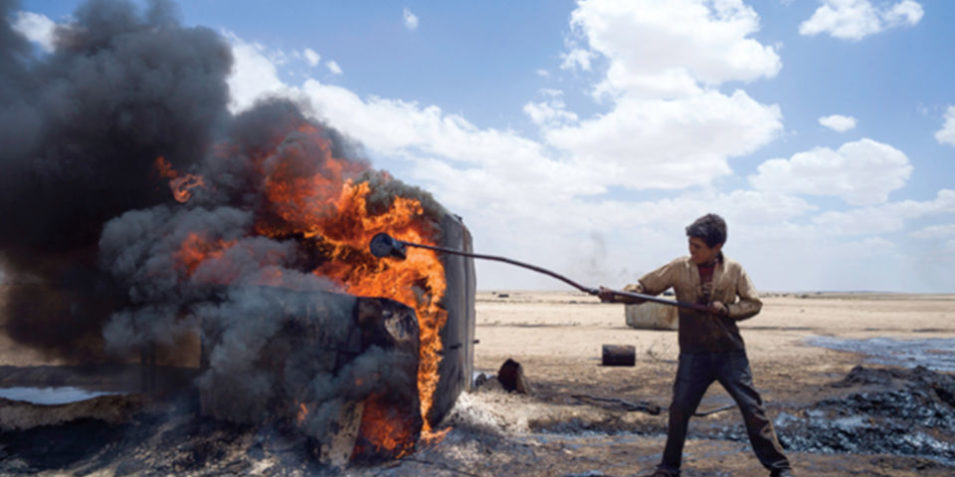
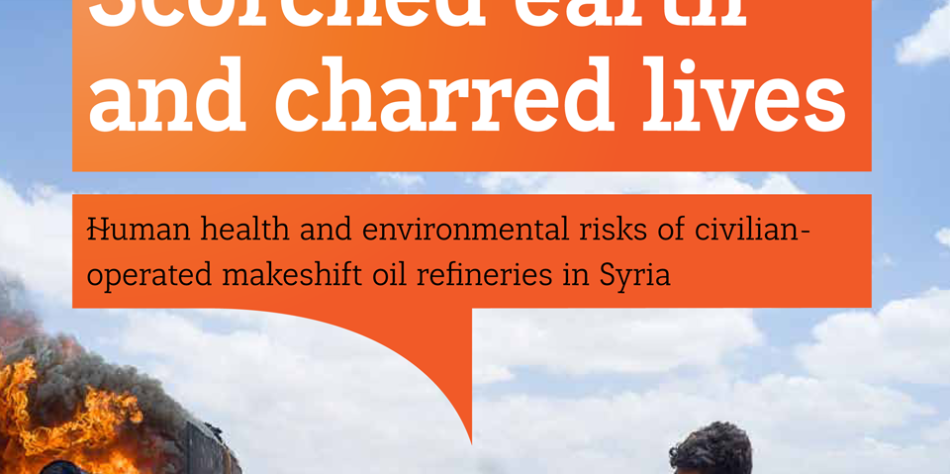
Analysis of the growth and increasing level of organisation in informal oil refining in Syria – the practice creates acute and chronic health risks for workers and nearby communities, and dealing with its environmental legacy will be a huge task.
Could geoengineering technologies that can modify our climate pose a threat to peace and security? And could they join other environmentally risky civilian infrastructure in becoming a target or hostage during conflicts? Gabriela Kolpak investigates.
Armed conflicts pose a threat to biodiversity and hamper conservation efforts. New legal norms intended to protect the environment in relation to armed conflicts could provide greater protection for biodiversity hotspots and are the subject of a motion ahead of this year’s World Conservation Congress.
Policy brief by NATO’s Defence College on its developing environmental security agenda, which covers conflict risks, reducing harm in operations, how climate change will alter operations and impact bases, and on what role NATO should play in addressing and responding to these issues.
The need to improve environmental standards in mine action is particularly clear when working in areas with rich or sensitive ecosystems. Kendra Dupuy and Linsey Cottrell report from their field visit to Colombia and on the challenges mainstreaming faces there.
Deteriorating access to water during Yemen’s conflict has had a disproportionate impact on women. But far from passive, silent victims, Leonie Nimmo finds that they can be found on the front lines, delivering aid and negotiating access to water sources.
Poor environmental governance and a changing climate are leading to the displacement of people in southern Iraq, with families unable to sustain themselves from agriculture and livestock production.
A recent workshop co-hosted by NPA, CEOBS and The HALO Trust demonstrated the growing interest in the need to mainstream the environment and climate change in mine action. In this blog, Linsey Cottrell and Kendra Dupuy report on the outcomes from the event in Geneva.
The International Law Commission has adopted legal principles on corporate due diligence and liability for companies operating in areas affected by armed conflicts. In this blog Dr Taygeti Michalakea examines how these principles compare to the standards established by the United Nations Guiding Principles on Business and Human Rights.
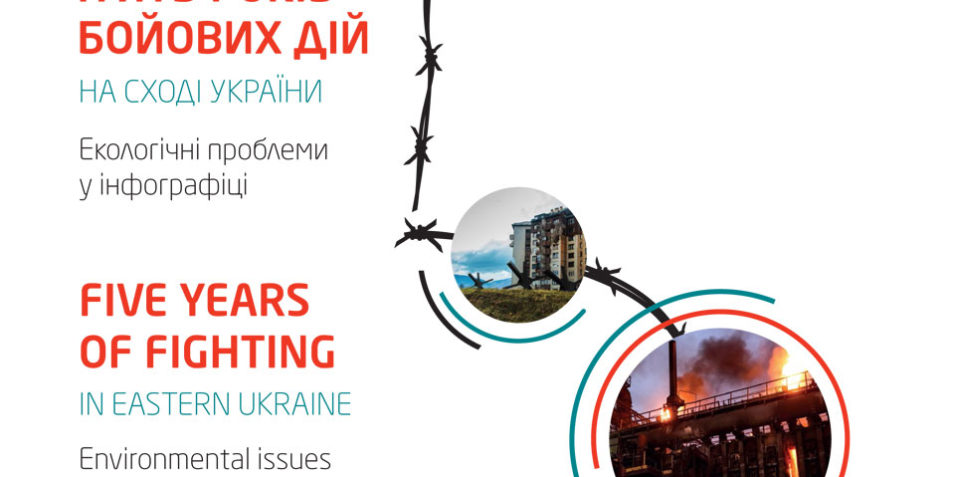
To mark five years of conflict the OSCE Project Coordinator for Ukraine has published a series of infographics detailing the environmental consequences of the conflict in Ukraine’s Donbas region.
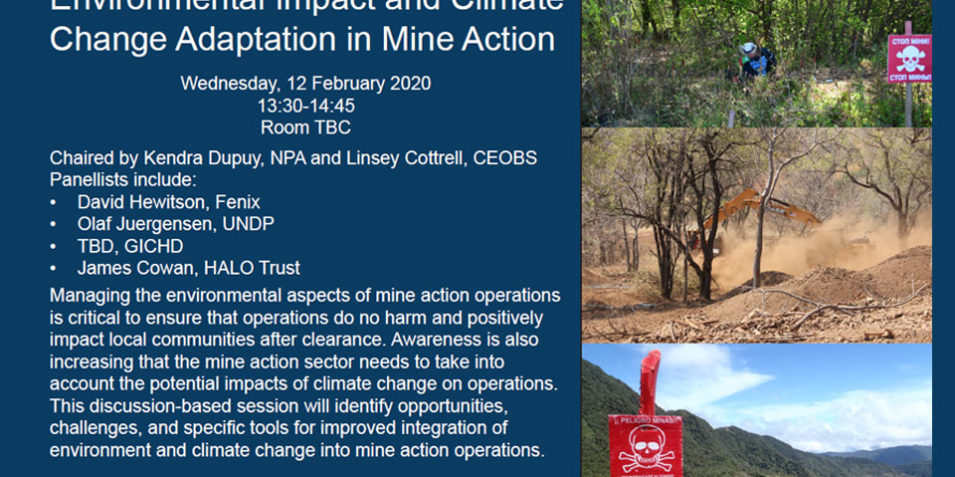
Side event on environmental mainstreaming in humanitarian mine action, co-organised by Norwegian People’s Aid, CEOBS and the HALO Trust. Feb 12th 2020, Geneva.
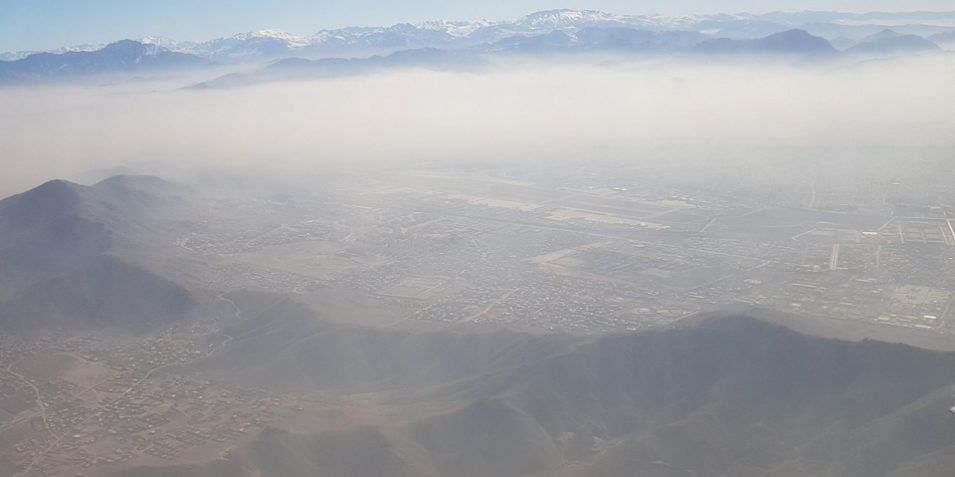
Our analysis of air monitoring data collected by the US embassy in Kabul between September and December 2019 sheds light on just how polluted the city’s air gets during the winter.
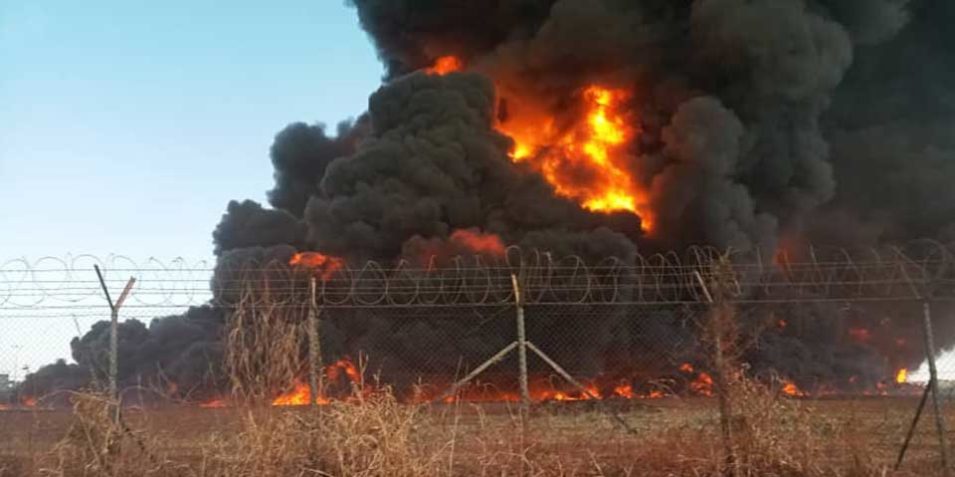
An open source investigation into South Sudan’s oil industry and the pollution it causes through inadequate management and regulation.
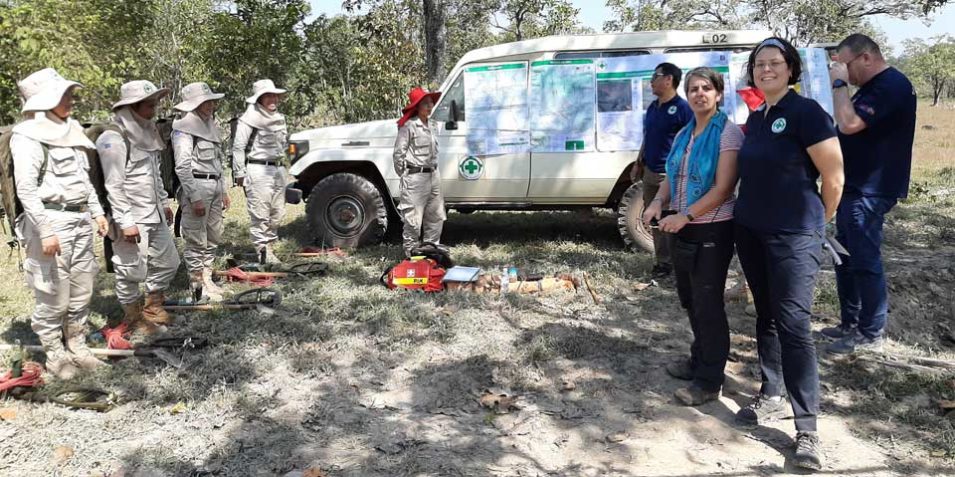
Clearing land mines and explosive remnants of war can also harm the environment. In a joint project, CEOBS is working with Norwegian People’s Aid to try and identify how this harm can be reduced. Kendra Dupuy and Linsey Cottrell share their thoughts as they begin the project.
Our round up and analysis of 2019’s UN General Assembly debate on proposals by the International law Commission to strengthen the laws protecting the environment in relation to armed conflicts.
Report finds that Islamic State’s extractive and destructive policies towards agricultural areas in northern Iraq are continuing to hamper renewed agricultural activities in rural Ninewa Plains and Sinjar and are delaying the return of IDP farmers to their areas of origin.
NATO and its member states are reacting to growing international pressure to reduce the environmental consequences of conflicts, this compilation of articles provides examples of this response.
Peacetime environmental legislation can help reduce the use of hazardous materials in conflicts. In this blog Linsey Cottrell and Doug Weir examine the impact of EU REACH legislation on the European defence industry, and the implications of a hard Brexit for efforts to reduce the polluting footprint of the UK MoD.
The Government of the Republic of South Sudan’s principle instrument for the undertaking of biodiversity management and conservation in the country. It presents a form of baseline, a reference for the status of biodiversity and conservation, as well as a vision for the future.
Joint civil society statement from 103 NGOs and experts to mark #EnvConflictDay 2019 calling for states to take urgent action to address the environmental dimensions of armed conflicts.
Afghanistan and its people are highly vulnerable to Climate Change, this briefing examines these risks and proposes measures to address them.
This report provides insights into the positions likely to be taken by the ICRC in its revised environmental guidelines for military manuals, which are expected to be published in 2020.
A brief overview of international legal and policy initiatives relating to conflict and the environment, with timeline and further suggested reading.
Briefing paper for states ahead of October 2019’s debate in the UN General Assembly’s Sixth Committee. The paper identifies opportunities to strengthen the most recent draft principles proposed by the ILC on the protection of the environment in relation to armed conflicts.
CEOBS has reviewed the UK’s policy and practice on the protection of the environment in relation to armed conflicts and found considerable room for improvement in both practice and reporting.
In this report we analyse the UK’s practice on the protection of the environment in relation to armed conflicts, using the draft principles on the topic that have been developed by the UN’s International Law Commission.
The challenges for the water system eastern Ukraine are significant and remain largely unchanged since they were first assessed by UNICEF in 2017.
This report contains all 28 draft principles adopted by the ILC at First Reading in July 2019, together with their commentaries.
Paper by CEOBS, Goldsmiths University of London and King’s College London on the potential of civilian science – participatory citizen science methodologies – for environmental data collection in areas affected by armed conflicts.
Conflicts often disrupt environmental governance and sustainable development. In this blog Doug Weir examines how the conflict in Yemen has interrupted plans to improve waste management while creating new risks to human and environmental health.

In June, a marine oil pipeline feeding a Syrian oil refinery was sabotaged, this open source investigation considers the environmental consequences of the incident.
A study of satellite data by the REACH Initiative has found that 948,000 acres of agricultural land in Syria was affected by wildfires between May and June 2019.
An investigation into the factors behind the water crisis in Basra Iraq, and the failure of the Iraqi government to address them.
Reconstruction and analysis of herbicide spraying events on the Gaza border that reveals the extent to which Israeli spraying is affecting Palestinian areas, impacting on agriculture and potentially on human health.
2019 is a hugely symbolic year for the laws protecting the environment in conflict. The adoption of 28 legal principles by the UN’s International Law Commission this month is the first of two major milestones. Stavros Pantazopoulos Looks at what has been agreed, what’s missing and what happens next.
The impacts of climate change are particularly complex in the Middle East and North Africa (MENA). The region suffers from violent conflicts and severe water scarcity, while climate models show more serious scenarios here than in other regions. This paper explains how the security of the MENA region is inscribed in a new climate reality.
Policy brief which shows that eight of the 10 countries hosting the largest multilateral peace operations in 2018 were located in areas highly exposed to climate change, yet international efforts to build and maintain peace are not yet taking these emerging challenges systematically into account.
A paper examining US military fuel use for the post 9-11 wars, which finds that the Department of Defense emits more CO2 than many countries with advanced economies.
Recent and ongoing conflicts in the MENA have seen the increasing use of water as a weapon and as a target, this paper by the Pacific Institute analyses this trend and considers ways to address it through enhancing protection during conflicts.
First look at the entire suite of draft legal principles that have been under development by the International Law Commission since 2013 and which are intended to enhance protection for the environment in relation to armed conflicts.
In late 2019, the ICRC will launch updated guidelines for militaries on environmental protection during armed conflicts, this blog and animation consider why they are needed.
This article uses open source methods and remote sensing to explore the trail of agricultural destruction caused by fires in central Iraq in May 2019, and reviews the evidence of whether they have been deliberately started by Islamic State.
Colombian experts are working on a proposal for the new transitional justice to investigate the ways in which the environment and its caretakers have been affected by violence.
Four decades of conflict and recurrent natural disasters have debilitated Afghanistan’s institutions and weakened the resilience of its people. In a country where more than 70 percent of the population is associated with crop production and livestock, the food security situation is expected to deteriorate further.
Seven new draft principles on the protection of the environment in relation to armed conflicts are being debated by the UN’s International Law Commission. Stavros Pantazopoulos examines the principles and finds that they are likely to be contested by governments.
Environmental risks and damage in conflicts have long been used for propaganda purposes but the growth of social media has turbocharged this in recent years. In this blog Doug Weir and Dr Nickolai Denisov untangle cases from Gaza, Ukraine and Yemen to explore how information becomes a weapon.
A report assessing how the conflict in eastern Ukraine has impacted the quality of surface and groundwaters in the Siverskyi Donets basin, which is intersected by the Ukraine conflict’s frontline.
Blog analysing the challenges that post-conflict sustainable development will face in Colombia without efforts to strengthen governance at all levels.
A dilapidated tanker with 1.14m barrels of crude oil has become a pawn in the conflict in Yemen. The potential for miscalculation leading to a spill that would cause serious harm to Red Sea ecosystems is significant. In this blog Doug Weir catches up with developments with the SAFER FSO one year on.
The 5th report from the International Law Commission on the protection of the environment in relation to armed conflicts proposes seven new draft principles and addresses a range of issues, include the responsibility of state and non state actors.
Satellite imagery and remote sensing are offering new ways to study the environment in areas affected by armed conflicts. Dr Lina Eklund provides examples of how they can be used to monitor changes in land use, what those changes can tell us, and offers tips on how you can try it at home.
The Global Environmental Outlook is UN Environment’s periodic assessment of the state of the world’s environment. The latest edition paints a bleak picture; Doug Weir and Leonie Nimmo take a look at what it has to say about the environmental dimensions of armed conflicts and security.
A study that seeks to document and model the impact of the conflict in Yemen on sustainable development, including its impact on environmental infrastructure such as water and sanitation, and its impact on agricultural practices and food security.
This policy brief examines the environmental and political impact of climate change on Palestine-Israel, particularly in the Occupied Palestinian Territory (OPT), offering recommendations for political and practical climate change adaptation.
Eight Year Anniversary of the Syrian Civil War: Thematic assessment of satellite identified damage This damage atlas provides an overview of infrastructure damage in 16 towns and cities across Syria, as well as the Eastern Ghouta region (Duma, Arbin, Harasta, Misraba), providing some of the context needed to understand post-conflict conditions. It also provides a…
How did this year’s UN Environment Assembly address environmental security and the environmental dimensions of armed conflicts. Doug Weir reviews what was achieved and considers how future meetings could provide an important platform for the topic.
This year could be a significant one for how the international community interprets the law protecting the environment in non-international armed conflicts. Right now, protection is minimal and, as Jeanique Pretorius explains, addressing this is likely to require that we also look to human rights and environmental law for inspiration.
After two game changing resolutions at its second and third meetings, Doug Weir looks ahead to the Fourth UN Environment Assembly this month to gauge the level of interest in the environmental dimensions of armed conflicts, and finds that the concept of environmental security remains as contested as ever.
A new study has examined the causes and extent of infrastructure damage in Gaza and the West Bank. Leonie Nimmo takes a look at both the consequences of slow violence under occupation, and periods of armed violence for the environment and for the viability of life.
Report assessing the reverberating effects of the use of explosive weapons in Syria, which considers the environmental legacy of UXO and of the destruction to agricultural and industrial areas during the conflict.
Israel, Palestine, and Jordan are all grappling with water scarcity in different ways and to different degrees. The Middle East and North Africa (MENA) region is considered a climate hotspot due to its natural water scarcity, low levels of socio-ecological resilience, social tensions and political conflicts, and ongoing immigration crisis. Over the course of the…
The first-ever global assessment of environmental rule of law finds weak enforcement to be a global trend that is exacerbating environmental threats, despite prolific growth in environmental laws and agencies worldwide over the last four decades.
Open source analysis of the impact of unseasonably heavy rains in northern Syria on IDPs and damaged oil infrastructure. When the season of heavy rainfall began in war-torn Syria, the misery local residents and internally displaced persons (IDPs) have faced over the years was compounded by environmental setbacks. This open-source monitoring blog of the situation…
A year after victory was declared over Islamic State in Iraq, this report examines the human and environmental legacy of its strategy of wanton damage in agricultural areas, and why more recovery assistance is needed from the Iraqi government.
This report provides an overview of OSCE SMM-facilitation and monitoring of infrastructure repair and maintenance in eastern Ukraine (January 2017 – August 2018).
A round up of the 7th November 2018 Arria Formula debate in the UN Security Council on the protection of the environment during armed conflict – the first time the topic has been discussed in the Council.
Our round up and analysis of the recent debate in the UN General Assembly’s Sixth Committee on the International Law Commission’s ongoing study into strengthening the legal framework protecting the environment in relation to armed conflicts. Progress is being made but fundamental differences of opinion remain.
Organisations and experts issue a joint statement to mark #EnvConflictDay 2018. The statement urges the international community to do far more to enhance the environmental security of communities before, during and after conflicts.
Afghanistan’s economy and people are heavily reliant on agriculture, a sector that has been under huge pressure due to conflict and insecurity and increasingly to climate change. This report from the UN FAO provides insights into the linkages between these factors and the efforts to address them.
Joint input for UN Environment’s consultation for its ‘Pollution Free Planet’ report that will be published at UNEA-4 in March 2019. The publication proposes a number of recommendations for measures that should be taken to minimise and address conflict pollution and the toxic remnants of war, and which should be pursued in the implementation of UNEA resolution 3/1.
A joint briefing paper by CEOBS and Al Haq with recommendations to states on how to strengthen the International Law Commission’s draft principles on the protection of the environment in situations of occupation.
This RAND study investigates the public health consequences of Gaza’s water crisis, finding that more than a quarter of all reported disease in Gaza is linked to poor water quality. The study also examines the steps necessary to improve water supplies to the Strip.
This report gives an overview of the impact of the Coalition bombing campaign on food production and distribution in rural Yemen and on fishing along the Red Sea coast.
This paper considers the threat that environmental degradation poses for peacebuilding and recovery in Iraq and Yemen, with a particular focus on climate change risks. But it also identifies opportunities for addressing the environment during reconstruction efforts.
Over the summer, the International Law Commission has strengthened its draft principles on environmental protection in situations of occupation. In this blog, CEOBS teams up with Al-Haq to review the revised principles against current cases of occupation to identify any further improvements that could be made.
Input submitted to UN Environment’s law division during a review meeting on the IV Montevideo Programme on the development of international environmental law, Geneva.
Climate change, drought and military activities all contributed to a spate of wildfires in Iraq during the summer of 2018, a pattern that seems likely to continue in coming years.
Hydrological limitations, increasing temperatures and extreme weather events put pressure on basic resources and undermine livelihood security for Iraq’s population. Failure to monitor and manage these climate-related risks will increase the risk from ISIS and post-ISIS terrorist groups.
Water security is a growing problem in Afghanistan, and one that looks likely to worsen with the impact of climate change. Access to clean water is already limited and aquifers and rivers badly affected by pollution.
Since March, Palestinian protesters have been launching incendiary kites and balloons over the border into Israel. The ensuing fires have affected agricultural areas and nature reserves, with no end in sight protected areas are the conflicts’s latest environmental casualty.
Alongside other major long-term challenges, such as the resettlement and integration of refuges and internally displaced people, urban rehabilitation or political stability, a vital priority must be to address Iraq’s water crisis in order to break the cycles of conflict and post-conflict periods and to build a basis for sustainable peace in the country.
In June 2018, social media and OSINT were used to identify damage caused to an oil storage site in Libya caused by fighting between the LNA and a former PFG commander.
Pollution is killing more people in Afghanistan each year than armed violence. While efforts have been made to build environmental governance since 2003, addressing the health and environmental threats posed by pollution in the face of insecurity, high levels of corruption and with limited financial resources remains an enormous challenge.
This first ever State of the Environment and Outlook report for South Sudan is intended to form the basis and the benchmark for assessments, inventories, mapping and valuation of its vast natural resources; for future planning and the management of natural resources and environmental protection.
A summary report commission by DfID covering the risks Iraq faces due to climate change, the degradation of water resources, biodiversity loss and conflict pollution.
The latest report by the International Law Commission in its ongoing study into the protection of the environment in relation to armed conflicts deals with environmental protection in situations of occupation. This blog looks at the new draft principles, their basis and argues that they should be strengthened.
Debris generated by conflicts poses health and environmental risks and its unsustainable management can lead to further environmental problems. This study reviewed the options for managing the vast quantity of debris generated by the conflict against Islamic State in Mosul.
It looks likely that an initiative to create a legally binding global agreement enshrining the principles of environmental law will go ahead. The draft text includes a principle on the protection of the environment in relation to armed conflicts; this blog takes a look at how the Pact could influence the ongoing legal debate.
In March, the Yemeni government called for UN help in dealing with a potentially serious oil pollution threat in the Red Sea. The case has highlighted the wider threat from oil pollution in Yemen’s civil war and the risks it poses to the Red Sea’s ecology.
A call to rethink how agricultural areas converted from desert to poppy production in Afghanistan are viewed.
A paper examining the relationship between climate change and conflict in South Sudan. Some of the important factors the paper highlights include the competition for territory usually based on the land’s fertility.
Conflicts like the ones in the Ukraine, Iraq, and Syria show how wartime damage to the environment can have long-term consequences for countries as they seek to recover.
While previous reports by the ILC adopted a temporal approach, broadly addressing environmental protection before, during and after conflicts, the new report delves into the obligations on states to protect the environment during situations of occupation and proposes three new draft principles.
In 2015, 24,142 hectares of forest were lost, which is almost 20% of Colombia’s total forested area in that year. The main driving forces of the deforestation are the expansion of the agricultural industry to make room for cattle, along with the commercialization of wood, illicit crops, and illegal mining.
This report looks at the environmental impact of peace operations and how the UN has responded, including through policies and guidelines, dedicated staff, and training material. In particular, it assesses the challenges the Department of Field Support faces in implementing its Environment Strategy.
Welcome to our new website and new organisational identity, this blog explains why we have launched The Conflict and Environment Observatory after six years as the Toxic Remnants of War Project, and what we hope to achieve.
There is a war being waged against whales, and it is being fought with noise, and it has left scientists and conservationists concerned about the potential impact of military noise on the wider marine ecosystem as a whole. Are naval activities bound by environmental norms, or will the damage continue in the name of national security?
With a growing number of individuals and organisations working on environmental security, and on a range of international, regional and domestic initiatives, it’s a good time to examine whether we are working effectively. This blog considers why greater civil society collaboration on environmental security is not only timely but vital.
Years of bombing by the US-led Coalition and Russian Air Force, combined with fighting around and attacks on oil refineries, have resulted in a severely damaged oil industry in Syria.
A brief introduction to the relationship between military activities and environmental harm, with suggested further reading.
A brief introductory overview of the environmental dimensions of the conflict in Yemen, with facts, figures and further reading.
The end of hostilities left Mosul, already devastated by ISIL’s wanton killings, grappling with debris from widespread destruction of infrastructure by rival forces.
A brief introductory overview of the environmental dimensions of the conflict in Ukraine’s Donbas region, with facts, figures and further reading.
Parties to the conflict must be encouraged to agree to a cessation of hostilities which must include safeguards for health, water and sanitation facilities.
A brief introductory overview of the environmental dimensions of the conflict in Syria, with facts, figures and further reading.
A brief introductory overview of the environmental issues facing the Gaza Strip and West Bank, with facts, figures and further reading.
Recommendations for States and UN Environment for the implementation of UNEP/EA.3/Res.1: ‘Pollution mitigation and control in areas affected by armed conflict of terrorism’.
How the needs of conflict-affected communities in Southern Libya are being addressed. Communities in southern Libya crucially rely on water wells to extract water, which through the connection to the water well network, reaches peoples’ individual homes. Over the past few years, many wells have fallen into disrepair or were not connected to the electricity…
Lasting development of Afghanistan’s mining sector can only be possible if local and foreign actors achieve a certain level of stability and can establish inclusive governance structures in some parts of Afghanistan.
Amid land mines, militants, and air strikes, conservationists are trying to carve out a protected area in the war-torn country. Can they succeed?
A brief introductory overview of the environmental dimensions of Libya’s conflict, with facts, figures and further reading.
A brief introductory overview of the environmental dimensions of Iraq’s conflicts, with facts, figures and further reading.
A brief introductory overview of the environmental dimensions of post-conflict Colombia, with facts, figures and further reading.
A brief introductory overview of the environmental dimensions of the conflict in Afghanistan, with facts, figures and further reading.
A recurring theme in the conversations is that the problem with the environment was that once it would go wrong, it would go wrong in a very destructive way.
This paper assesses the impact of climate change and Saudi-Yemen ongoing war on Yemen’s economy, agriculture, households and health and the proposed solutions for adaptation to climate change.
An analysis of the politicisation of the pastoral practice of cattle raiding in South Sudan, and its enduring consequences on peace and stability.
This report finds that the water quality of the Tigris River has deteriorated in recent times and pollutants have left an imprint on the population. Wastewater from various sources flows directly into the river: in particular increasing levels of industrial and public service discharges.
President Santos is expanding national parks but they remain under threat from agriculture.
The military has been quicker than some to grasp the problems that climate change might cause, but until recently, this hadn’t looked closer to home, and at their many installations around the world.
Islamic State is chopping down fruit trees and smuggling the timber into Pakistan, claim Afghan officials and local residents of the Deh Bala district of eastern Nangarhar province where the terrorist group operates.
Report on the use of aerial herbicides by the Israeli Defence Forces on agricultural areas along the border of the Gaza Strip and its implications for human health and the environment.
Communities living in proximity to the Abu Kammesh and Melittah Oil and Gas complex are concerned over rates of health problems linked to pollution from the sites.
After five decades of civil war, Colombia is holding more than seven million displaced people, second only to Syria worldwide, now they are returning home.
While much has been written about the United States’ security and geopolitical motivations for the War in Afghanistan, relatively little literature exists on the conflict’s mineral factor, this analysis identified how the past three administrations shaped their policy directives around Afghanistan’s mineral deposits.
The Islamic State footprint on Iraq’s environment may be unprecedented and permanent, with a toxic legacy that includes wide-scale cattle deaths, fields that no longer yield edible crops and chronic breathing complications in children and the elderly, doctors and experts said.
This resolution was triggered by the widespread pollution caused by Islamic State in Iraq, it sought to draw attention to wide range of factors that cause pollution in conflict and strengthen the response by states and UN Environment to the health and environmental risks posed by the toxic remnants of war.
The overall objective of this research was to provide evidenced recommendations on programmes and policy that could sustain markets inside Syria, as a means to increase food-insecure communities’ resilience to the conflict.
Interview with Dr. Hassan Janabi, Iraq’s Minister of Water Resources on the developing water crisis in the country.
Land grabs, government policies and a lack of governance in the regions are all placing Colombia’s environment at risk.
Since 2015, a number of different actors have published data on the environmental impact of the conflict in Ukraine. Doug Weir and Nickolai Denisov take a look at the different methodologies that have been used to monitor environmental harm, their findings, and what the studies tell us about how monitoring could be improved.
Insights into the factors affecting deforestation in areas of Colombia under the control of armed groups and the government.
The plenary sessions of UNEA-3 saw a number of states highlight the environmental impact of armed conflicts and terrorism. These had been encouraged by the negotiations on a resolution on the topic at the assembly. The plenary statements were a reflection of national experiences and perspectives on conflict and the environment; Foeke Postma examines who said what, and why.
This series from Pro Publica sought to map toxic military sites on the continental US, investigated specific contaminants such as RDX and documented the environmental risks from practises such as outsourcing military clean-ups.
The publication “Environmental Assessment and Recovery Priorities for Eastern Ukraine” incorporates existing information from various sources on impact and threats to the environment posed by a conflict in Eastern Ukraine.
During periods of rainfall, the sewage/storm water station receives rainwater mixed with sewage. This must be pumped out to the storm water infiltration ponds, to the sea or to open areas.
Israel has set out less stringent regulations in industrial zones in settlements and even offers financial incentives such as tax breaks and government subsidies. This policy has made it more profitable to build and operate waste treatment facilities in the West Bank than inside Israel.
Coverage of the health and environmental risks posed by the abandoned Abu Khammash chemical plant in northern Libya.
The armed conflict in eastern Ukraine has not only led to heavy casualties, but also caused significant damage to ecosystems and natural resources as a result of the violation of international principles of and national law.
After months of negotiations, governments at the UN Environment Assembly have finally agreed a consensus resolution on conflict pollution that was tabled by Iraq. It’s the first UN resolution to focus on the health and environmental risks posed by toxic remnants of war, read our analysis.
Living under a black sky revealed how the conflict in Iraq has left a toxic trail of destruction,which could have severe health consequences for communities and reconstruction efforts.
A new PAX report, ‘Living under a black sky’, reveals how the conflict in Iraq has left a toxic trail of destruction,which could have severe health consequences for communities and reconstruction efforts.
After four months of consultations and negotiations, it’s decision time for governments over Iraq’s UN Environment Assembly resolution on conflict pollution. However with deep divisions on show between states on the role of the environment in matters of peace and security, Doug Weir suggests that it is still unclear what will happen when negotiations begin again tomorrow.
Battered by shifting resources, desperate farmers were driven into terror recruiters’ clutches. Can it happen again?
How a former chemical plant has been abandoned due to the conflict and now poses risks to the environment and local communities.
Governments at the UN General Assembly’s Sixth Committee have welcomed the continuation of the International Law Commission’s study into the legal framework protecting the environment in relation to armed conflicts. However, while there was near universal support for the study, its scope, priorities and eventual outcome are all still subject to debate.
UN experts on human rights and hazardous substances, and safe drinking water and sanitation, raise concerns over the potential risks from damage to water infrastructure in the Donbas region.
33 NGOs and 12 experts mark the UN’s 6th November #EnvConflictDay 2017 by releasing a joint statement calling for progress on conflict and the environment.
This study used remote observations to model the atmospheric dispersion of sulphur dioxide from a fire at the Al Mishraq sulphur plant near Mosul, estimated casualties corresponded well with those reported.
After a half-century of conflict, Colombia is regaining control of vast biologically rich areas that had been havens for rebel groups. Now, scientists are racing to create plans for conservation and sustainable development to head off an influx of illegal loggers and miners.
To date, debate over the implications of the growing use of armed drones has focused on human rights, on the expansion of the use of force into new contexts, and on the imbalances created by the newfound ability to project violence at a distance. Doug Weir and Elizabeth Minor consider the environmental dimensions of the use of drone warfare. They find the literature to be largely absent of considerations over the environmental and derived humanitarian impacts of drone operations, and so this blog, should be viewed as a starting point for efforts to assess the environmental consequences of the use of armed drones.
Russian Air Force and CJTF-OIR bombing has heavily targeted oil infrastructure. At the same time, scorched-earth tactics by the Islamic State also caused pollution. These actions have left an environmental toxic footprint that is already posing health risks to local communities.
Water stress, climatic factors and poor governance all had a part to play in undermining Syrian society. Syria became water-stressed due to both external and internal factors. Reduced rainfall levels and an unfavorable position in the Euphrates-Tigris river basin contributed to Syria’s socio-economic vulnerability to drought. These are factors that are difficult to control nationally.…
The Centre for Humanitarian Dialogue’s assessment has a particular focus on the threats posed by industrial facilities and coal mines in Ukraine’s eastern Donbas region.
This open access book covers a range of environmental issues common to post-conflict settings and explores legal and policy principles relevant to enhancing environmental protection.
With what has been called a ‘landmark’ resolution, the UN Security Council has established a team to investigate international crimes committed by ISIL in Iraq. Will the investigative team also seek accountability for the victims of its scorched earth policy and oil fires? On which criminal provisions could the team of experts rely to address conflict-related environmental harm?
Even without a peace plan, environmentalists have recognised that the pollution and water problems need common solutions.
This rapid scoping assessment was primarily based on observational walkover surveys, and focus group discussions and interviews with government experts, academics and UN agencies.
The Iraqi government has tabled a draft resolution aimed at addressing pollution caused by armed conflicts and terrorist operations for this year’s meeting of the UN Environment Assembly. The overarching theme of UNEA3 is pollution, and the universal membership body is the UN’s primary decision-making body on the environment. Doug Weir takes a look at the scope of the initial text and looks ahead to the negotiations.
Next week, UN Environment will host the biennial Environment and Emergencies Forum (EEF) in Nairobi. The EEF seeks to showcase innovations in environmental emergency preparedness and response, and to highlight current efforts on integrating environmental risk in humanitarian action. Although it has been held since 1995, until this year it has never specifically focused on the human health and environmental threats caused by armed conflicts. Wim Zwijnenburg and Doug Weir preview the event and consider some of the main challenges faced by humanitarian practitioners seeking to minimise the risks posed by toxic remnants of war.
Report and recommendations from the High-Level Panel on Water and Peace on the ways to address water security throughout the cycle of conflicts.
The objective of the Damage Assessment (DA) of selected cities is to provide information on the effects of the current crisis on population, physical infrastructure, and quality of service delivery in those cities.
The then Austrian Foreign Minister and Chair of the OSCE Sebastian Kurz on the environmental risks being created by the conflict in Ukraine.
Climate change and water stress are posing a serious challenge to Afghanistan’s farmers.
The humanitarian problems posed by the substandard living conditions in Gaza require the attention of international actors associated with the peace process. If the living conditions in Gaza do not improve in the near future, the region will inevitably experience another round of conflict, more violent than the last.
As the dust settles from the battle to recapture Mosul, and the urgent humanitarian crisis reaches its peak with millions of Internally Displaced Persons (IDPs) in desperate need of medical help, shelter food and water, Iraq is beginning to reflect on the extent of the damage inflicted by the battle against the so-called Islamic State (IS). Beyond the immediate needs of IDPs, it is becoming clear that recovery and reconstruction will be a huge challenge, requiring billions of dollars to rebuild the country. One element that will need to be addressed writes Wim Zwijnenburg, but which is rarely prioritised in the reconstruction agenda, is the impact of conflict on the environment and its consequent health risks.
Like all wars, Syria’s conflict has taken not just a massive human toll, it has also had a significant environmental impact. But green initiatives in rebel and Kurdish areas – even failed ones – have brought a small measure of hope to local people.
Since 1989, the Basel Convention, and later the Rotterdam and Stockholm conventions, have played an important role in international efforts to minimise the health and environmental threats from chemicals and hazardous wastes. However, their implementation relies heavily on the ability of states to ensure robust domestic environmental governance. Armed conflicts and insecurity commonly disrupt the capacity of states to adequately respond to the pollution threats that may arise from them, and to oversee or implement environmental regulations.
To calculate the extent of the damage, the report relied on satellite imagery cross checked with traditional and social media postings, data from the ongoing Syria Damage Assessment, and information from partner organizations that have a presence on the ground.
We’re just over halfway through the negotiations on a treaty banning nuclear weapons and, while some campaigners and states seem generally happy with the progress being made on the draft text, there are too few voicing concerns that its environmental dimensions have been neglected. This matters because the treaty is intended first and foremost as a humanitarian instrument, and yet protecting fundamental human rights requires that the environment that people depend upon is also protected.
Last year’s landmark UNEA-2 resolution on conflict and the environment, the most significant of its kind since 1992, was the product of tough negotiations. Fortunately however, a hard-fought reference on gender made the final version of the text. Alexandria Reid suggests that the reference itself is unquestionably a positive step. But to effectively incorporate this gender perspective in future policy to fully understand and clarify what gendered approaches mean in the context of conflict, peacebuilding and the environment.
The current diplomatic process towards a convention banning nuclear weapons is a remarkable breakthrough. It’s also an opportunity to reset the difficult historical relationship between nuclear weapons, and the international law intended to protect the environment in relation to armed conflicts. This blog analyses the environmental elements of the newly published draft ban treaty but in doing so it finds that there is room for improvement, if states and civil society hope to truly deliver on their humanitarian and environmental objectives.
A near-forgotten island in the Indian Ocean, Socotra was outshadowed by the conflict raging in Yemen, allowing the UAE to turn it into a military outpost and tourist hotspot.
With 2017’s UN Environment Assembly focusing on the theme of pollution, UN Environment’s Civil Society Unit invited the TRW Project to contribute an extended article on conflict pollution to its long-running Perspectives series.
The emergence of IS reshaped the agricultural landscape of Iraq and Syria in some areas, low-intensity agriculture was generally maintained and even expanded in some places. High-intensity farming seems to have been better maintained inside the IS zones than in the rest of Iraq and Syria.
The aim of the study was to create conditions for a wide public discussion about the actual economic, environmental and social consequences of coal mining in Donbas during the war
Agriculture and the livelihoods that depend on it have suffered massive loss. The report finds that food production is at a record low and around half the population remaining in Syria are unable to meet their daily food needs.
Large-scale heavy industry in the Donbas region adds to the risks posed to civilians through the risk of environmental pollution and related health issues. This article focuses on the often overlooked, or at minimum under-reported, risks of the impact of the conflict on the environment.
This blog discusses the findings of a project to map the targeting of agricultural infrastructure in rural Yemen.
Meet Azzam Alwash, the man who left a life of luxuries behind in the US to return to his native Iraq and restore the country’s historically significant wetlands to their former glory.
Biodiversity hotspots cover just 1.4% of the planet’s surface, yet 80% of major armed conflicts between 1950 and 2000 occurred in these areas. With the recent release of a UN report stressing the direct relationship between biodiversity and human rights, Alex Reid asks whether it’s time for us to reassess our understanding of the links between armed conflict, human rights and conservation.
A steady uptick in shelling along front lines in eastern Ukraine is threatening numerous industrial facilities that, if damaged, could trigger severe environmental and humanitarian consequences, according to a new report by an environmental nonprofit organization.
With the Ukraine conflict’s environment risks again in the news, Zoï Environment Network has released new maps on the environmental consequences of the conflict. Both sides are increasingly conscious of the humanitarian and ecological impact of the war and plans to minimise risks and encourage sustainable reconstruction are being promoted. But without a comprehensive assessment of the damage, such proposals are of limited value.
Water filtration plants in Ukraine have been repeatedly damaged by shelling. How big a risk does the chlorine gas stored at these sites present?
Everyone recognises the importance of environmental mainstreaming. It’s a problem that is particularly acute for conflict and the environment, where the environment is rarely prioritised before, during or after conflicts. In turn this influences how we frame the issues we work on, and it also influences how we work, often content with modest progress from one project to the next. The barriers we face are shared, and systemic, which begs the question – do we need to change the system, together?
An examination of the mobilisation and transformation of South Sudan’s many informal armies, with a focus on three case studies. The utility of this paper is its provision of essential context relevant for community-based solutions to environmental peacebuilding and natural resource management.
This profile provides an overview of climate risk issues in Libya, including how climate change will potentially impact agriculture, water resources, human health and coastal zones.
Report assessing the environmental impact of the armed conflict in Colombia, potential environmental risks in former conflict zones resulting from the implementation of the peace accords, and which identifies the institutional, economic, and policymaking challenges to mitigating those risks.
The Syrian crisis has resulted in a reduction in agricultural land in southern Syria, a decline in Syrian demand for irrigation water and a dramatic change in the way the Syrians manage their reservoirs.
This article analyses the factors influencing the conservation status of protected areas in Ukraine caused by the unstable political situation in the country in the years 2014‐2016, including military action and occupation of the eastern part of Ukraine by Russian troops, and annexation of the Crimean Peninsula and increasing military activity of the Armed Forces of Ukraine.
Khat now ranks first in the list of cash crops in Yemen, with an average cultivated area of 166,557 hectares, out of a total cultivated land of approximately 1,172,000 hectares. Meanwhile, the total yield has reached nearly 190 thousand tons annually.
The Great Man-made River is a remarkable feat of engineering but the whole scheme could collapse if the mayhem in Libya continues.
EU chemicals legislation intended to protect human health and the environment is having an impact on military procurement within the EU and beyond. This report outlines the concerns of the European Defence Association over these regulations.
With the conflict still raging, and creating more environmental damage, what will this legacy of degradation and pollution entail for Syria’s future, and opportunities for building peace, and what role can the international community and civil society play in rebuilding a sustainable future for Syria?
Oil fires started by Islamic State in northern Iraq have now been burning for months, exacerbating an already serious humanitarian crisis, but right now nobody seems to be monitoring their impact on the ground.
Discussion on the environemntal dimensions of military peace-keeping operations. This chapter first appeared in Governance, Natural Resources, and Post-Conflict Peacebuilding.
Thirty governments spoke on the draft principles on environmental protection following conflicts proposed by the International Law Commission during a UN General Assembly Sixth Committee debate. This report covers who said what and why.
Blog examining post-2011 efforts to strengthen the legal framework protecting the environment in relation to armed conflicts.
With new legal principles on the table governing obligations for the remediation of toxic remnants of war, and to ensure data sharing on environmental risks, we take a look at the case of depleted uranium use in Iraq. The US and UK were reluctant to accept responsibility for clearance, and differed markedly on data sharing and cooperation with the Iraqi authorities and UN system.
Analysis of the locations where US forces fired depleted uranium weapons in the 2003 Iraq War which revealed its widespread use in urban areas and against non-armoured targets.
The United Nations Special Rapporteur on human rights and toxics has presented the findings of his report on the effects of hazardous substances on the lives of children around the world to the 33rd session of the Human Rights Council. He argued that States should take responsibility for cleaning-up of the toxic remnants of war and provide medical aid to affected communities and individuals afterwards.
Lack of access to safe water in the war-torn country is driving migration and disease and pollution, say hydrologists and humanitarian groups.
PAX report Scorched Earth and Charred Lives shows a sharp increase in the number of makeshift refineries in Syria’s oil rich Deir ez-Zor governorate, in the past four years, with the most recent analysis based on satellite images from June 2016. There are likely tens of thousands of makeshift refineries in the region, in which adults and an alarming number of children work.
Using satellite analysis, PAX identified a massive increase in artisanal oil refining, a practice that threatens the health of workers – many of them children – and the environment of local communities.
Nine new principles proposed by the UN’s International Law Commission on environmental protection after conflicts have been reviewed and modified by commission members. This blog takes a look at the revised draft principles and assesses their potential contribution to environmental and civilian protection.
This UN Environment Assembly resolution helped reaffirm UN Environment’s mandate to work on conflicts and was a sign of the growing international interest in addressing the environmental dimensions of armed conflicts.
Water scarcity in Yemen which has been exacerbated by climate change, may be a critical factor underlying the country’s instability, and prolonging and worsening its conflict.
The mission to Iraq’s Mosul Dam proved that there is a growing need for UNEP to be integrated in the humanitarian world. The environment lies at the very heart of many of the world’s most devastating humanitarian disasters.
This panel discussion sought to promote shared understandings of how the donor community and international civil society can support a newly peaceful Colombia to embark on a renewed path of sustainability for its long-term security.
The International Law Commission has just published its third report on the protection of the environment in relation to armed conflicts (PERAC). Its Special Rapporteur is trying to distil state practice, and the norms from disparate bodies of law, into a set of draft principles that capture how States, their militaries and international organisations should address the environmental impact and legacy of armed conflict.
This report, which is aimed at militaries, summarises the twelve principles of the Ecosystem Approach into four steps of a Rapid Ecological Assessment for the areas that armed forces are deployed to.
The passage of a wide-ranging resolution on the environmental and humanitarian consequences of armed conflicts at UNEA last month has helped to affirm that progress on this oft neglected issue may at last be possible. This blog explores why this is an auspicious time for work on conflict and the environment; how the resolution could bring together civil society, and what states and UNEP could do to facilitate this.
The third report of the ILC’s Special Rapporteur proposed a number of principles related to post-conflict environmental measures, by necessity these placed a greater reliance on the practice of states and international organisations than those proposed during conflicts.
After five months of negotiations, a resolution from Ukraine on the protection of the environment in areas affected by armed conflict has been approved by consensus at the second meeting of the UN Environment Assembly (UNEA-2) in Nairobi. The resolution is a sign of growing international interest in conflict and the environment, read our analysis here.
What might reparations for the illegal exploitation of natural resources in armed conflict look like? This question may soon be answered by the International Court of Justice in the final episode of its long-running Armed Activities Case. Eliana Cusato considers the main legal findings of the ICJ in its landmark judgement.
The Sustainable Development Goals fail to fully articulate the linkages between armed conflict and the environment, this blog examines why and discusses the importance of addressing the environment throughout the cycle of conflicts if countries are to deliver on the 2030 Agenda.
A major multi-year project to document environmental policy and practice from conflict zones around the world in order to create a foundation for the field of environmental peacebuilding.
Amidst the urgency of the humanitarian response to support those feeling Syria, the environmental footprint of these population surges has been less visible but, as Jordan is discovering, failing to address the impact of migration during response and recovery could have serious health, environmental and political consequences.
An influential report from Colombia’s Departamento Nacional de Planeación outlining the environmental dimensions of Colombia’s conflict and the peace process.
The United Nations Compensation Commission (UNCC) was established after the 1991 Gulf War. Its aim was to not only help neighbouring states recover from the personal and financial losses inflicted during the war, but also to help repair the environmental damage caused. With protection for the environment in armed conflict under increasing scrutiny, it seems useful to re-examine how this mechanism worked.
Colombia’s environment has suffered widespread and severe damage as a result of half a century of armed conflict. With a peace agreement with FARC on the table, the government has been reviewing the financial costs of the damage – and the economic and environmental benefits of peace.
The devastation wrought upon Syria has cost the lives of hundreds of thousands of civilians, wounding many more and displacing millions across the region and beyond. They have left behind cities turned to rubble, ravaged towns and barren lands scarred by fighting. To mark the 5th anniversary we propose five priorities to address the damage it has caused to Syria’s environment.
A global study on countries’ environmental performance suggests that those affected by armed conflicts are among the worst performers across a range of environmental benchmarks, this blog takes a look at the results for 2016.
The question of whether a healthy environment is a human right has been occupying the minds of legal experts and governments since the 1980s. Now it is increasingly a question of not whether this is a right but instead how these rights could be operationalised to better protect people and the environment they depend on.
Three resolutions on conflicts have been tabled ahead of the second meeting of the UN Environment Assembly but the negotiations so far have revealed major differences in opinion between states on the role of UN Environment.
If we want to strengthen the protection of the environment in relation to armed conflicts, we need to define what we mean by “the environment” – is it a natural thing, a human thing, a cultural thing or is it all these things and more? How do different entities and legal regimes tackle this question, and what we should take into account when trying to define what it is we want to protect?
Unless the international community does more to protect and restore the environment from the impact of armed conflict, many countries will fail to meet the Sustainable Development Goals. This blog considers some of the SDG targets that are affected by conflict.
For new and ongoing conflicts across the world, the need to document their impact on civilians and the environment upon which they depend is encouraging the development of new research tools and methodologies. With civilians increasingly able to access the Internet and mobile networks, new opportunities are being created for the collection of environmental data, by experts and civilians alike.
As the United States, Russia, and others step up attacks on oil infrastructure captured by the self-proclaimed Islamic State in Iraq and Syria (ISIS), there is concern over their direct and long-term environmental and public health impacts.
Contrary to other armed groups in Libya, the strategy behind the Islamic State’s attacks on oil facilities this week is not purely military. It is also part of a wider strategy calling for the disruption of the oil industry, not only to affect opposing regimes but also western society and the global economy.
How do weapons damage the environment? Should we be thinking only in terms of their direct impact, or should we focus on how weapons are used? Or do we also need to take a more holistic approach, one that considers their impacts on the environment from production to disposal?
In this blog, Jonathan Somer begins to explore the terra incognita of current efforts to strengthen legal protection for the environment in relation to armed conflicts – the role of non-state armed groups, their policies and doctrine and why they must be part of any solution – in spite of the objections of some states.
Last week, quite a lot of governments said quite a lot of things about 2015’s report from the International Law Commission on legal protection for the environment during armed conflicts. This blog takes a look at what was said, who said it, why it matters and what it tells us about the hopes for more effective protection for the environment from the impact of armed conflict.
Environmental Mechanics explores how a more formalised system of post-conflict assistance could increase the protection of civilians and their environment, and help to create and strengthen norms against environmentally destructive military behaviours. In doing so it seeks to identify the legal principles and structures that could help such a system function, and examine the thematic areas where more focused legal and political debate would be important to achieve this goal.
The ongoing conflict in Syria is likely to have a disastrous impact on the environment and public health, according to a new study published by PAX. Four years of fighting has left cities in rubble and caused widespread damage to industrial sites, critical infrastructure and the oil industry.
This workshop reviewed the findings of the empirical study by ILPI into the environmental dimensions of international and non-international armed conflicts.
This desktop analysis identifies four types of hazards – feasible scenarios in which the environmental impact of the conflict may have a direct and or long-term impact on the public health of the Syrian people.
This assessment seeks to identify all the potential environmental impacts of 2014’s Operation Protective Edge almost a year after it came to an end. Its findings are based on participatory research in which more than ten experts and almost a thousand Palestinians from the Gaza Strip participated.
Based on 30 years of ICRC work in urban conflict zones, this report warns that unless humanitarian agencies adopt a different approach to assisting urban populations in conflict, the human and social cost could be catastrophic, with the deterioration of critical infrastructure leaving people without essential services.
This report examines how the right to an adequate standard of living has been affected by the conduct of hostilities, particularly access to sufficient, safe, acceptable and affordable water for personal and domestic use.
The first tentative moves to strengthen legal protection for the environment before, during and after armed conflict are underway. We take a look at a scientifically unrepresentative sample of governments to see who’s progressive, and who would rather the international community stuck with a status quo that does little to protect the environment or the civilians who depend on it.
Revised and reissued US Army doctrinal manual on environmental protection in operations, taking into account forces health protection, the sustainability of operations and host nation relations.
This report found that insurmountable domestic legal barriers were creating environmental injustice.
The environmental costs of the ongoing Ukraine conflict are still to be fully quantified but an EU-UN-World Bank needs assessment has called for US$30m to fund urgent environmental recovery over the next two years. With UNEP still unable to assess or begin restoring the damage on the ground due to insecurity, this sum, which already far exceeds that for UXO management is only likely to grow.
The deliberate or inadvertent damage or destruction of industrial facilities during conflict has the potential to cause severe environmental damage and create acute and long-term risks to civilians. Can such attacks ever be justified, particularly when the consequences of attacks may be difficult to anticipate with any degree of certainty?
The Vatican’s latest encyclical ‘Care for Our Common Home’ has triggered much rejoicing from the environmental movement, and justifiably so, coming as it does in the run up to the latest round of climate change negotiations. But in questioning the global economic order and its depredations on the planetary environment, Pope Francis has also sought to communicate a wide range of problems that have blocked progress on environmental protection.
How much of a threat do cyber attacks on industrial infrastructure pose to civilians and the environment? More to the point, how do we judge the environmental acceptability of new forms of warfare, or current practices for that matter? Doug Weir takes a look.
The second report from the ILC’s Special Rapporteur proposed four draft principles aimed at minimising harm during conflict, and one on the agreement of protected areas before conflicts, or at their outset.
This report focuses on environmental governance in Libya and was prepared as part of an EU project intended to create a shared environmental information system in the European neighbourhood.
Aerial use of Glyphosate herbicides in Colombia prove too controversial after WHO findings on cancer risks.
Early indications suggest that the conflict in Ukraine’s Donbas region has resulted in a number of civilian health risks, and potentially long-term damage to its environment. In order to mitigate these long-term risks, international and domestic agencies will have to find ways to coordinate their efforts on documenting, assessing and addressing the damage.
The TRWP was recently asked to help identify a substance associated with partially detonated barrel bombs in Syria. While the irritant fumes and pink powdery residue appeared to be from TNT and not a chemical weapon, the health risks from exposure to this common explosive are increasingly well understood and should be taken into account when examining the civilian impact of the use of explosive weapons in populated areas.
The World Health Organisation’s International Agency for Research on Cancer has classified the world’s most widely used herbicide Roundup as probably carcinogenic in humans. Roundup is widely used in US supported efforts to destroy poppy and coca fields in Colombia’s long running internal conflict and the decision will add to existing concerns over the health impact of aerial spraying.
Military personnel may come across a number of natural and anthropogenic environmental health risks during training, domestic operations and overseas deployment. The response has been to seek to integrate data on environmental risks and exposures into health monitoring programmes. Could these systems help inform approaches aimed at monitoring the risks to civilians from toxic remnants of war?
While Iraq is still recovering from the environmental impact of both Gulf wars, it now faces new environmental problems caused by the current conflict against the Islamic State. Since the uprising began in June 2014, fierce battles have taken place in and around cities and industrial areas, affecting the already precarious environmental situation. Wim Zwijnenburg considers the risks and response.
This study found that the conflict had exacerbated existing pollution in the Donbas region and caused further environmental damage and loss.
Report by the Ukrainian NGO Environment People Law which was one of the first to raise the alarm about the environmental consequences of the conflict in eastern Ukraine.
This blog examines how mine action became decoupled from earlier, more holistic approaches to addressing the material legacies of wars, which included environmental harm, and whether it is time for this to be reappraised.
The widespread damage to urban areas in the latest conflict in Gaza has generated a range of toxic remnants of war, from debris, to sewage and water contamination to the residues of weapons, there is a pressing need for an environmental assessment in the affected areas.
When considering how norms could be developed to ensure that conflict pollution is properly addressed, it is worth examining peacetime norms and standards for military contamination. This blogs takes a look at the approach taken in Australia.
A report from Oslo’s International Law and Policy Institute commissioned by the Norwegian government as part of the ICRC Pledge 1290 from the 2011 Red Cross conference to: “highlight the relevance of the existing legal framework for the protection of the natural environment in contemporary armed conflicts”.
Pollution Politics examines how the weakness of current international humanitarian law allows the generation of conflict pollution that can impact both civilian health and the environment for long after the cessation of hostilities. The report defines toxic remnants of war, explores how they are created and argues that a new mechanism is needed to prevent and remedy environmental damage, to increase accountability and improve post-conflict response and assistance.
Syria’s oil industry has begun to be targeted by the US. Military policies indicate that the environmental consequences of the strategy are low on the agenda but the move looks set to have direct and indirect impacts on Syria’s environment and people.
NATO’s presence in Afghanistan included 1200 properties, from major airbases to small forward operating bases. Environmental oversight was mixed and the Afghan national authorities had limited capacity for investigating contamination or other forms of damage. Furthermore, the bilateral agreements between Afghanistan and major NATO contributing nations provided very limited scope for environmental redress.
Conflicts over water have long haunted the Middle East. Yet in the current fighting in Iraq, the major dams on the Tigris and Euphrates rivers are seen not just as strategic targets but as powerful weapons of war.
This briefing examined a range of toxic remnants of war that could impact installations in Afghanistan as a result of the drawdown. It also considered current agreements in respect to environmental liability, identifying a policy gap that could unjustly impact Afghan citizens.
This blog examines the health and environmental risks of the debris and pulverised building materials created by the use of explosive weapons in populated areas and finds that very little research has been done into this ubiquitous form of conflict pollution.
An explanation of how South Sudan’s system of government led to its civil war.
The lack of a clear strategy to deal with the legacy of the use of depleted uranium (DU) munitions in Iraq, from either the Coalition Forces, the Coalition Provisional Authority or the Iraqi government, has resulted in the continued exposure of civilians to DU.
This blog investigates the worrying lack of regulation for the Private Military and Security Contractors who have played an increasingly significant role in recent conflicts. Lack of regulation and oversight has lead to serious incidences of environmental harm and with it harm to the health of military personnel, contractors and communities.
Report covers the initial phase of the work of the International Law Commission on the Protection of the environment in relation to armed conflicts, between 2011-2014.
This blog considers the use and importance of screening systems for chemicals to identify potential health and environmental risks, in doing so it reviews examples from the civilian and military sphere but finds that standards don’t fully consider the protection of civilians.
An analysis of the internal struggle to build the state of the new South Sudan and the international community’s assistance, which became a violent civil war of state formation.
This report looked at the ways in which natural resource management—the institutions, policies and practices that govern land, water, forests, minerals, hydrocarbons—interact with violent conflict in Afghanistan.
This book offered signposts towards achieving Libyan environmental sustainability, finding that Libya was poised to become a world leader in sustainability should it have chosen to.
Part of a long-term project between the US, Sweden and Finland to develop and promote common environmental standards for deployed militaries.
The proceedings from European Conference of Defence and the Environment cover a range of environmental issues associated with military preparedness and training, as well as the management of legacy issues on defence estates.
The aim of this report is to provide greater clarity on the impact that the use of DU has had on Iraqi society; in doing so it will document the persistent uncertainty that continues to affect the daily lives of Iraqi civilians.
The broad objectives of this study were to: highlight the longer-term effects and implications of current developmental and social trends and challenges affecting the Gaza Strip; raise awareness of these both locally and internationally; and, inform the strategic programming of the UN.
This report focuses on the impact on civilians of weapons that were once part of Qaddafi’s arsenal, but were not used in the conflict and are now held by various parties.
In 2011, the 31st Conference of the Red Cross considered proposals to enhance the protection of people and the environment from the impact of conflict, the proposals were questioned by some governments but work began to follow up on the inadequate legal framework.
This report shows that peacekeeping operations not only have important natural resource implications, as well as significant impacts on the environment, but also that natural resources are often a fundamental aspect of conflict resolution, livelihoods and confidence-building at the local level.
The report reveals in a striking manner the linkages between environment and security in the occupied Palestinian territory.
Workshop report from one of a series of conferences held to review the state of legal protection for the environment following the 2011 ICRC conference.
2011 report submitted to the 31st International Conference of the Red Cross and Red Crescent strengthening legal protection for victims of armed conflict. The report includes suggestions for new approaches to reducing civilian harm from conflict pollution and environmental damage.
This report contains a compilation of information from national and international experts and from documentation available on marine and coastal biodiversity in Libya. It proposes and describes sites of conservation interest along the Libyan coast.
In 2009 UNEP, the ICRC and the Environmental Law Institute sought to catalogue and analyse the legal framework protecting the environment in relation to armed conflict.
Provides an overview of the context, importance and use of natural resources, their conditions, trends and linkages to regional or global factors. The report also reveals how Afghanistan’s natural resources – if sustainably managed – could provide the basis for future economic growth and stability.
RAND’s research showed that environmental concerns can have far-reaching and significant impacts on the US Army, both direct and indirect, especially in terms of cost, current operations, soldier health, diplomatic relations, reconstruction activities, and the ultimate success of the operation or the broader mission. Some evidence suggests that environmental problems may have even contributed to insurgency in Iraq.
This guidebook gives operational planners the necessary tools to incorporate environmental considerations throughout the life cycle of the operation. Failure to integrate environmental considerations into operational- and tactical-level planning increases the risk to the health and safety of military personnel and civilian non-combatants.
An assessment of the capacity of Iraq’s environment ministry in 2006 found it to be in good shape but made recommendations to improve its work.
This assessment identified the need for a priority programme of site assessment and emergency intervention at contaminated sites, and follow up work by UNEP and the Ministry of Environment to address the identified toxic waste on the worst of the first five sites has commenced.
UNEP’s post-conflict environmental assessment illuminates Afghanistan’s current levels of degradation, and sets forth a path that the country can take towards sustainable development.
The aim of this desk study was to outline the state of the environment and identify major areas of environmental damage requiring urgent attention.
This document summarises the results of environmental assessments of the 1991 Gulf War undertaken by IUCN-the World Conservation Union and collaborators during the period 1991 to 1993.
A Greenpeace study prepared for the a meeting on a “Fith Geneva Convention” in London, May 1991.
A Soviet submarine that lies at the bottom of the Norwegian Sea is leaking small but non-hazardous amounts of radiation
/1 In recent years #Houthi attacks on shipping have led to serious pollution incidents. Any continuation or expansion of this policy poses threats to the #RedSea’s marine ecosystem and fisheries, as do retaliatory strikes on port and energy infrastructure in #Yemen. #IranWar
/2 We've updated our overview of environmental risks emerging from the #IranWar to reflect the #Houthi's apparent decision to enter the conflict
Iran War: Environmental risk overview as of 27th March - CEOBS
A month into the Israeli-US war against Iran we summarise conflict trends and their potential implications for people and the environment.
ceobs.org
With the First Conference on Transitioning Away from Fossil Fuels being hosted in Colombia next month, more and more climate campaigners are examining the impact of ongoing conflicts on plans for a global transition.
A Soviet submarine that lies at the bottom of the Norwegian Sea is leaking small but non-hazardous amounts of radiation
/1 In recent years #Houthi attacks on shipping have led to serious pollution incidents. Any continuation or expansion of this policy poses threats to the #RedSea’s marine ecosystem and fisheries, as do retaliatory strikes on port and energy infrastructure in #Yemen. #IranWar
/2 We've updated our overview of environmental risks emerging from the #IranWar to reflect the #Houthi's apparent decision to enter the conflict
Iran War: Environmental risk overview as of 27th March - CEOBS
A month into the Israeli-US war against Iran we summarise conflict trends and their potential implications for people and the environment.
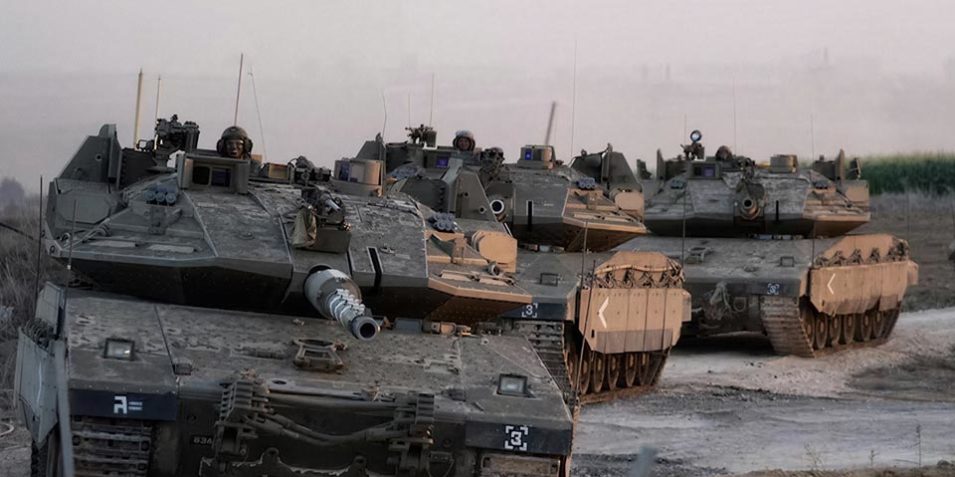
ceobs.org
With the First Conference on Transitioning Away from Fossil Fuels being hosted in Colombia next month, more and more climate campaigners are examining the impact of ongoing conflicts on plans for a global transition.