Training and tools for IMAS 07.13 environmental and climate compliance
Published: 2026 · Categories: Environment in humanitarian disarmament/Consultancy
Supporting your environmental journey
CEOBS offers specialist training and consultancy to help mine action organisations meet the requirements of the updated IMAS 07.13 on Environmental Management and Climate Change.
With increasing donor and regulatory pressure, integrating environmental considerations into mine action is no longer optional — it’s essential.
We can provide practical Green Field Tool (GFT) and field-based training to ensure your operations are compliant, effective, and aligned with IMAS 07.13.
Why this matters now
Environmental considerations in mine action are receiving increasing global attention. Mine action organisations are expected not only to minimise environmental harm during operations, but also to contribute positively to environmental protection and community resilience.
This means ensuring that field activities:
- Avoid or reduce adverse environmental impacts;
- Apply responsible environmental practices throughout operations; and
- Address growing climate-related risks and challenges.
At the same time, the sector is rapidly evolving.
- The updated IMAS 07.13 now requires stronger integration of environmental and climate considerations.
- Donors are increasingly expecting environmental compliance and reporting, and
- National Mine Action Standards (NMAS) related to the environment are continuing to develop.
Together, these changes create an urgent need for practical, field-ready tools and training that mine action practitioners can apply immediately in operational contexts.
The solution: the Green Field Tool (GFT)
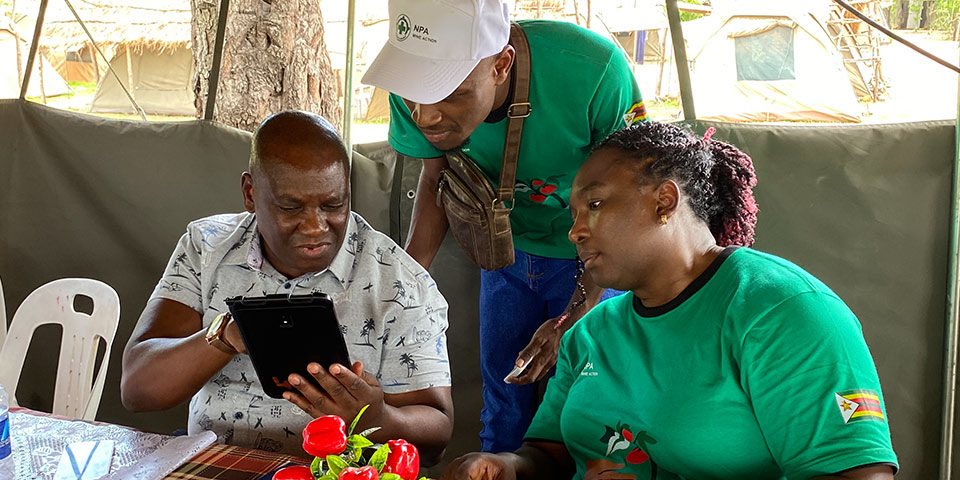
Developed collaboratively by Norwegian People’s Aid and CEOBS, the GFT enables field teams to identify, assess, and mitigate environmental risks during mine clearance.
What the GFT does:
- Identifies site-specific environmental risks.
- Guides mitigation measures in real time.
- Supports planning, reporting, and compliance.
The tool requires no prior environmental expertise to operate and has been field-tested across multiple NPA country programmes, including Angola, Cambodia, Bosnia and Herzegovina, Lao PDR, Yemen, Vietnam, Ukraine and Zimbabwe.
Key benefits
By using the GFT, your organisation can:
- Achieve compliance with IMAS 07.13.
- Integrate environmental considerations into operations from the outset.
- Meet donor and national authority requirements.
- Improve operational planning and accountability.
- Use a range of formats including ArcGIS Survey123 or Excel – whichever is most suitable for the specific field conditions.
Our training offer
Bespoke, field-focused training
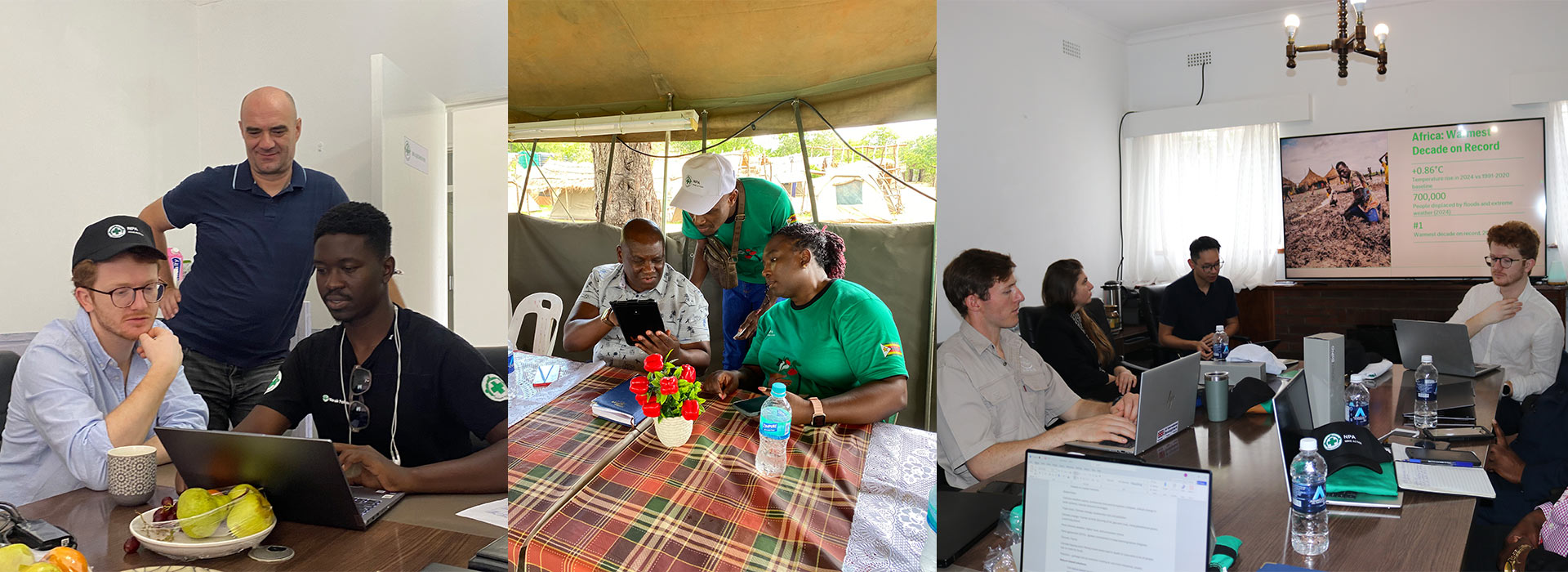
We deliver tailored training packages designed around your organisation’s structure, geography and operational needs. We offer a five-day training plan tailored to your operational scale and context. A typical format would run along the following lines:
- Preparation phase
- Adaptation of the GFT to your country/context.
- Alignment with your environmental policies.
- Translation support (if required).
- Training delivery
- Two days of classroom-based training.
- One day of field-based practical application.
- Two days follow-up, refinement, and integration.
What you’ll gain
By the end of the training, your teams will:
- Be able to confidently apply the GFT in field operations.
- Understand how to meet the requirements of IMAS 07.13.
- Be able to identify and mitigate environmental risks.
- Strengthen reporting and compliance for donors.
Our training team
Dr Anna McKean
Senior Adviser, Mine Action and Environment
Anna is an environmental and war researcher with over 15 years of project management experience. She holds a Ph.D. in Environmental Sciences and Policy, a Masters degree in Sustainable Development and a MBA in Sustainability Studies. Her expertise lies in assessing war damage to the environment and biodiversity, analysing environmental incidents using open-source intelligence and earth observations, studying impacts of humanitarian demining on the environment, as well as developing sustainable strategies for post-conflict reconstruction.
Jonathan Walsh
Researcher
Jonathan has expertise on mine action and using remote sensing and OSINT methods to assess environmental impacts of conflict. He holds post graduate degrees in Earth Observation and International Relations. Jonathan will assist in designing and delivering the training package. He has worked in post-conflict contexts including Azerbaijan, Lebanon, Bosnia and Zimbabwe.
Get in touch
If your organisation would like support in preparing to meet the new environmental standards in mine action, contact us to discuss your requirements or request a tailored proposal.