The case for mandatory military emissions reporting under the UNFCCC is growing stronger with every flood and heatwave.
Our latest Military Emissions Gap dataset reveals that, in the face of the accelerating climate crisis and rising military spending, military emissions reporting to the UNFCCC is getting worse. In several cases, reporting is becoming less transparent, meaning less data and less understanding of what is needed to mitigate our climate impacts. And as COP31 approaches, we reveal how countries like COP host Türkiye are making their military emissions disappear in the paperwork. You can explore your government’s military emissions reporting via the interactive map at: https://militaryemissions.org
Key findings
- During 2024 — the year of the UNFCCC’s latest dataset — military spending was rising while reported emissions decreased.
- Turkiye’s reporting is going backwards. Turkiye, the COP31 host, spent $25bn on its military in 2024 but reports no military emissions. In last year’s reporting these emissions were “included elsewhere”, while this year they are “not occurring”.
- Countries’ own documents contradict each other. In several countries the written report says military fuel is counted in civilian categories, while the data tables say the emissions are “not occurring”. Confusing accounting that further obstructs understanding of this carbon intensive sector’s true climate impact.
Not occurring or not reported?
The impacts of climate change are accelerating — and included a record number of heatwaves in Europe this summer — and it’s imperative that governments account for and reduce their whole of society’s emissions if we are to prevent climate breakdown.
Governments are required to report their emissions to the UN Framework Convention on Climate Change (UNFCCC). This data is used to track greenhouse gas (GHG) emissions and assess climate progress under the Paris Agreement. Since 2021, the Military Emissions Gap has tracked and reported on how militaries are often missing from the data. There is a two-year delay in the publication of UNFCCC emissions data so our new 2026 dataset is from emissions during 2024.
Military spending is rising and this has a carbon cost. Across 28 Annex-1 countries where there is some level of military emissions reporting[NOTE]Aggregated totals for 28 Annex-1 countries that provided some figure (either for 1.a.5.a, 1.a.5.b or both in the CRT. Countries that did not report anything: Belarus, Russian Federation, Croatia, Estonia, Ireland, Japan, New Zealand, Poland, Sweden, Türkiye, United States; as well as Russia and Belarus were not included due to lack of data on military emissions, while Russia was excluded due to the size of its emissions.[/NOTE] — those countries which in 1992 were industrialised, or had economies in transition — year-on-year military spending rose 11%, yet their reported military emissions were 6% lower for the same period. Bottom line: governments are spending more money on their militaries, but reporting fewer GHG emissions to the UN.
While conceivable that some emissions reductions could be attributed to more efficient vehicles, decarbonisation efforts or methodology revisions, recent research does not support this. In 2024 with Russia’s full-scale invasion of Ukraine continuing, many other Annex-1 countries raised their military spending, readiness, and exercises, including Steadfast Defender 2024, NATO’s largest in decades. All of this burns fuel, meanwhile militaries show little progress towards decarbonisation. Moreover, studies highlight that when countries spend a larger share of their GDP on their military, their emissions intensity increases.
It’s therefore reasonable to expect that higher military spending and more intensive activities lead to higher emissions, but this is not reflected in the data reported to the UN. Thus our analysis suggests that not only are military emissions increasingly underreported but that governments are likely obscuring their true scale. Globally, the military is a carbon intensive sector with a large climate impact, but through climate obstruction like this, it avoids the emissions accountability of other economic sectors.
Table 1: military spending and emission changes
| Measure | Earlier year | Later year | Change (%) |
|---|---|---|---|
| Military spending (US$ m, constant 2024 prices; 2023 vs 2024) | 491,503.6 | 545,984.3 | 11.1% |
| Reported military emissions (Mt CO2e; 2025 dataset vs 2026 submission) | 11.39414 | 10.6741 | -6.3% |
| Notes: Only includes countries that had an emissions figure reported: excludes Russia and Belarus, as Russia figure is an anomaly, Belarus figure doesn't contain military. | |||
Note: Aggregated totals of military spending and reported emissions for 28 annex-1 countries that provided some figure (either for 1.a.5.a, 1.a.5.b or both in the CRT). Countries that did not report anything: Belarus, Russian Federation, Croatia, Estonia, Ireland, Japan, New Zealand, Poland, Sweden, Türkiye, United States; as well as Russia and Belarus were not included due to lack of data on military emissions, while Russia was excluded, as its 1.A.5 figure at 48 million tonnes CO2e, would outweigh all 28 countries combined.
How are figures being reported?
Every year Annex-1 countries are required to submit two documents to the UNFCCC: an annual National Inventory Report (NIR) explaining their numbers and methods, and a set of Common Reporting Tables (CRT) detailing the numbers. The CRT is usually used for emissions calculations. Every year, we analyse these submissions to review military emissions transparency and update our military emissions tracking map, and this year our review found a concerning pattern. In at least three countries — including Ireland, Turkiye and Japan — the NIR reported that some categories of military fuel use are counted inside civilian categories, such as commercial buildings for stationary emissions, or transport for mobile emissions. However, the CRT data tables for the same countries record military emissions as “not occuring” rather than “included elsewhere”.
“Included elsewhere” indicates that emissions exist and are hidden within another number. Meanwhile, “not occurring”, indicates that there are no emissions occurring nor reported. A table in the CRTs should then detail where emissions “included elsewhere” are reported, although there is a caveat if it is deemed confidential for military emissions; our assessment of the security risks of better reporting suggest that they are minimal. Even where countries do include emissions elsewhere, this table often remains blank, particularly for military categories. While “included elsewhere” and “not occurring” is a subtle difference, it shows that UNFCCC reporting is missing even more data, and is sometimes incorrectly reported between different government documents. This makes military emissions even harder to track. Given that militaries are estimated to contribute around 5.5% of global emissions in peacetime, this emissions gap is considerable and is impacting global efforts to mitigate climate change.
Table 2: What three countries inventory reports say about military fuel, compared with their data tables, 2026 submissions.
| Country | What the NIR says | What the CRT data says |
|---|---|---|
| Ireland | "Emissions associated with military operations, stationary or mobile, are included elsewhere (IE) under category 1.A.4.a for stationary and category 1.A.3 for mobile." (section 3.2.8, p. 110) | 1.A.5 "not occurring" (NO) |
| Japan | "The emissions from fuel combustion for the national defense purpose are included in commercial/institutional (1.A.4.a)." (section 3.2.10, p. 3-74/75) | 1.A.5 "not occurring" |
| Türkiye | "Emissions from fuel delivered to the military is included under category 1.A.4.b for 1990-2022 periods and 1.A.4.a (for stationary) and 1.A.3 (for mobile) since 2015." (section 3.2.7.4, p. 120) | 1.A.5.a: "not applicable" (NA); 1.A.5.b: "not occurring" |
Türkiye: the COP31 host that reports no military emissions
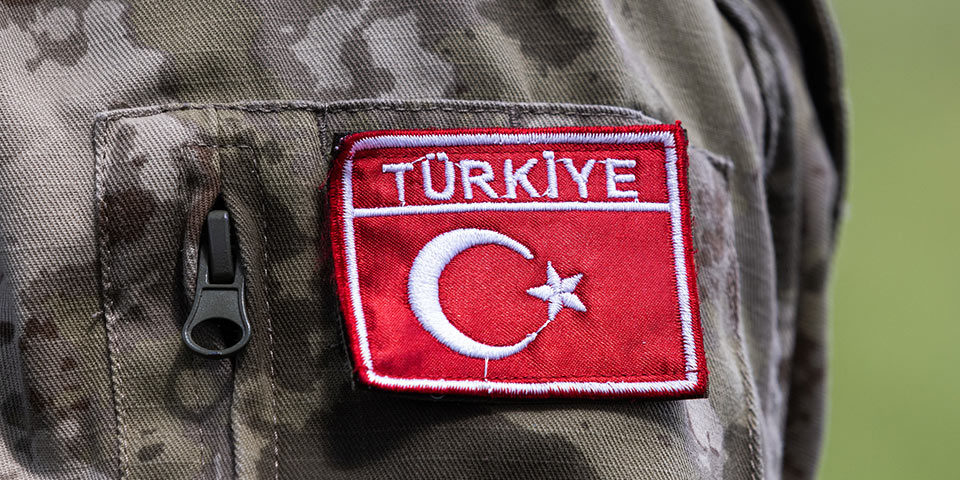
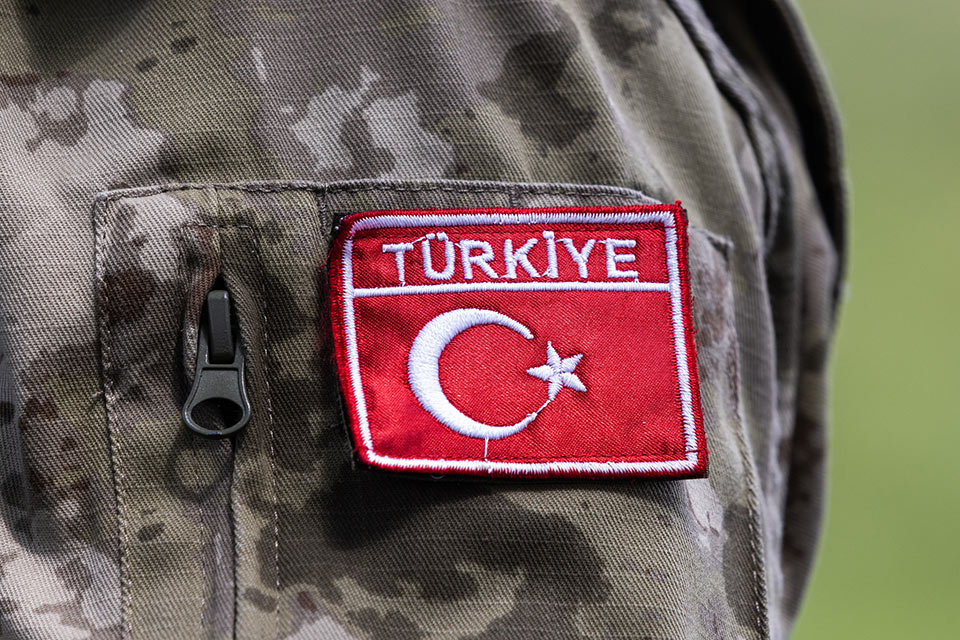
COP31 host Türkiye should be keen to show its climate leadership, which should extend to its own climate impact and emissions reporting, including military emissions. The country spent $25 bn on its military in 2024, around 1.8% of its GDP, and is NATO’s second largest army. In spite of this, it reported no figures for any associated emissions to the UNFCCC. The COP hosts’ military emissions reporting has in fact gone backwards; in previous years mobile military emissions were noted as “included elsewhere” but in the latest data as “not occurring”. Unhelpfully, Türkiye’s NIR claims that fuel delivered to the military is included in other civilian categories, with no amounts given and no inclusion or mention of these figures in their reporting tables.
So how much is missing from Türkiye’s reported military emissions? It’s hard to say, no clear data is reported to the UNFCCC and fuel is only part of the picture. While in-country military emissions reporting can be more detailed than UNFCCC submissions, even this isn’t the whole picture. Estimates that include the emissions from other areas of military activities and their supply chains suggest a military’s full footprint is many times larger than its fuel use alone.
Table 3: How Türkiye reported military emissions in 2025 (2023 data), and 2026 (2024 data).
| Category | 2025 (inventory year 2023) | 2026 (inventory year 2024) |
|---|---|---|
| 1.A.5.a (military bases and buildings) | NA (not applicable) | NA |
| 1.A.5.b (military vehicles, ships and aircraft) | IE (included elsewhere) | NO (not occurring) |
| Military spending (current US$ billion) | 19.2 | 25.0 |
| Share of gross domestic product (GDP) | 0.0169 | 0.0184 |
| SIPRI global spending rank | 19th | 18th |
What needs to change?
Governments must publish more data on their military emissions. Military spending is rapidly rising, with NATO members committed to spending 5% of GDP on defence and security by 2035. This means more and more military emissions are likely to go uncounted unless reporting improves.
COP31 host Türkiye should lead the way by correcting its own reporting. But reporting needs to be improved across the board if we are to get a true picture of militaries’ contributions to the climate crisis. Without this, we have less ability to mitigate the emissions that are driving it, or to produce accurate and effective climate action plans. The UNFCCC needs to mandate military emissions reporting, urgently.
Grace Alexander is CEOBS’ military and conflict emissions Researcher, you can explore the latest military emissions data using the map at militaryemissions.org, the dataset for this year an previous years are available as Google Sheets. If you have found this work useful, please donate so that we can continue to do it.