
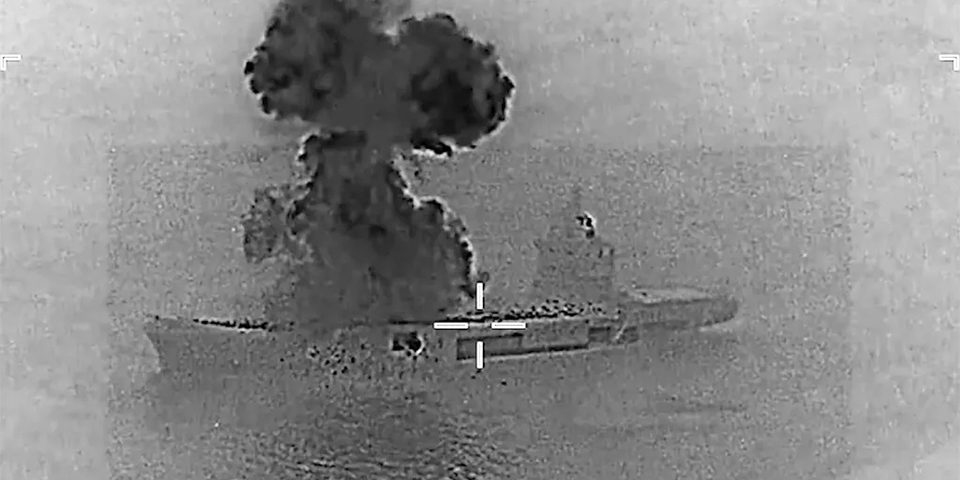
When operationalised, the due regard rule intersects with core IHL principles, helping create a framework of protection for the environment.
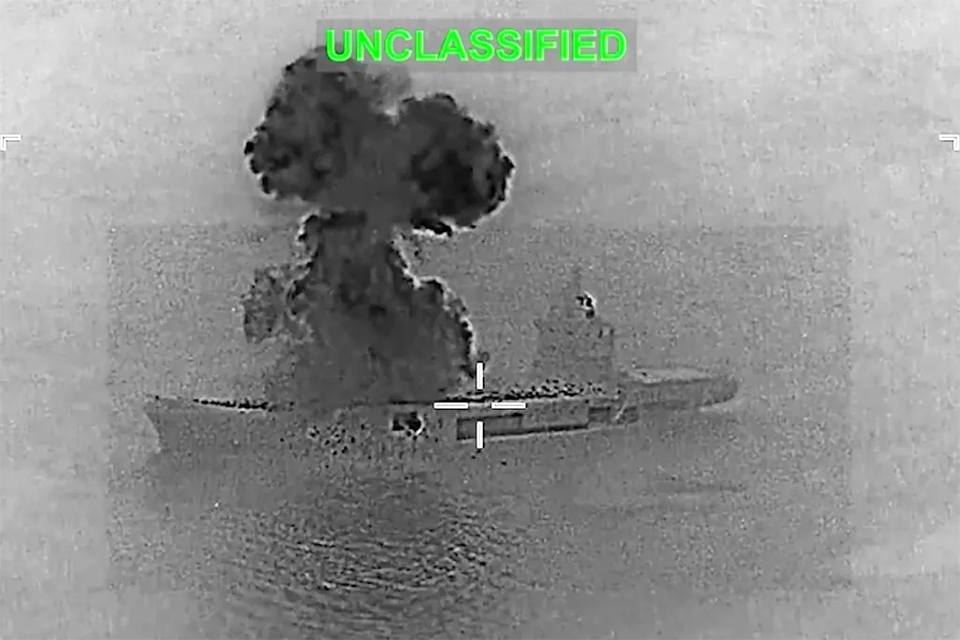
At a time where many are questioning the extent and value of legal protection for the environment during war, Lydia Millar explores the potential of IHL’s due regard rule for minimising harm, and why it’s worth fighting for.
Introduction
Environmental degradation remains one of the most persistent and under-addressed consequences of contemporary armed conflict. International Humanitarian Law (IHL) recognises these dangers and imposes a series of obligations to mitigate environmental harm. Among them, is the somewhat elusive due regard principle, which seeks to ensure that military operations are conducted in a manner that protects and preserves the natural environment.
Sources of the ‘due regard’ principle
The roots of the due regard principle can be traced to concepts in the law of the sea, including in the UN Convention on the Law of the Sea (UNCLOS), pre-dating but also reflected in the 1994 San Remo Manual on International Law Applicable to Armed Conflicts at Sea. Section 44 of the San Remo Manual states that the: ‘methods and means of warfare should be employed with due regard for the natural environment, taking into account the relevant rules of international law.’
This provision is significant in two respects: it demonstrates that due regard is a well-established element of operational guidance rather than a novel concept, and it affirms its character as a conduct-based obligation requiring genuine environmental consideration within the limits of military necessity. It sits among other obligations reflecting ‘due regard’ in the San Remo Manual, generally understood to involve a balancing of interests between the parties to armed conflict at sea and other interests, notably those of neutral states. Due regard’s articulation in the naval context further highlights the principle’s cross-domain application, confirming that environmental considerations apply equally across land, sea, and air operations.
The relevance of this early maritime framing is highlighted further by work on environmentally sensitive regions such as the Arctic, where naval and maritime operations in frozen or partially frozen seas can produce ecological effects that persist for decades due to the slow rate of biological processes in such environments. This makes San Remo’s cross-domain due regard requirement particularly important, as it applies to contexts where even limited military activities, such as submarine manoeuvres, sonar use, or vessel movements, carry heightened environmental risks. Submarine manoeuvres can disturb or destroy seabed habitats; sonar use is known to disorient and harm marine mammals, including cetaceans; and vessel movements through ice can break up sea ice cover, disrupting ecosystems that depend on stable frozen surfaces.
A more modern expression of the principle appears in Rule 1 of the ICRC’s 2020 Guidelines on the Protection of the Natural Environment in Armed Conflict, which requires that: ‘methods and means of warfare must be employed with due regard to the protection and preservation of the natural environment.’ Rule 44 of the ICRC’s database of customary international law, which is a compilation of unwritten rules and general practice accepted as law, expands upon Rule 1 of the ICRC’s Guidelines and Section 44 of the San Remo Manual, requiring that the due regard principle involves taking ‘all feasible precautions’ to avoid, and in any case minimise, incidental environmental damage during military operations. Rule 44 also states that ‘scientific certainty as to the effects on the environment of certain military operations does not absolve a party to the conflict from taking such precautions.’ This means that military planners and commanders must consider environmental consequences not only in extreme cases, but as part of routine operational practice.
Due regard within the architecture of IHL
Under IHL, the natural environment is treated as a civilian object, meaning that, unless used for military purposes to the extent that they become a military objective, it must not be attacked. The due regard principle interacts directly with the rule of distinction, reinforcing that damage to the environment must be avoided unless strictly justified by military necessity and subject to all other IHL constraints. It also reinforces the precaution requirement, whereby parties to a conflict must take ‘all feasible precautions’ to avoid or minimise incidental harm to the environment during military operations, even amid scientific uncertainty. This reflects an important normative shift: commanders cannot ignore environmental risks simply because their scale or duration cannot be precisely predicted. The proportionality rule is equally central: environmental damage must be assessed as part of foreseeable collateral damage, and attacks expected to cause excessive environmental harm in relation to the anticipated military advantage are prohibited.
Alongside the due regard requirement, Articles 35(3) and 55 of Additional Protocol I to the Geneva Conventions (1977) establish a higher threshold prohibition on methods or means of warfare expected to cause ‘widespread, long-term and severe’ damage to the natural environment.1 Importantly, this is an absolute threshold: if damage reaches that level, it is prohibited even if it would otherwise be lawful under the rules of distinction, precautions, and proportionality (see ICRC Guidelines, para. 49). These treaty provisions are aimed at preventing catastrophic, strategic-level ecological destruction, a far narrower category than the impacts typically addressed by the due regard principle. Because Articles 35(3) and 55 apply only when all three cumulative conditions are met, many forms of environmentally harmful conduct fall below this threshold. This is precisely why the due regard obligation is so important: it fills the large operational space between ordinary battlefield practice and the most extreme forms of environmental devastation.
Taken together, the due regard principle and the prohibitions contained in Articles 35(3) and 55 form a layered protective framework. The treaty provisions guard against the most severe environmental consequences of warfare, while the due regard obligation is intended to ensure that environmental considerations shape everyday military decision-making through the rules of distinction, proportionality, and precautions in attack.

Case law and practice: The challenge of enforcement
A central difficulty in operationalising the due regard principle is the absence of robust judicial interpretation, particularly from international courts, that gives the rule concrete legal contours during armed conflict. While the principle is widely recognised in customary IHL and reflected in military doctrine, courts have so far addressed environmental protection only indirectly, leaving significant ambiguity around how due regard should function in practice.
The Gabcíkovo-Nagymaros Project case remains one of the most frequently cited authorities for environmental due diligence obligations. Although not an armed-conflict case, the International Court of Justice (ICJ) affirmed that environmental protection constitutes an ‘essential interest’ of states and recognised a general obligation to integrate environmental considerations into all activities, particularly those involving scientific uncertainty. This emphasis on precaution and environmental risk management echoes core elements of the due regard principle, reinforcing the expectation that states must act proactively, even in uncertain conditions.
Similarly, in the Legality of the Threat or Use of Nuclear Weapons Advisory Opinion, the ICJ held that environmental considerations ‘are not an abstraction’ and must inform the application of IHL during hostilities. While the ICJ stopped short of defining a standalone environmental obligation, it acknowledged that environmental protection operates as a substantive constraint within IHL. This recognition provides important normative support for due regard, even if it does not clarify its precise legal threshold.
There are, however, some more recent developments worth noting. In its 2022 judgment in DRC v Uganda (Reparations), the ICJ awarded damages for environmental damage to fauna in a national park, recalling that compensation is due for damage caused to the environment in and of itself, and that damage to the environment and the consequent impairment or loss of the ability of the environment to provide goods and services is compensable under international law. While not directly adjudicating the due regard rule, this decision represents meaningful progress in recognising environmental harm as legally actionable in an armed-conflict context.
Ukraine has announced and is conducting ongoing investigations into ecocide and war crimes in relation to environmental damage, signalling growing state practice in this area. Additionally, the UN Compensation Commission (UNCC), established to process claims arising from Iraq’s actions during the 1990–91 Gulf War, made numerous awards for environmental damage resulting from the burning and spilling of Kuwaiti oil wells, prioritising ecological functioning as the objective of remediation and awarding compensation accordingly. These developments, while not definitive, gesture to a slowly evolving landscape.
Despite these touchpoints, the jurisprudence falls short of supplying an enforceable framework. No international tribunal has yet found a belligerent responsible for breaching environmental obligations during hostilities, even in cases involving major pollution events, oil-well fires, or widespread ecosystem degradation.
Implementation over enforcement
Due to this enforcement gap, there is increased caution against relying on courts to give practical effect to the due regard obligation. Instead, internalisation through military manuals, operational law guidance, targeting procedures, and rules of engagement may be a better approach. This view has also been reflected in practice: in 2023 an ICRC-convened expert meeting emphasised that meaningful implementation will depend primarily on national doctrine and training, not judicial enforcement.
While the due regard principle enjoys broad endorsement as a norm of IHL, the lack of jurisprudential development continues to limit its operational clarity. Until more explicit case law emerges, its effectiveness will rely heavily on state practice, military policy, and the gradual consolidation of customary law rather than courtroom enforcement.
Further complexity arises from debates about the principle’s applicability in non-international armed conflicts (NIACs), which constitute the majority of today’s hostilities. The ICRC has conceded that it is unclear whether the due regard principle has attained customary status during NIACs, noting that it may apply when environmental harm spills across borders. However, opinion remains divided and practice is inconsistent. Post-conflict remediation presents additional difficulties. Even when environmental harm is recognised, obligations to restore damaged ecosystems or pursue reparations remain weak, leaving long-term environmental recovery under-addressed.
That said, there are noteworthy advancements in this domain. The sixth session of the United Nations Environment Assembly (UNEA-6) passed a Ukrainian resolution on environmental assistance and recovery in areas affected by armed conflict, and UNEP has subsequently undertaken initial work towards environmental assessment guidance aimed at strengthening remediation frameworks. These developments, while incremental, point to growing international recognition of the need for more structured post-conflict environmental obligations.
Conclusion: A norm in search of enforcement
The due regard principle reflects a modest but meaningful shift in IHL: environmental protection is not exceptional or discretionary, but an integral part of lawful conduct in warfare, requiring due care even amid uncertainty. That said, in the absence of consistent judicial practice, its real-world impact depends largely on states and other armed actors internalising the norm through military doctrine, rules of engagement, training, targeting practices, and decision-making that accounts for ecological consequences. Strengthening due regard in this way is critical, not only for protecting ecosystems, but for safeguarding civilian livelihoods, health, and the long-term sustainability of communities caught in armed conflict.
One timely opportunity in this regard is the ongoing update of the San Remo Manual, which sets out due regard obligations in relation to the marine environment. This process offers an important occasion to retain and, where possible, strengthen requirements on due regard and environmental protection, ensuring that any revised text entails meaningful damage reduction measures and reflects the continued evolution of IHL’s environmental framework.
Lydia Millar is a PhD candidate at Queen’s University Belfast. Her thesis is on the usefulness of open source information in identifying victims of conflict-related environmental harm for the purposes of transitional justice. Found this post useful, please donate so that we can continue to publish them.
- Article 35(3): ‘It is prohibited to employ methods or means of warfare which are intended, or may be expected, to cause widespread, long-term and severe damage to the natural environment.’ Article 55: ‘Care shall be taken in warfare to protect the natural environment against widespread, long-term and severe damage. This protection includes a prohibition of the use of methods or means of warfare which are intended or may be expected to cause such damage to the natural environment and thereby to prejudice the health or survival of the population.’