Published: October, 2026 · Categories: Publications, Law and Policy
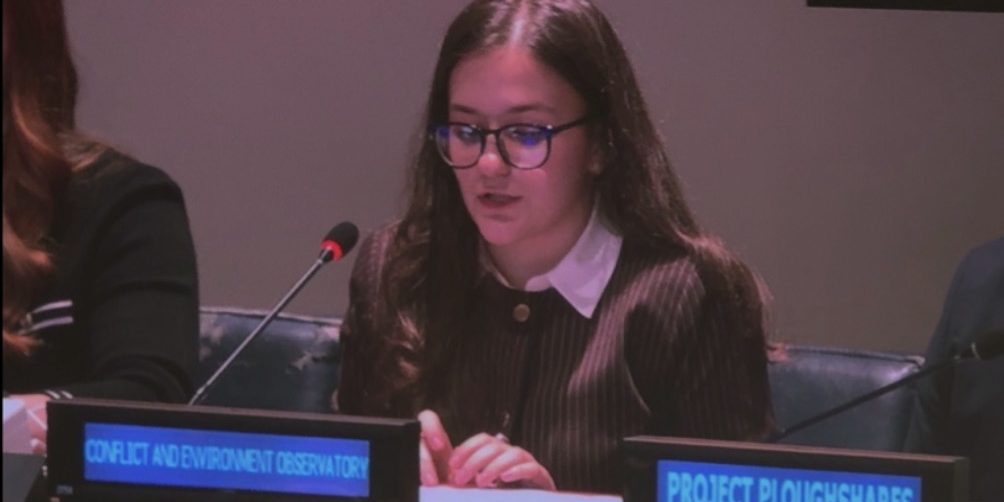
Statement drafted by CEOBS and delivered by Melissa Bushi of Pace University. For more exploration of the themes in this statement see the chapter on the protection of the environment in relation to armed conflicts in Reaching Critical Will’s 2026 First Committee Briefing Book.
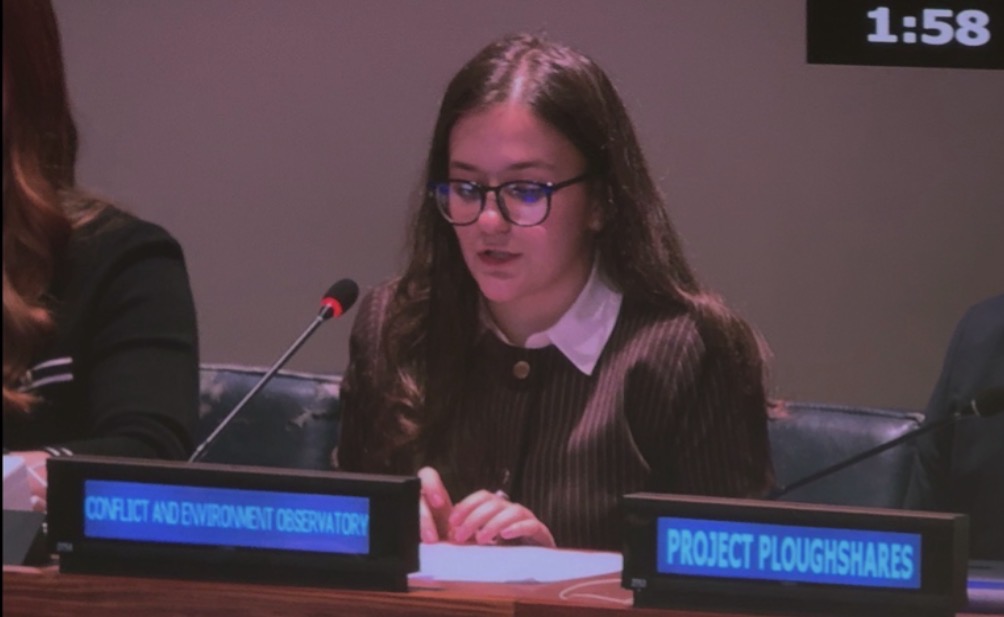
Thank you, Chair. I am delivering this statement on behalf of 35 organisations and three civil society networks.
This General Assembly has heard that “the climate and nature crisis is a national and global security threat, and that tackling the causes and consequences is essential to safeguarding the security, stability and resilience of our societies for future generations”.
While acknowledgement of the risks that environmental degradation poses to national security is welcome, we see far little attention on how national security choices are driving environmental degradation.
There are many reasons for this. Perhaps foremost is our instinctive reluctance to accept our role in these threats; something that applies as much to personal responsibility as it does to that of the state.
This selectivity is visible in the UN’s peace and security architecture. The Security Council has debated the security implications of the climate crisis since 2008 but not our contributions to that crisis. While here in the First Committee, scant attention is paid to the environmental dimensions of the methods and means of warfare on its agenda.
Delegations are largely silent on the legacy of pollution from the use of explosive weapons in populated areas, and on the resource and carbon costs of reconstruction. The contributions that small arms and light weapons make to biodiversity loss and to crimes that affect the environment get little mention. Links aren’t made between rising military budgets and cuts to action on climate, nature, land degradation and pollution. Meanwhile, the environmental risks associated with the use of autonomous weapons remain unexplored.
And yet, there are grounds for optimism. The Convention on Cluster Munitions’ new Vientiane Capital Action Plan progressively integrates climate and environmental considerations. There are signs that the Global Framework for Through-life Conventional Ammunition Management may explore how ammunition storage and climate extremes intersect. Elsewhere, the Treaty on the Prohibition of Nuclear Weapons is breaking new ground on environmental remediation and victim assistance.
But these advances have happened despite the First Committee, not because of it, and this forum’s ongoing failure to meaningfully engage with the environmental dimensions of the topics on its agenda is increasingly undermining its relevance in our climate changed, nature depleted and polluted world.
Chair.
This matters because a history of military and security exceptionalism has excluded these topics from international environmental fora. For example, under the UN Framework Convention on Climate Change, states with large militaries take advantage of voluntary reporting to hide their military greenhouse gas emissions; obfuscation that is slowing decarbonisation, undermining national climate plans and ultimately increasing climate security risks.
Until the First Committee recognises the environmental impact of the topics on its agenda, demonstrates curiosity, and becomes comfortable with discussing and acting on them, it will continue to contribute to global environmental security risks, when it should be tackling them.
This statement was endorsed by:
Networks
- International Campaign to Abolish Nuclear Weapons
- ICBL-CMC
- International Network on Explosive Weapons
Organisations
- Action on Armed Violence
- Actors Rwanda
- Aotearoa New Zealand Campaign on Military Spending
- Aotearoa New Zealand Joint Working Group on Landmines and Cluster Munitions
- Aotearoa New Zealand Network on Explosive Weapons
- Article 36
- Campaña Colombiana Contra Minas
-
Centro de Estudios Ecuménicos, México
- Common Ground Rising
- Conflict and Environment Observatory
- Deutsche Friedensgesellschaft – Vereinigte KriegsdienstgegnerInnen e.V.
- Development and Ability Organization
- Dhesarme – Brazilian Action for Humanitarian Disarmament
- Legacies of War
- Maat for Peace, Development and Human Rights
- Middle East Treaty Organization
- Mile Organization for Environmental Protection
- Mines Action Canada
- Nonviolence International
- Nonviolence International Canada
- Norwegian People’s Aid
- PAX
- Peace Movement Aotearoa
- Réseau d’Action Sur les Armes Légères en Afrique de l’Ouest
- Réseau d’Action Sur les Armes Légères en Afrique de l’Ouest, section Côte d’Ivoire
- Rete Italiana Pace Disarmo
- Saferworld
- Scientists for Global Responsibility
- Soka Gakkai International
- Sustainable Peace and Development Organization
- Transparency Advocacy
- West Virginia Campaign to Ban Landmines and Cluster Munitions
- Women’s International League for Peace and Freedom
- Women, Peace and Security National Network, Aotearoa New Zealand
- Youths Awaken Foundation