
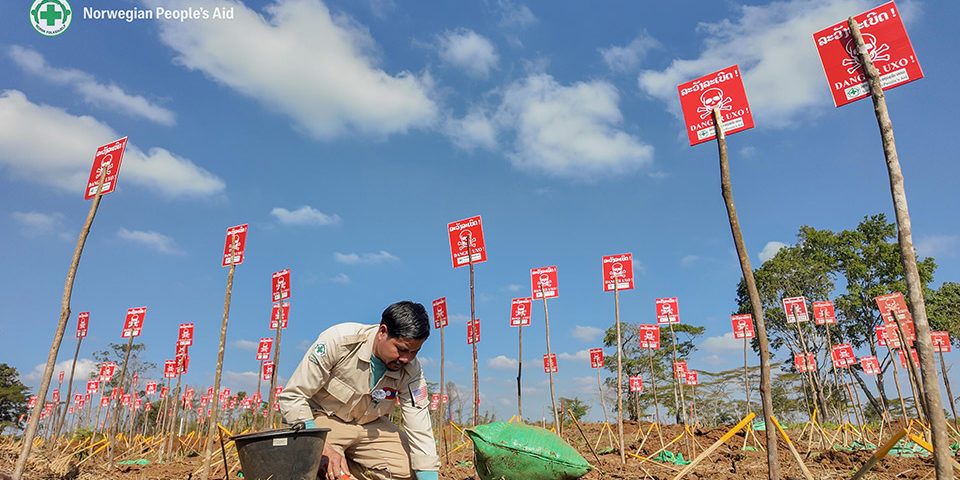
The plan should address both how climate and environmental risks can affect clearance operations, as well as their environmental impacts.
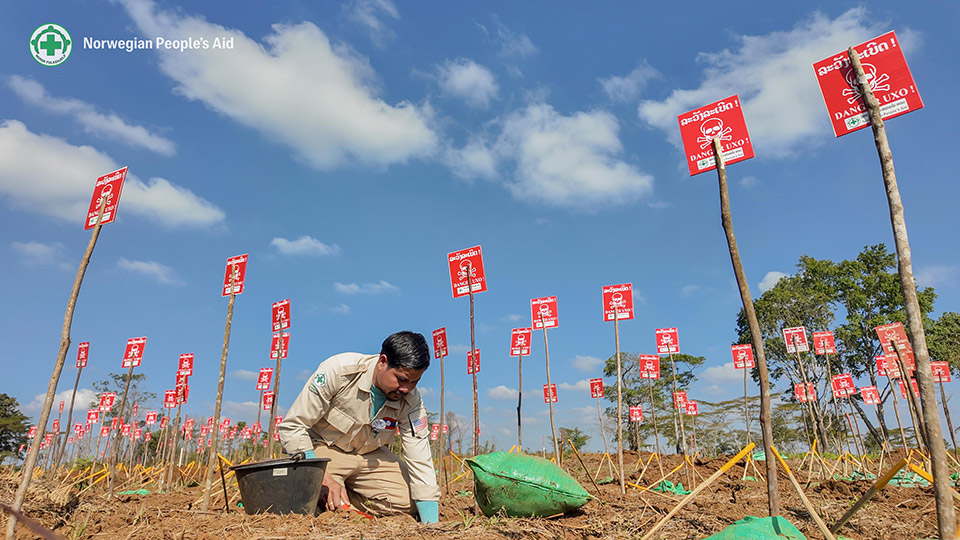
The process of environmental mainstreaming in mine action has been underway for several years. Anna McKean and Jonathan Walsh explain how a new action plan for the Convention on Cluster Munitions will both reflect and encourage this process.
Introduction
The Convention on Cluster Munitions (CCM) was adopted in Dublin in 2008, entering into force in 2010. It prohibits the use, production, transfer, and stockpiling of cluster munitions. To date, 123 states have committed to its goals, including 111 state parties and 12 signatories. As of August 2025, at least 24 states and two other areas were affected by cluster munition remnants. While the treaty has created a norm against the use of the weapons — with stockpiles destroyed and no state parties recorded as using them — they continue to be used in some ongoing conflicts.
Environmental and climate considerations are becoming increasingly important to the implementation of the CCM. Many affected countries are also highly exposed to climate hazards, environmental degradation and pressures on land and natural resources. This creates a two-way relationship between the environment and mine action: environmental and climate conditions can affect the safety and effectiveness of mine action, while mine action activities themselves can have negative environmental impacts.
Overlapping climate and environmental risks include those from extreme weather events, as well as land degradation, pollution and ecosystem fragility. Floods, droughts, storms, wildfires and soil erosion may expose, move or degrade cluster munition remnants, creating renewed risks for people and complicating land release. Changing environmental conditions can also affect access to contaminated areas, operational planning and task prioritisation, while increasing risks for communities who depend on contaminated land and natural resources. Climate resilience is therefore increasingly relevant to ensuring that the land released back to communities remains safe and sustainable over the longer term.
Implementation of the CCM is guided by an action plan that is reviewed every five years. The next review conference — its third — takes place this month in Vientiane, Lao PDR. The conference is a significant opportunity to ensure that environmental and climate considerations are a part of clearance activities for the next five years.
Part of a wider shift in mine action
The increased attention given to the environment and climate under the CCM reflects a wider shift across the mine action sector. Over recent years, environmental management has moved from the periphery towards an element of good operational practice. Progress has included:
- Adoption and revision of IMAS 07.13 on Environmental Management and Climate Change in Mine Action and Technical Note 07.13/01;
- Adoption of the Anti-Personnel Mine Ban Convention’s Siem Reap-Angkor Action Plan 2025–2029 at its Fifth Review Conference in November 2024, which included 13 actions and eight indicators on the environment and climate change,
- Development of operational tools (such as the Green Field Tool) supporting environmentally responsible practices, more holistic programming and greener approaches;
- Increased donor expectations around environmental safeguards;
- Growing cooperation between mine action, environmental and development actors, including through the sector’s Environmental Issues and Mine Action Working Group.
Building on Lausanne
The CCM’s previous action plan — the 2021 Lausanne Action Plan — already included environmental considerations across: cross-cutting issues (Action 8), stockpile destruction (Action 12 and 14), survey and clearance (Action 21 and 23), risk education (Action 27 and 30) and international cooperation and assistance (Action 39). Two indicators corresponding to these actions explicitly mention the environment, and an additional five indicators corresponding to these actions support the monitoring of progress on the environment-related actions.
The Lausanne Action Plan established an important foundation for environmental mainstreaming under the CCM. However, understanding and practice across the mine action sector have evolved since its adoption. For instance, climate resilience has become more prominent, environmental management standards and operational tools have developed, and there is greater recognition of the reciprocal risks between explosive ordnance, environmental degradation and climate-related hazards.
What’s new in the draft Vientiane Capital Action Plan
This month’s review conference is a timely opportunity to ensure these developments are reflected in the new five-year ‘Vientiane Capital Action Plan’ (VCAP). The plan should address both how climate and environmental risks can affect operations, as well as the environmental impacts of mine action. Doing so would strengthen the safe, sustainable, and forward-looking implementation of existing obligations under the CCM, and support states in managing evolving operational challenges.
Work on the VCAP has been underway for months and as of July, climate and environmental considerations were presented as cross-cutting issues with two indicators in Action 5. The plan also includes stronger provisions on stockpile destruction and retention (Action 13 and 16), survey and clearance (Action 22 and 23), risk education (Action 28), and international cooperation and assistance (Action 33).
This broader integration is important. Rather than treating the environment as a standalone issue, the draft VCAP recognises its relevance across different implementation areas. This can help move environmental commitments from policy into practice: influencing how operations are planned, how risks are assessed, how clearance and destruction are undertaken, how communities are informed, and how international assistance is designed.
The inclusion of indicators is particularly important because mainstreaming requires more than references to the environment in policy documents. Indicators can help states demonstrate progress, identify gaps and build evidence on how environmental and climate considerations are being incorporated during implementation.
Conclusion
If adopted, the VCAP would further establish the environment and climate as normal considerations in good mine-action practice. This matters, not because environmental protection is separate from the humanitarian purpose of the Convention, but because environmental conditions influence whether mine action can be carried out safely and effectively, whilst the way mine action is conducted can impact on the long-term recovery of affected land and communities. Mainstreaming climate and environmental considerations can therefore contribute to safer operations, more resilient communities and more sustainable outcomes from clearance.
But adoption is only the first step. Implementation over the next five years will be the real test, particularly at a time of deep funding cuts to mine action. The challenge will be to translate the VCAP’s commitments and indicators into national policies, operational planning and measurable changes in field practice, in turn benefitting the livelihoods and wellbeing of cluster-munition affected communities globally.
Dr Anna McKean is CEOBS’ Senior Advisor on Mine Action and Environment, Jonathan Walsh is a Researcher. CEOBS will be participating in this month’s Third Review Conference, do reach out if you are too. If you’ve found this post useful please consider a one-off or recurring donation so that we can produce more of them.