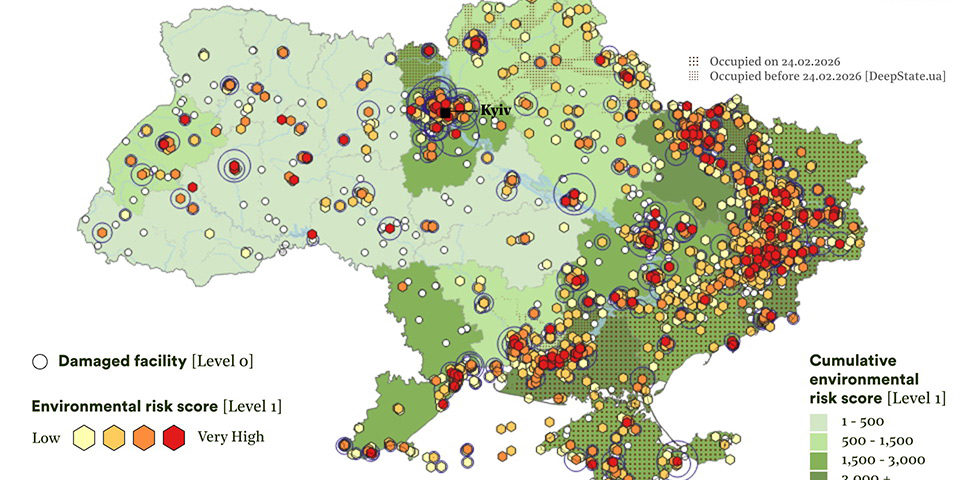
WISEN-Ukraine: tracking four years of wartime environmental harm

Four years of data from our WISEN-Ukraine database documents environmental harm from Russia’s full-scale invasion that is widespread, severe, diverse and cumulative. Here we examine what’s been damaged, and when, how harm has built up in particular locations, and release the dataset to support recovery, research and accountability.


Militaries and conflict: critical gaps in climate action

This report analyses how governments address military emissions and armed conflict impacts in UNFCCC Nationally Determined Contributions, the national climate plans that all countries have to submit to the UNFCCC. Military emissions are missing from mitigation plans, while conflict affected countries are increasingly highlighting the obstacle they pose.

Addressing the environmental consequences of conflict, towards the full protection of civilians.

Article36 is exploring the concept of the full protection of civilians, protection not constrained by the limits of international humanitarian law, such as its focus on immediate harms. This paper, prepared for their study, explores the environmental consequences of conflict and situates them within this evolving concept.

Briefing: Defining Nature, Peace and Security (NPS)

Narrowly interpreting the relationships between nature and security and prioritising the national security of a few risks repeating past environmental securitisation mistakes, doing little to address the drivers of biodiversity loss. This briefing explores what a more holistic approach to nature, peace and security should encompass, and offers recommendations for its development.