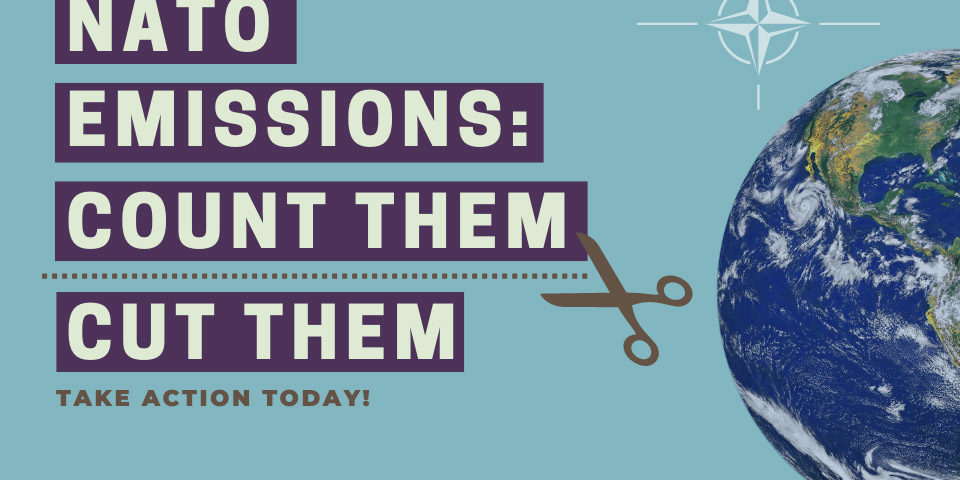
NATO emissions: Count them, cut them
Ellie Kinney explains why we have launched a new campaign ahead of COP27 urging NATO to come clean on its military emissions reporting.

Ellie Kinney explains why we have launched a new campaign ahead of COP27 urging NATO to come clean on its military emissions reporting.
Climate action tracking websites and reports play a vital role in driving the climate action of states and corporations but as Ellie Kinney writes, the leading climate tracking sites remain silent on military emissions.
It looks like NATO has pledged to reduce its institutional emissions but won’t publish the methodology it will use to count them. Doug Weir argues that this lack of transparency underscores the importance of military emissions instead being addressed by the UNFCCC.
What sources of greenhouse gas emissions should militaries be tracking and reporting on? Ellie Kinney introduces our new report, which examines military emissions in both peacetime and during conflicts.
The electrification of military vehicles will increase demand for batteries, yet forthcoming EU battery legislation contains a blanket military exemption. Piotr Barczak and Linsey Cottrell explain why the exemption challenges military greening claims.
It’s been an extraordinary year for the campaign to hold militaries accountable for their contribution to the climate emergency, in this post Doug Weir takes stock of where we are, and how we can build on the achievements of COP26.
Linsey Cottrell introduces the key findings from our analysis of the military emissions data that governments report to the UNFCCC. We found that the standard and scope of reporting is unacceptable, underscoring the need for greater transparency and tougher standards.
With interest growing in reducing military emissions, Linsey Cottrell and Eoghan Darbyshire explore why they emit so much and what it will take to reduce their contribution to climate change.